
Now Reading: Are Binaural Beats and Isochronic Tones Safe? Listening Guidelines
-
01
Are Binaural Beats and Isochronic Tones Safe? Listening Guidelines
Are Binaural Beats and Isochronic Tones Safe? Listening Guidelines
Interest in brainwave audio has grown rapidly in recent years.
Many people use:
- binaural beats,
- isochronic tones,
- ambient soundscapes,
- and relaxation audio
during:
- studying,
- meditation,
- focus sessions,
- sleep preparation,
- and mindfulness routines.
As these audio environments become more popular, an important question continues appearing online:
Are binaural beats and isochronic tones safe?
In most cases, people use these audio tools without serious problems.
However, safe listening habits still matter — especially with repetitive or immersive sound environments.
🧠 What Are Binaural Beats and Isochronic Tones?
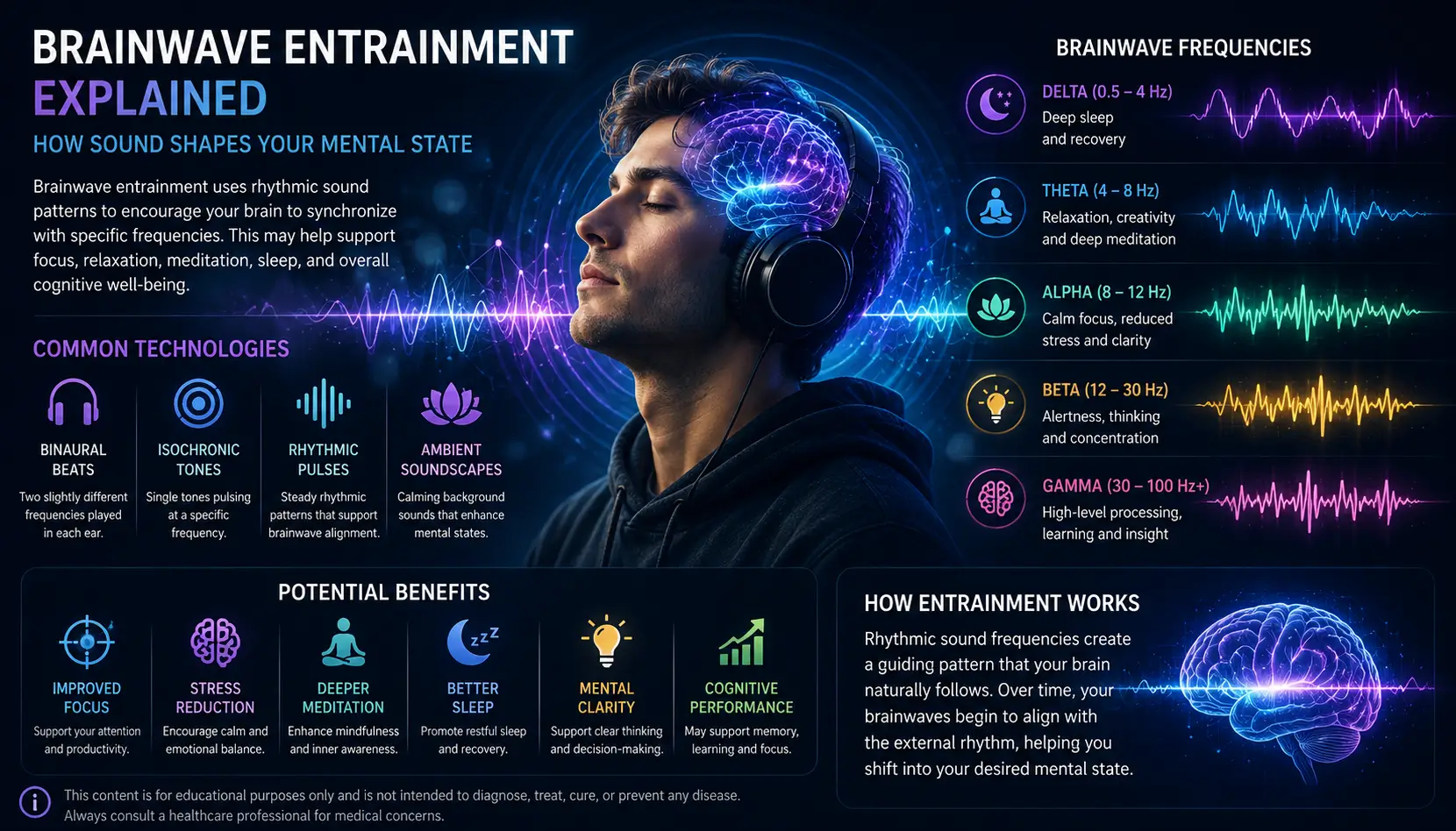
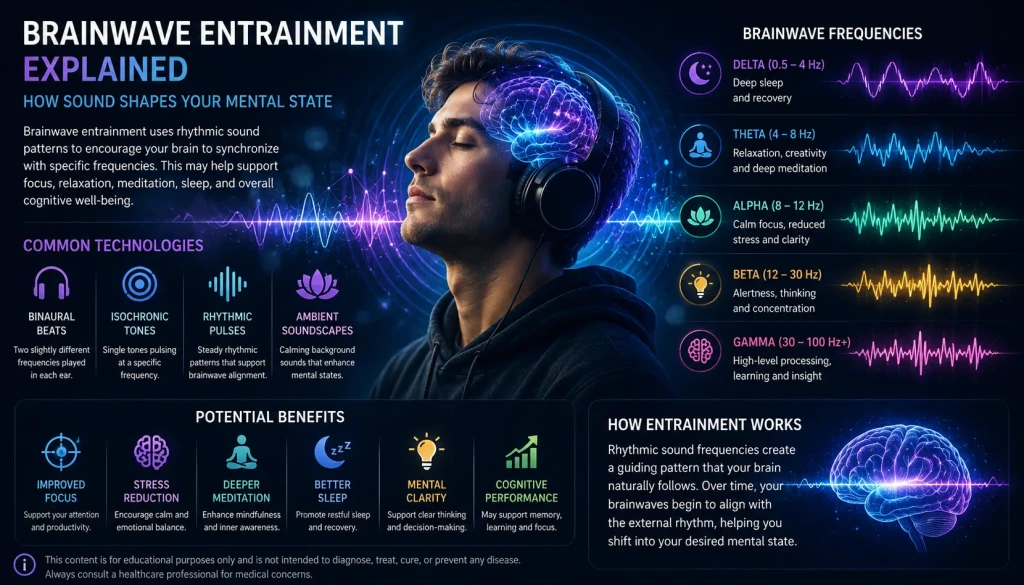
Both binaural beats and isochronic tones are forms of rhythmic audio stimulation.
Binaural beats:
use slightly different frequencies played separately in each ear.
Isochronic tones:
use repetitive sound pulses that rapidly switch on and off in a rhythmic pattern.
These sound environments are commonly used for:
- relaxation,
- focus,
- meditation,
- and sleep routines.
You may also enjoy: Isochronic Tones Explained and Binaural Beats vs Isochronic Tones for a deeper understanding of how these audio styles differ.
🔬 What Science Says About Safety
Current research does not suggest that normal listening to binaural beats or isochronic tones is inherently dangerous for most healthy individuals.
However, scientific evidence also does not support exaggerated internet claims involving:
- instant brain transformation,
- permanent cognitive upgrades,
- or extreme neurological effects.
Further reading:
https://www.frontiersin.org/articles/10.3389/fnhum.2019.00425/full
https://www.ncbi.nlm.nih.gov/pmc/articles/PMC10198548/
The healthiest perspective is viewing these audio environments as:
- relaxation tools,
- focus aids,
- or supportive sensory experiences.
⚡ Why Listening Comfort Matters
Sound environments can influence:
- mood,
- attention,
- sensory comfort,
- and emotional state.
However, excessive stimulation — especially at high volume or for very long sessions — may sometimes create:
- mental fatigue,
- irritation,
- overstimulation,
- or headaches in sensitive individuals.
This is why moderation matters.
🎧 Safe Listening Guidelines
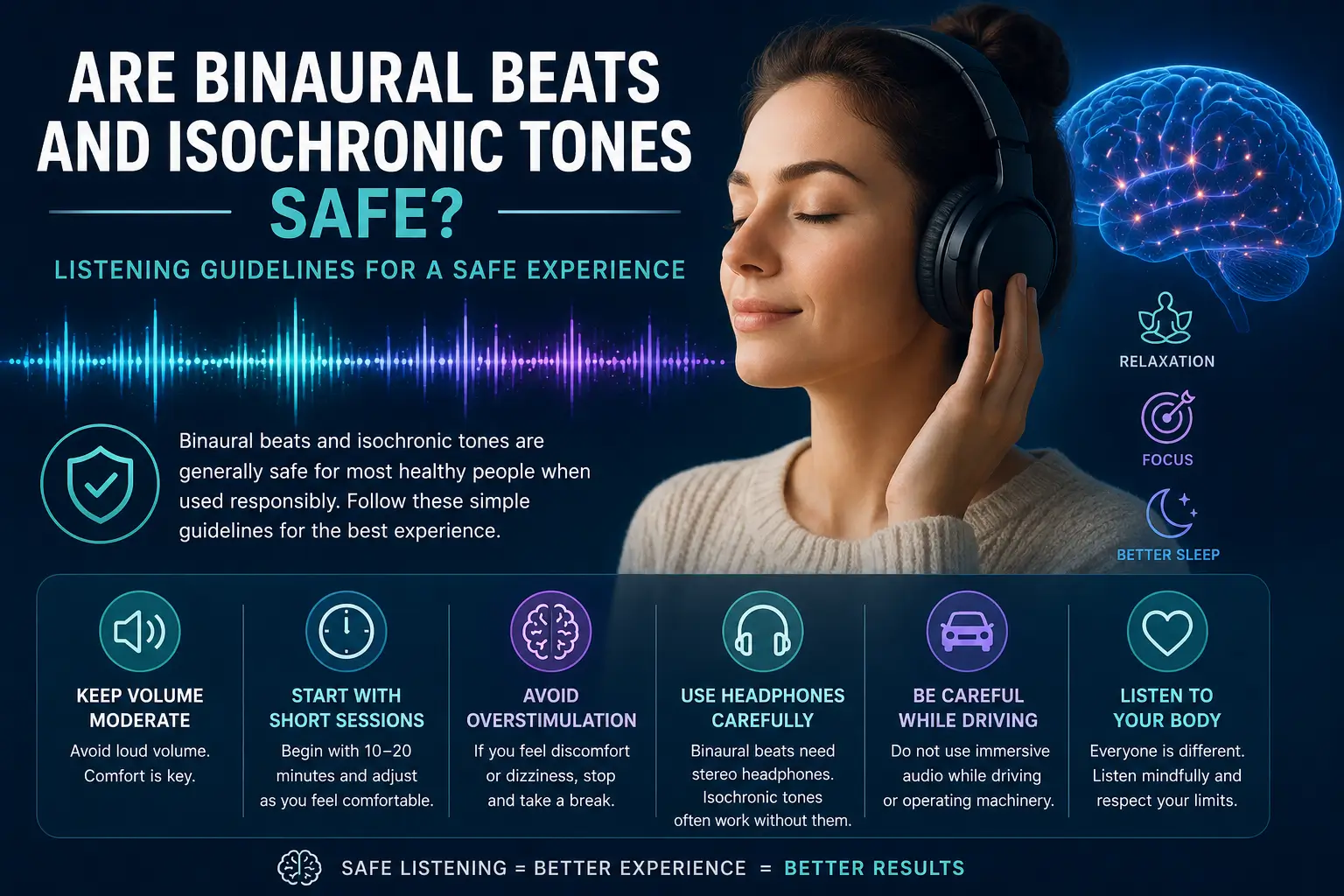
Keep Volume Moderate
Very loud audio is unnecessary.
Most listeners use brainwave audio comfortably at:
- low,
- soft,
- or moderate volume levels.
If the sound feels physically uncomfortable, reduce the volume immediately.
Start With Short Sessions
Some people prefer beginning with:
- 10–20 minute sessions
before using longer listening routines.
This allows you to understand how different sound environments feel personally.
Avoid Overstimulation
Not everyone responds the same way to repetitive audio.
If you experience:
- discomfort,
- anxiety,
- dizziness,
- irritation,
- or sensory fatigue,
it is best to stop listening and take a break.
Use Headphones Carefully
Binaural beats:
usually require stereo headphones for the intended effect.
Isochronic tones:
often work without headphones because the rhythmic pulses are externally audible.
Comfort matters more than intensity.
Be Careful While Driving
Deeply immersive audio should generally not be used while:
- driving,
- cycling,
- operating machinery,
- or performing activities requiring full environmental awareness.
Relaxation-focused audio may reduce attentiveness in some situations.
🌙 Brainwave Audio and Sleep
Many people use calming audio before sleep because repetitive sound environments may help reduce:
- racing thoughts,
- sensory distraction,
- and mental overstimulation.
You may also enjoy: Binaural Beats for Sleep for more discussion about nighttime relaxation audio.
☁️ Why People Respond Differently
Human sensory experience is highly individual.
Factors such as:
- stress levels,
- anxiety,
- sleep quality,
- sensory sensitivity,
- and listening environment
may all influence how audio feels.
Some individuals enjoy rhythmic sound environments greatly, while others may prefer silence or traditional music.
🎵 Focus, Relaxation, and Mental Environment
Many people explore sound environments simply because modern life creates:
- constant distraction,
- digital overload,
- fragmented attention,
- and sensory stress.
Structured audio may help some individuals feel:
- calmer,
- more focused,
- and less mentally scattered.
Some listeners also experiment with neuroacoustic relaxation audio systems designed to support calmer focus and reduced sensory overload.
⚠️ Common Myths About Brainwave Audio
Myth:
“Brainwave audio permanently changes the brain.”
Reality:
Current scientific evidence does not support extreme transformation claims.
Myth:
“One frequency works perfectly for everyone.”
Reality:
People respond differently to sound and sensory environments.
Myth:
“More intense audio creates better results.”
Reality:
Comfortable, moderate listening is usually the healthiest approach.
Final Thoughts
For most healthy individuals, binaural beats and isochronic tones are generally explored as low-risk relaxation and focus tools.
At the same time, realistic expectations and safe listening habits remain important.
The healthiest approach is viewing rhythmic audio as:
- a supportive environment,
- a relaxation aid,
- or part of a broader mindfulness and focus routine.
Related Articles
Related Posts
Stay Informed With the Latest & Most Important News
Previous Post
Next Post