
Now Reading: Best Binaural Beats for Focus and Concentration: A Practical Guide
-
01
Best Binaural Beats for Focus and Concentration: A Practical Guide
Best Binaural Beats for Focus and Concentration: A Practical Guide

Finding real focus is harder than it used to be.
Notifications, open tabs, background noise, stress, and constant digital stimulation can make deep concentration feel almost impossible. That is one reason many people now explore binaural beats for focus and concentration as part of a calmer, more intentional work routine.
Binaural beats are not magic. They do not instantly turn the brain into a productivity machine. But for some listeners, they may help create a more stable audio environment for reading, studying, writing, coding, planning, and other mentally demanding tasks.
This guide explains how binaural beats may support focus, which frequency ranges are commonly used, how to listen safely, and how to build a simple routine without falling for exaggerated claims.
Affiliate disclosure: This article may include affiliate links. If you choose to buy through them, Megs Brain may earn a commission at no extra cost to you.
🎧 What Are Binaural Beats?
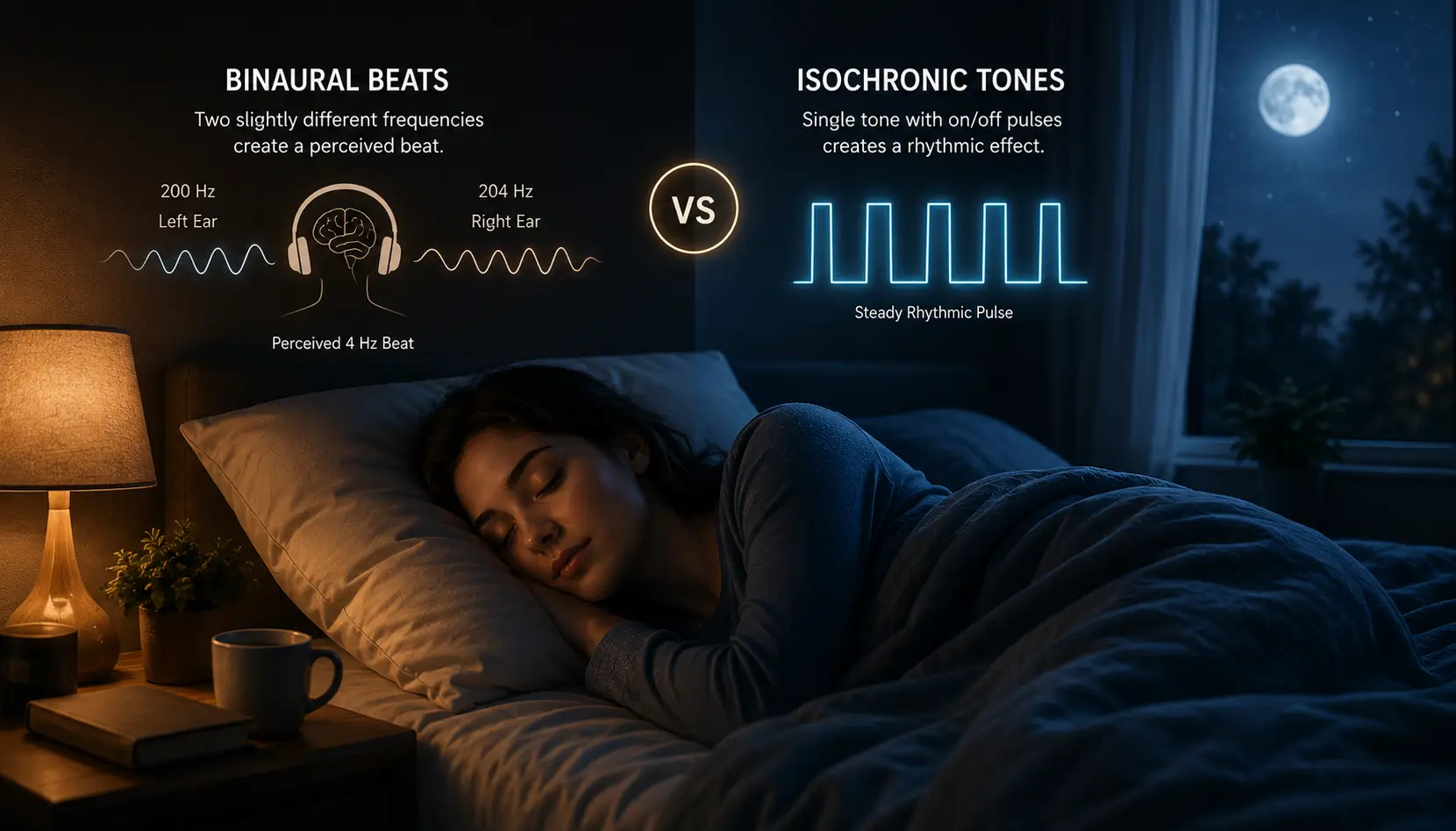
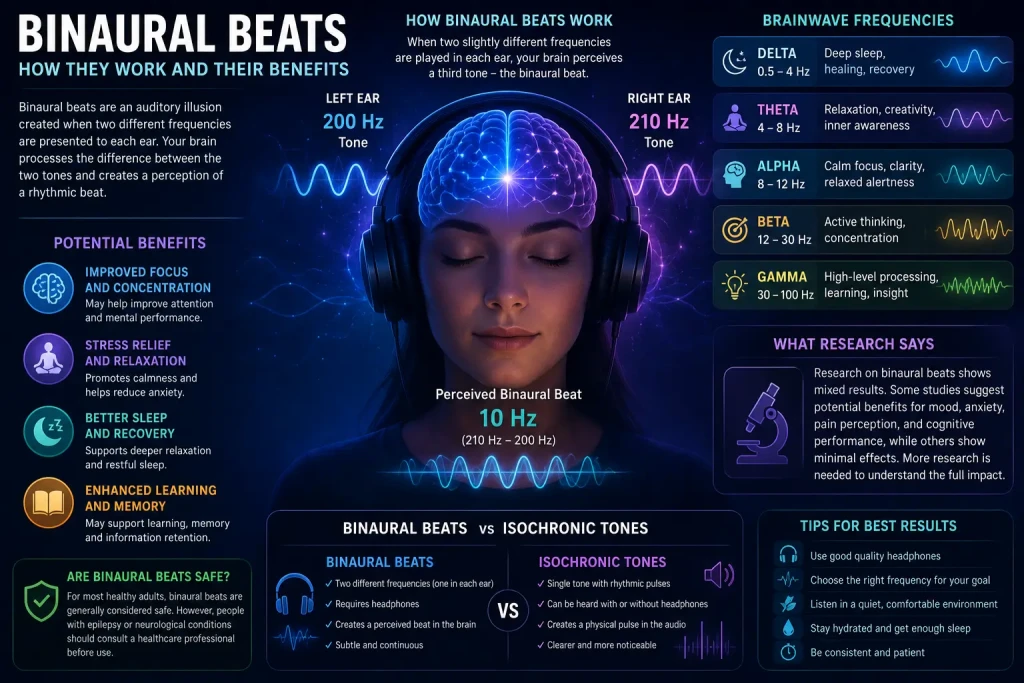
Binaural beats are an auditory effect created when each ear hears a slightly different tone.
For example, if one ear hears 200 Hz and the other ear hears 210 Hz, the brain may perceive a 10 Hz difference. This perceived difference is often discussed as the binaural beat frequency.
Because the effect depends on separate signals reaching each ear, binaural beats usually require headphones.
They are often discussed in relation to:
- Focus
- Relaxation
- Meditation
- Sleep preparation
- Creative work
- Mental clarity
Related guide:
Brainwave Entrainment Explained: How Sound Shapes Your Mental State
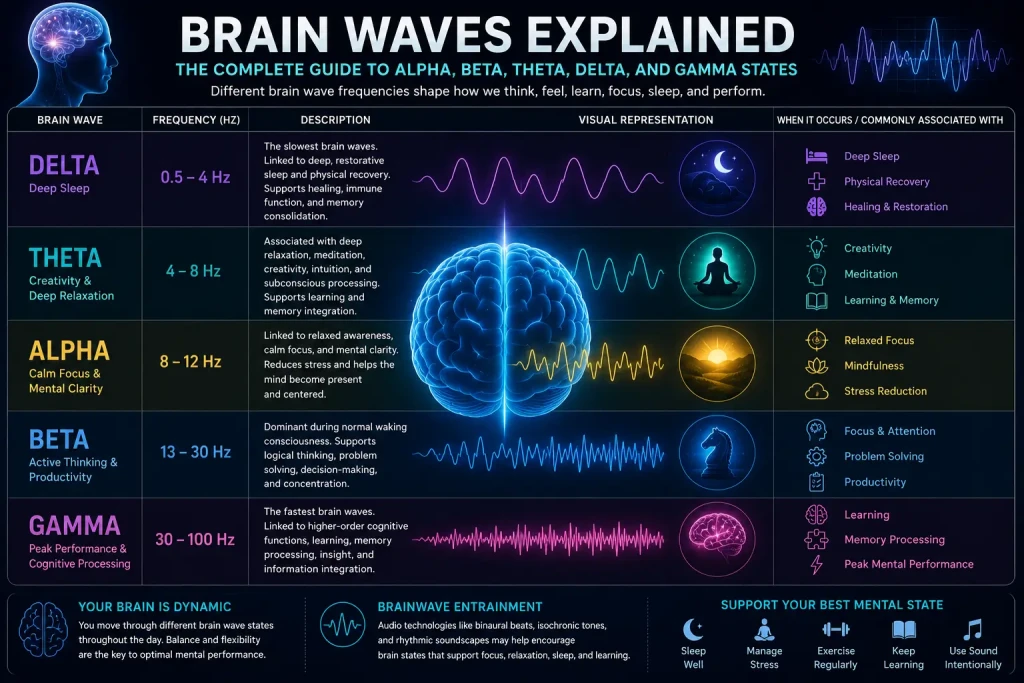
To better understand how sound-based mental states relate to brain activity, read our guide to the different types of brain waves and how they affect focus, relaxation, and sleep.
🧠 How Binaural Beats May Support Focus
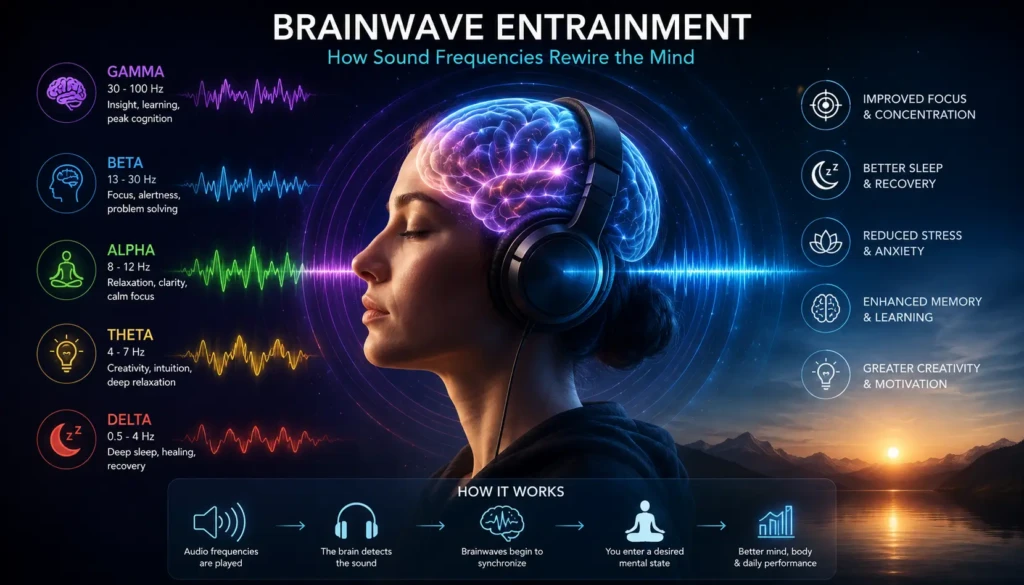
The idea behind binaural beats is connected to brainwave entrainment.
Brainwave entrainment refers to the concept that rhythmic sensory stimulation may influence the brain’s electrical activity patterns for some people. In simple terms, repeated audio rhythms may help guide the brain toward states associated with calmness, alertness, or focused attention.
For concentration, the goal is not to “force” the brain into one perfect frequency. A focused mind depends on many things, including sleep, stress levels, emotional state, motivation, nutrition, environment, and task difficulty.
Still, structured audio may help some listeners by reducing environmental distractions and creating a more consistent mental cue for deep work.
If you are interested in immersive work environments, read our guide to audio environments for focus and deep work.
For a deeper look at calm concentration and relaxed attention, explore our guide to alpha brain waves and mental clarity.
⚡ Best Binaural Beat Frequencies for Focus
Different frequency ranges are commonly associated with different mental states. For focus and concentration, the most discussed ranges are usually alpha, beta, and gamma.
1. Alpha Range for Calm Focus
Alpha activity is commonly associated with relaxed awareness. This state may be useful when you want to feel calm but not sleepy.
Alpha-style audio is often used for:
- Reading
- Creative writing
- Light study
- Meditation before work
- Reducing mental tension before a task
If your problem is stress, overthinking, or mental noise, alpha-focused audio may feel more comfortable than intense productivity tracks.
Related article:
Alpha Brain Waves and Relaxed Focus
2. Beta Range for Active Concentration
Beta activity is commonly linked with active thinking, problem solving, and alert attention.
Many people use beta-oriented binaural beats when working on tasks that require mental engagement, such as studying, planning, editing, coding, or analytical work.
However, stronger stimulation is not always better. If a track feels tense, irritating, or mentally exhausting, it may not be the right choice for your nervous system or your current task.
3. Gamma Range for High-Level Processing
Gamma activity is often discussed in relation to information processing, attention, and cognitive integration.
Gamma-focused audio is popular among people who want sharper mental engagement, although individual results can vary widely.
For demanding work sessions, gamma-style sound may be useful for some listeners, especially when combined with a clear task, a distraction-free environment, and short timed focus blocks.
Related article:
Gamma Brain Waves and Cognitive Performance
🎯 Which Frequency Should You Choose?
The best binaural beats for focus depend on what kind of focus problem you are trying to solve.
- If you feel anxious or scattered: start with alpha-style audio.
- If you feel tired but need to work: try gentle beta-style audio.
- If you need deep mental engagement: experiment carefully with gamma-style audio.
- If you are trying to sleep: avoid focus-oriented tracks and use sleep-specific audio instead.
Focus is not one single state. Sometimes the brain needs calm. Sometimes it needs alertness. Sometimes it needs a better environment, not more stimulation.
📚 Best Uses for Binaural Beats for Concentration
Binaural beats may be most useful when paired with a specific work routine rather than played randomly in the background all day.
Common use cases include:
- Studying for exams
- Reading difficult material
- Writing articles or essays
- Programming or technical work
- Design and creative planning
- Deep work sessions
- Meditation before focused work
For better results, choose one task before pressing play. The audio should support the session, not become another form of distraction.
🕒 A Simple 25-Minute Focus Routine
Here is a practical way to test binaural beats without overcomplicating the process:
- Choose one task only.
- Put your phone away or turn on Do Not Disturb.
- Use headphones at a comfortable volume.
- Play a focus-oriented binaural beat track.
- Work for 25 minutes without switching tasks.
- Take a short break and notice how you feel.
This method works well because it connects the audio with a repeatable behavior. Over time, the sound can become a cue that tells your brain, “Now it is time to focus.”
🔊 Binaural Beats vs Regular Focus Music
Regular focus music can be helpful, especially if it is calm, repetitive, and free from distracting vocals.
Binaural beats are different because they use slightly different tones in each ear to create a perceived frequency difference. This is why headphones are usually recommended.
Some people prefer binaural beats because the structure feels more intentional. Others prefer ambient music, brown noise, nature sounds, or isochronic tones.
There is no single best option for everyone.
Related comparison:
Binaural vs Isochronic Focus: Which Audio Method Works Better?
🌿 Why Calm Matters for Better Concentration
Many people assume focus means pushing harder.
But concentration often improves when the mind feels less overloaded. A nervous, tense, or overstimulated brain may jump between tasks even when motivation is high.
This is why calmer sound environments can sometimes help more than aggressive productivity tracks.
Good focus usually comes from a balance of:
- Enough alertness to stay engaged
- Enough calmness to avoid mental chaos
- Enough structure to prevent distraction
- Enough recovery to avoid burnout
Related article:
Mental Clarity and Audio Environments
🚀 Where Genius Wave Fits Into Focus Audio
Some listeners prefer simple single-frequency binaural beat tracks. Others prefer more layered neuroacoustic audio experiences that combine rhythm, atmosphere, and guided sound design.
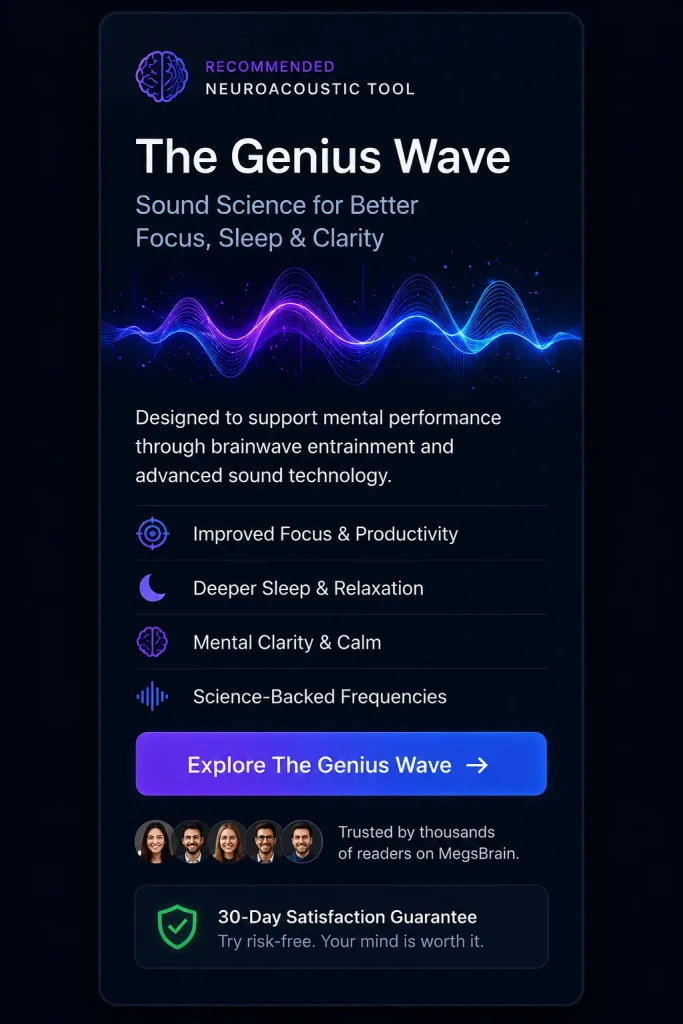
One example is The Genius Wave audio program, which uses structured sound environments inspired by brainwave concepts, mental clarity, and focus support.
This type of program may be useful if you want something more polished than basic tone-based tracks, especially for short daily listening routines.
As always, the best results usually come when audio is combined with healthy habits, consistent sleep, realistic expectations, and a clear work routine.
🔬 What Does Research Say?
Research on binaural beats and brainwave entrainment is still developing. Some studies suggest possible effects on attention, mood, anxiety, or memory-related tasks, while other findings are mixed.
That means binaural beats should be viewed as a possible support tool, not a guaranteed cognitive upgrade.
Useful research starting points:
https://www.frontiersin.org/articles/10.3389/fnhum.2019.00425/full
https://www.ncbi.nlm.nih.gov/pmc/articles/PMC4428073/
https://pubmed.ncbi.nlm.nih.gov/11191043/
⚠️ Safety Tips Before Listening
Most people use binaural beats casually without issue, but it is still smart to listen carefully and avoid extreme volume.
- Use a comfortable listening level.
- Stop if you feel dizzy, irritated, or uncomfortable.
- Do not use focus tracks while driving or operating machinery.
- Avoid long sessions at high volume.
- Talk to a medical professional if you have epilepsy, seizure history, or serious neurological concerns.
Related guide:
Are Binaural Beats Safe?
✅ How to Get Better Results
Binaural beats work best when they are part of a larger focus system.
Try combining them with:
- A clean workspace
- One clear task
- Short work blocks
- Reduced notifications
- Regular breaks
- Good sleep
- A consistent listening routine
The goal is not to depend on audio for every task. The goal is to use sound as a cue that helps your brain enter a more focused environment.
For higher-frequency states linked with attention and cognitive performance, see our guide to gamma brain waves and cognitive performance.
📌 Final Thoughts
The best binaural beats for focus and concentration are not always the loudest, fastest, or most intense tracks.
For many people, the most effective audio is the one that helps reduce distraction, create mental consistency, and support a repeatable deep work habit.
Alpha-style audio may help when your mind feels tense. Beta-style audio may support active concentration. Gamma-style audio may be worth testing for more demanding mental work.
But the real power comes from the routine around the sound.
If you want a more structured audio experience, The Genius Wave audio program may be worth exploring as part of a simple daily focus practice.
Related Articles
Related Posts
Stay Informed With the Latest & Most Important News
Previous Post
Next Post