
Now Reading: Sound Frequencies and Brainwave Activity Explained
-
01
Sound Frequencies and Brainwave Activity Explained
Sound Frequencies and Brainwave Activity Explained
🎧 Understanding Sound Frequencies
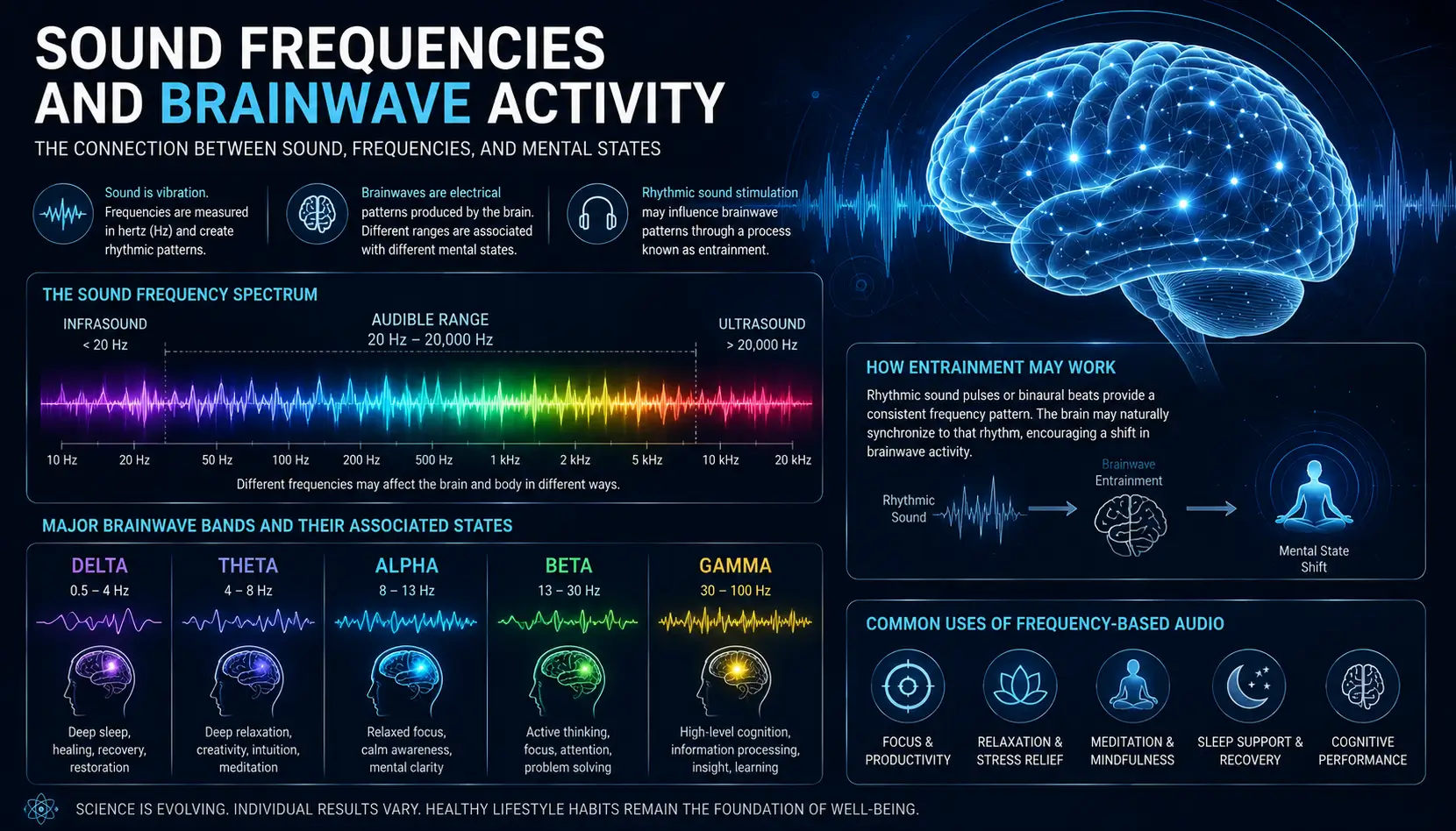
Sound frequencies are vibrations measured in hertz (Hz) that the human ear and nervous system may perceive in different ways.
Modern discussions about sound frequencies often explore how audio environments may influence relaxation, focus, and mental states.
Sound-based environments are commonly connected to:
- Focus
- Relaxation
- Meditation
- Sleep support
- Mindfulness
- Cognitive wellness
Interest in sound frequencies has grown alongside modern conversations about stress management, productivity, and mental recovery.
Related guide:
The Science of Brainwave Entrainment and Mental States
🧠 What Are Brain Waves?
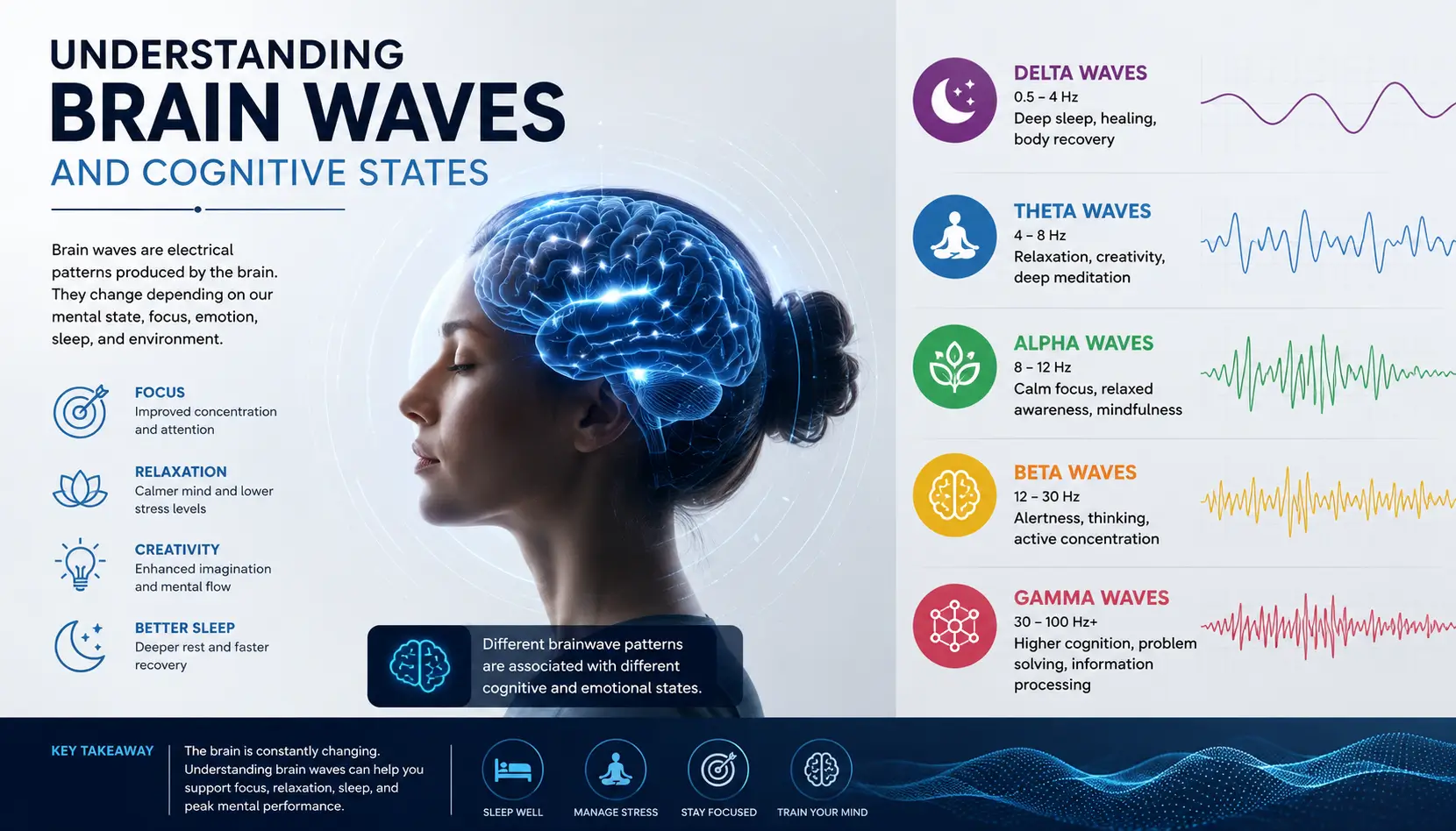
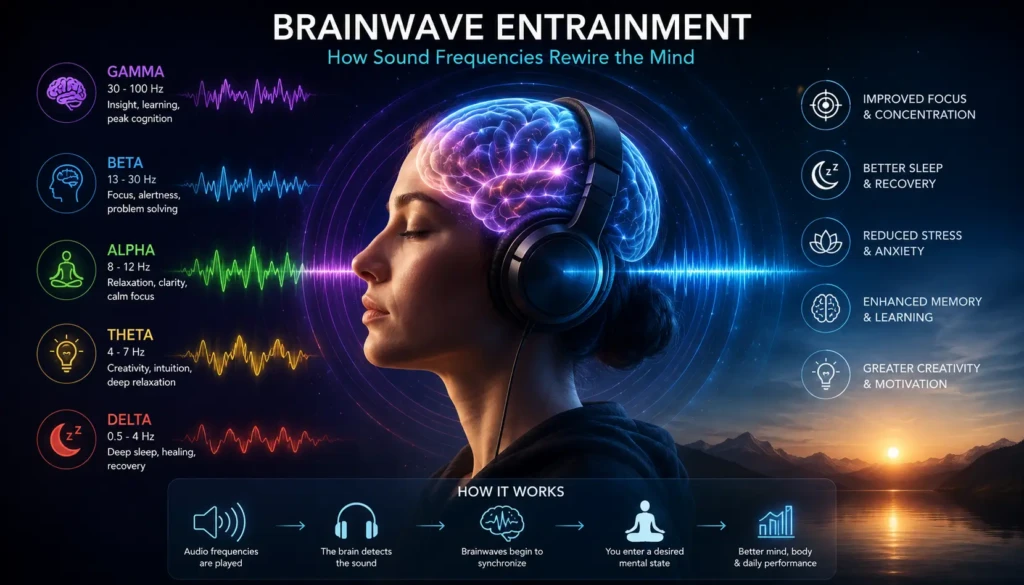
The brain naturally produces electrical activity known as brain waves.
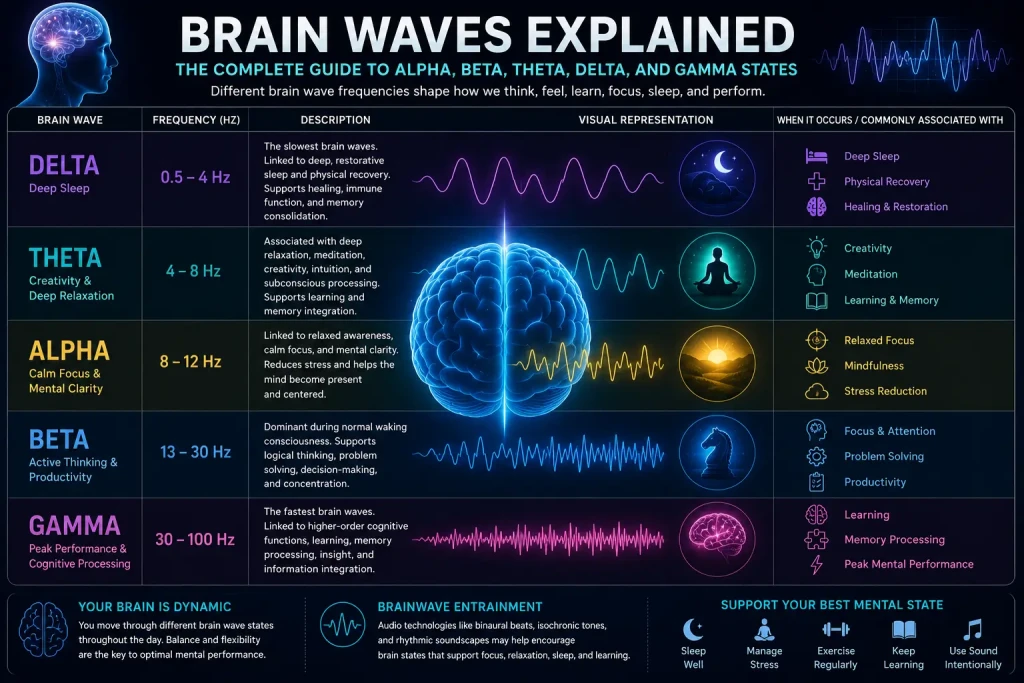
Different brainwave ranges are commonly associated with different mental conditions.
- Delta waves — deep sleep and recovery
- Theta waves — relaxation and creativity
- Alpha waves — calm focus
- Beta waves — active thinking
- Gamma waves — cognitive processing
These patterns continuously shift depending on attention, emotional state, stress levels, and sleep quality.
Related article:
Understanding Brain Waves and Cognitive States
⚡ How Sound and Brainwave Concepts Are Connected
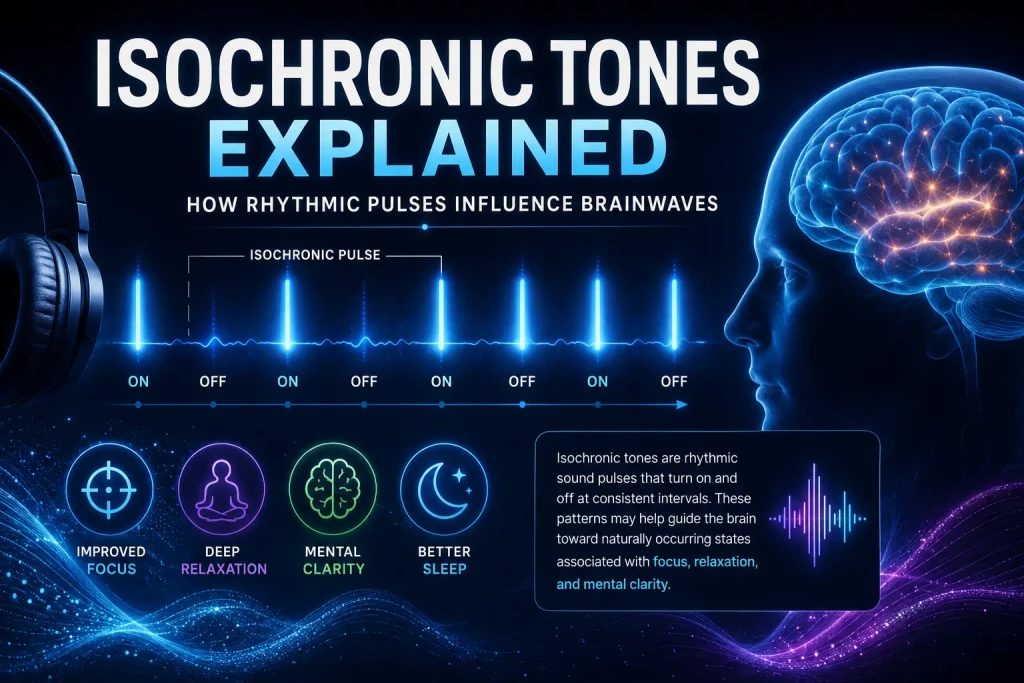
Some audio systems are designed around rhythmic stimulation patterns inspired by brainwave research.
This concept is commonly discussed under the term:
brainwave entrainment.
The theory suggests that rhythmic sensory stimulation may influence mental-state patterns for some listeners.
Common examples include:
- Binaural beats
- Isochronic tones
- Rhythmic pulse audio
- Ambient meditation soundscapes
Research remains ongoing, and individual responses vary significantly.
🎯 Focus, Productivity, and Audio Environments
Modern environments constantly compete for attention.
Notifications, multitasking, digital overload, and background noise may increase cognitive fatigue and reduce concentration quality.
Some people use structured sound environments to create calmer focus conditions with fewer distractions.
Related article:
Focus, Productivity, and Brainwave Activity
🌿 Alpha States and Relaxed Focus
Alpha-associated states are often discussed in relation to calm concentration and reduced mental tension.
Many people report stronger creative flow when they feel mentally relaxed rather than overstimulated.
Calmer audio environments are sometimes used during:
- Reading
- Writing
- Meditation
- Creative work
- Deep focus sessions
Related reading:
Alpha Brain Waves and Relaxed Focus
🌙 Sleep, Recovery, and Relaxation Audio
Some sound environments are designed for nighttime relaxation and sleep preparation.
These may include:
- Ambient soundscapes
- White noise
- Low-frequency rhythmic audio
- Calming meditation environments
Sleep quality strongly influences emotional balance, focus, and cognitive endurance.
Related guide:
Delta Waves and Deep Sleep
🚀 Gamma Activity and Cognitive Performance
Gamma activity is commonly explored in neuroscience research related to attention and information processing.
Researchers sometimes study gamma synchronization during mentally demanding tasks involving concentration and cognitive integration.
However, mental performance depends on many broader factors including sleep quality, stress management, emotional recovery, and healthy attention habits.
Related article:
Gamma Brain Waves and Cognitive Performance
📱 Modern Attention and Cognitive Overload
Constant digital stimulation may reduce sustained attention and increase mental fatigue.
Many people now intentionally create calmer environments by reducing distractions and using structured focus routines.
Healthy cognitive habits often improve long-term mental performance more effectively than aggressive stimulation strategies.
🔬 What Does Research Actually Suggest?
Research into sound frequencies and brainwave entrainment remains an evolving field.
Some studies suggest rhythmic auditory stimulation may influence attention or relaxation patterns for certain individuals.
However, modern neuroscience does not support exaggerated claims about instantly unlocking hidden mental abilities through one sound frequency.
Healthy sleep, emotional balance, stress management, and sustainable routines remain the strongest foundation for cognitive wellness.
🌊 Why Frequency-Based Audio Continues to Grow
Many people enjoy structured audio environments because they may help create calmer conditions for focus, relaxation, or mindfulness.
Some systems combine atmospheric sound design with rhythmic pulse structures inspired by cognitive and relaxation concepts.
One example is:
The Genius Wave audio program, which combines layered sound environments inspired by focus, relaxation, and mental clarity concepts.
📌 Final Thoughts
Sound frequencies and brainwave activity remain widely discussed topics in modern conversations about focus, relaxation, and cognitive wellness.
Although research continues to evolve, many people enjoy using structured audio systems during study sessions, meditation routines, or nighttime relaxation habits.
The strongest foundation for long-term mental performance still comes from healthy routines, balanced recovery, emotional wellness, and sustainable attention habits.
🔗 Related Articles
Related Posts
Stay Informed With the Latest & Most Important News
Previous Post
Next Post