
Now Reading: Mental Clarity and Audio Environments: Can Sound Reduce Cognitive Overload?
-
01
Mental Clarity and Audio Environments: Can Sound Reduce Cognitive Overload?
Mental Clarity and Audio Environments: Can Sound Reduce Cognitive Overload?
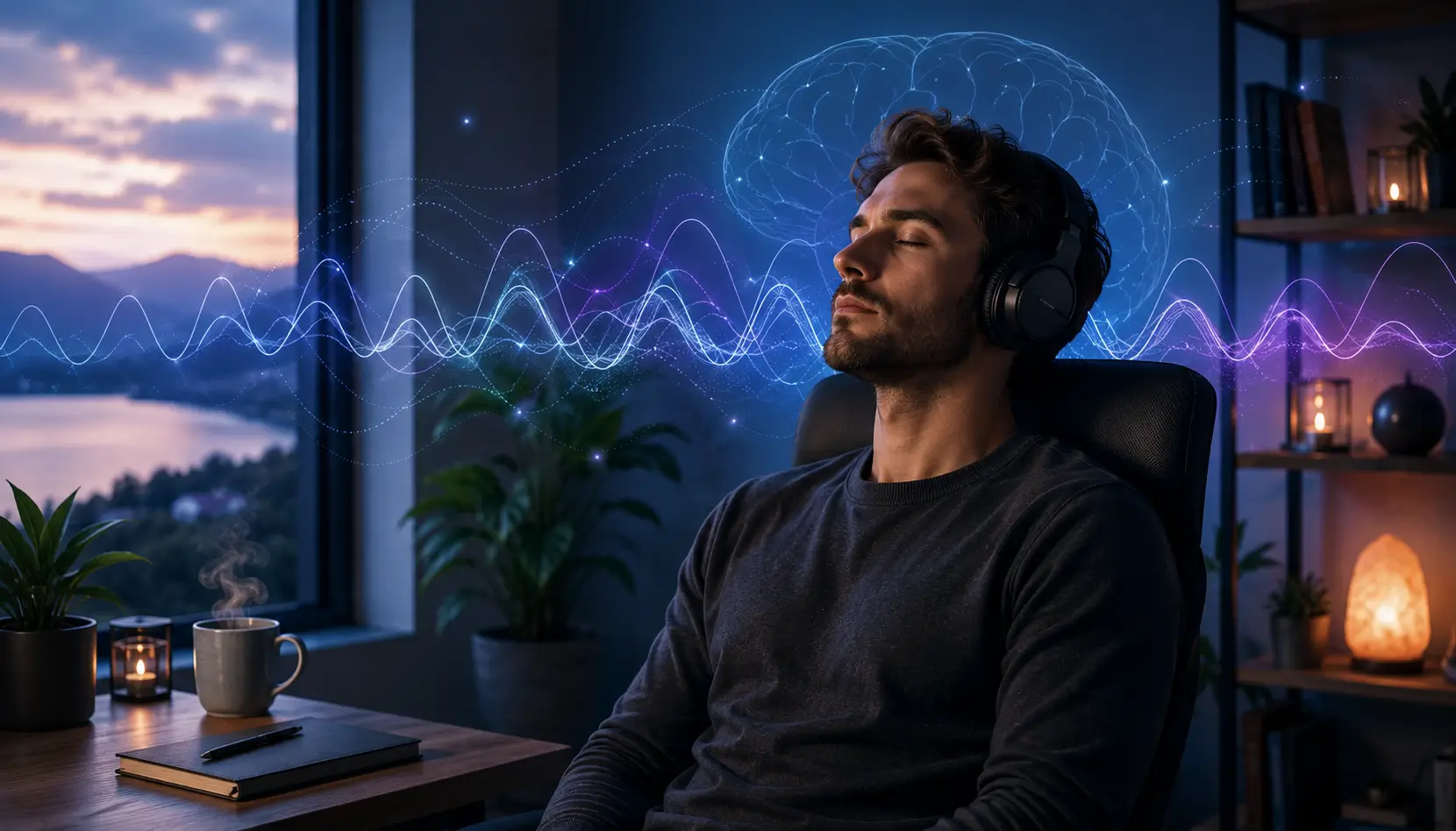
Mental overload has become normal for many people.
Constant notifications, endless scrolling, multitasking, background noise, and digital stress can leave the brain feeling mentally crowded even during quiet moments.
That is one reason audio environments designed for focus, relaxation, and mindfulness have become increasingly popular.
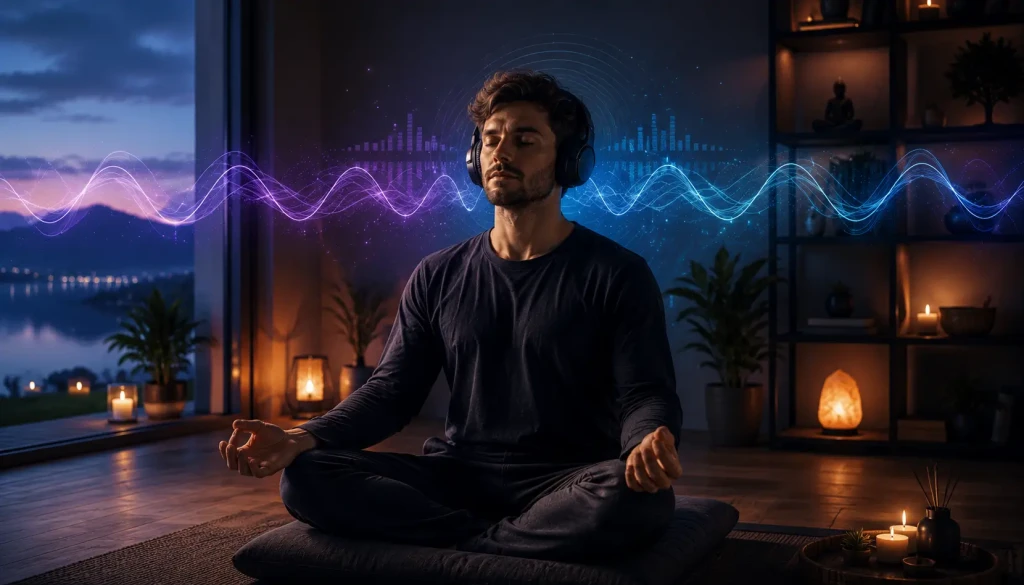
For some people, the right sound environment may help reduce distraction, calm mental noise, and support clearer thinking throughout the day.
Audio alone will not solve burnout or chronic stress. But it may help create conditions that feel calmer, more stable, and mentally easier to work inside.
Affiliate disclosure: This article may include affiliate links. If you choose to buy through them, Megs Brain may earn a commission at no extra cost to you.
🧠 What Is Mental Clarity?
Mental clarity is difficult to define because people experience it differently.
For some, it means calm focus. For others, it means reduced anxiety, fewer racing thoughts, better concentration, or simply feeling mentally lighter.
In practice, mental clarity often improves when the brain experiences:
- Less distraction
- Lower stress
- Better sleep
- Reduced sensory overload
- More structured routines
- Intentional recovery periods
This is where sound environments may become useful.
🎧 How Audio Environments Affect Focus and Mood
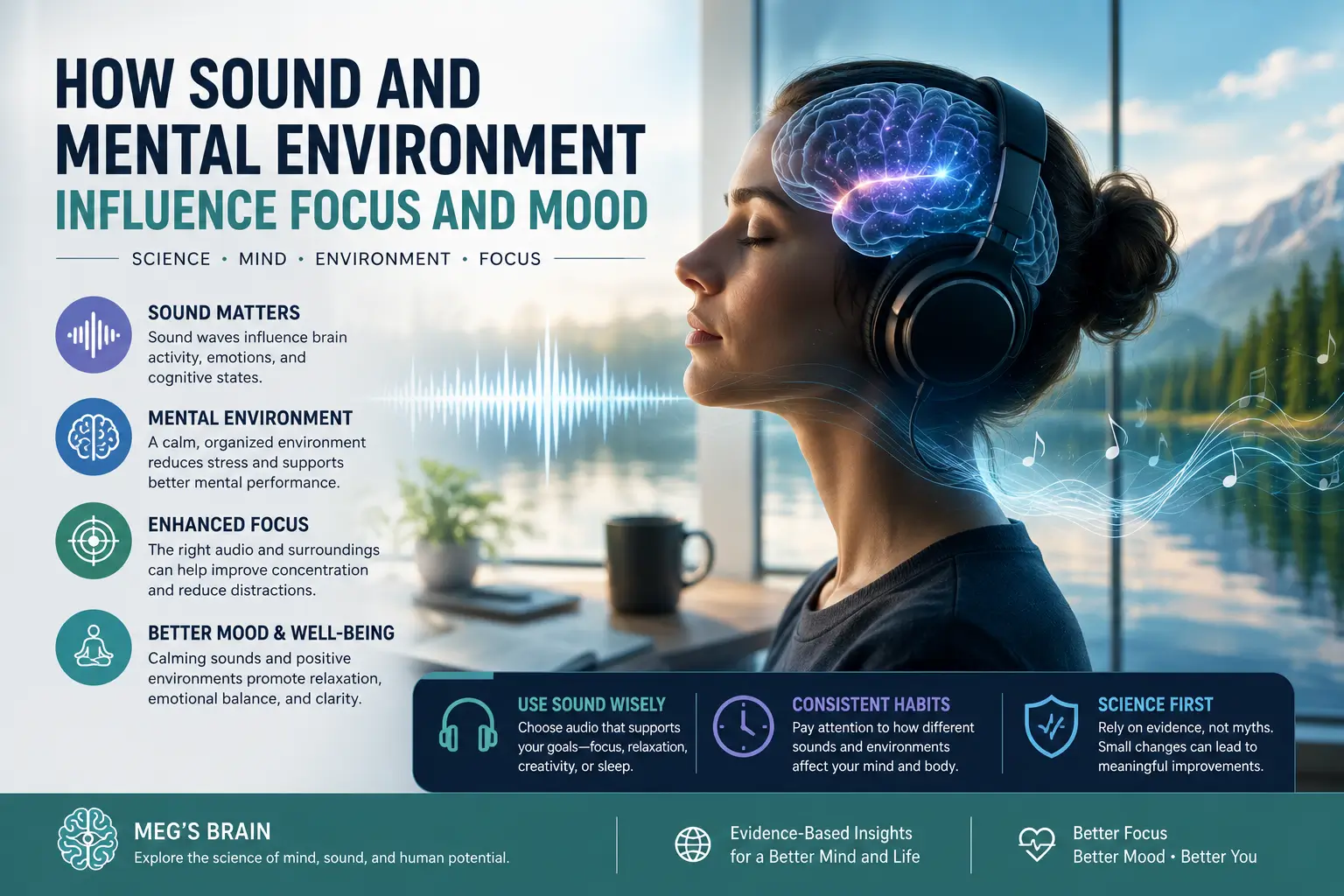
The brain constantly reacts to sound.
Chaotic environments, loud interruptions, unpredictable conversations, and constant alerts can increase mental fatigue over time.
Calmer audio environments may help some people by:
- Reducing perceived distraction
- Masking environmental noise
- Creating emotional consistency
- Supporting meditation or relaxation
- Helping transition into deep work
- Encouraging slower mental pacing
The effect is often less about “hacking the brain” and more about shaping a better mental atmosphere.
🌊 Types of Audio Used for Mental Clarity
Different people respond differently to sound.
Common audio environments used for mental clarity include:
- Ambient soundscapes
- Brown noise
- Rain sounds
- Ocean waves
- Binaural beats
- Isochronic tones
- Minimal instrumental music
- Meditation audio
The best option is usually the sound that feels supportive without becoming distracting.
⚡ Brainwave Audio and Mental Clarity
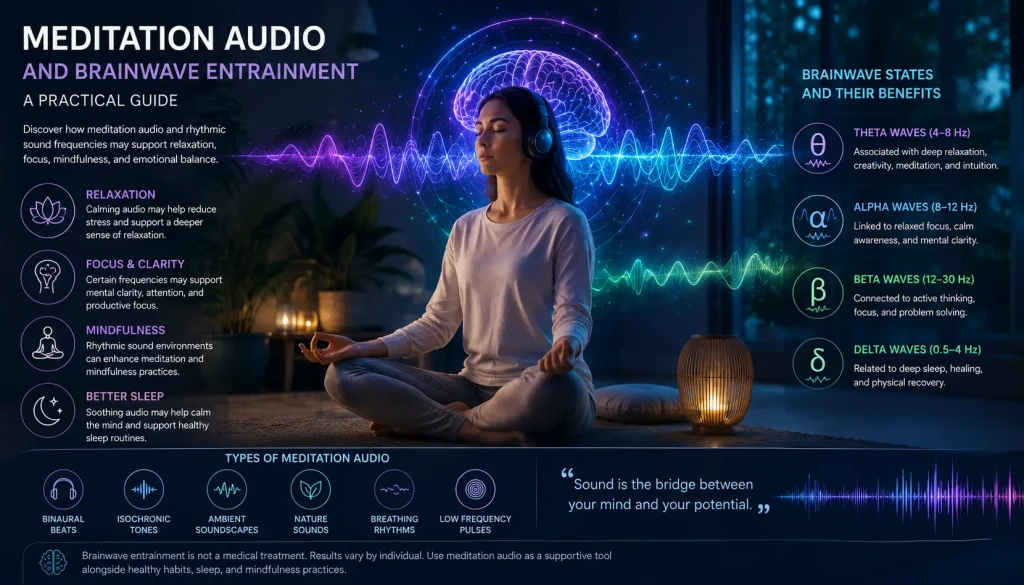
Some focus and relaxation audio is designed around brainwave entrainment concepts.
Brainwave entrainment refers to the idea that rhythmic sensory stimulation may influence mental-state activity for some listeners.
Different frequency ranges are commonly associated with different experiences:
- Alpha waves: relaxed awareness and calm focus
- Theta waves: meditation and deep relaxation
- Beta waves: active thinking and concentration
- Gamma waves: intense cognitive engagement
For mental clarity, many people prefer calmer alpha-oriented environments rather than highly stimulating focus tracks.
Related guide:
Brainwave Entrainment Explained
🧘 Why Calmness Often Improves Focus
People often assume productivity comes from pushing harder.
But in many cases, concentration improves when mental tension decreases.
A stressed brain may constantly switch tasks, overthink, or react emotionally to small distractions. A calmer nervous system usually handles focus more efficiently.
This is why mindfulness practices, meditation, calmer workspaces, and softer audio environments often improve mental performance indirectly.
📚 Best Situations for Mental Clarity Audio
Audio environments may be especially useful during:
- Deep work sessions
- Meditation
- Reading
- Writing
- Studying
- Stress recovery periods
- Evening wind-down routines
- Low-energy work sessions
The goal is not to eliminate all thoughts. The goal is usually to reduce unnecessary mental friction.
🎵 Binaural Beats vs Ambient Audio
Binaural beats and ambient sound environments are often grouped together, but they are different.
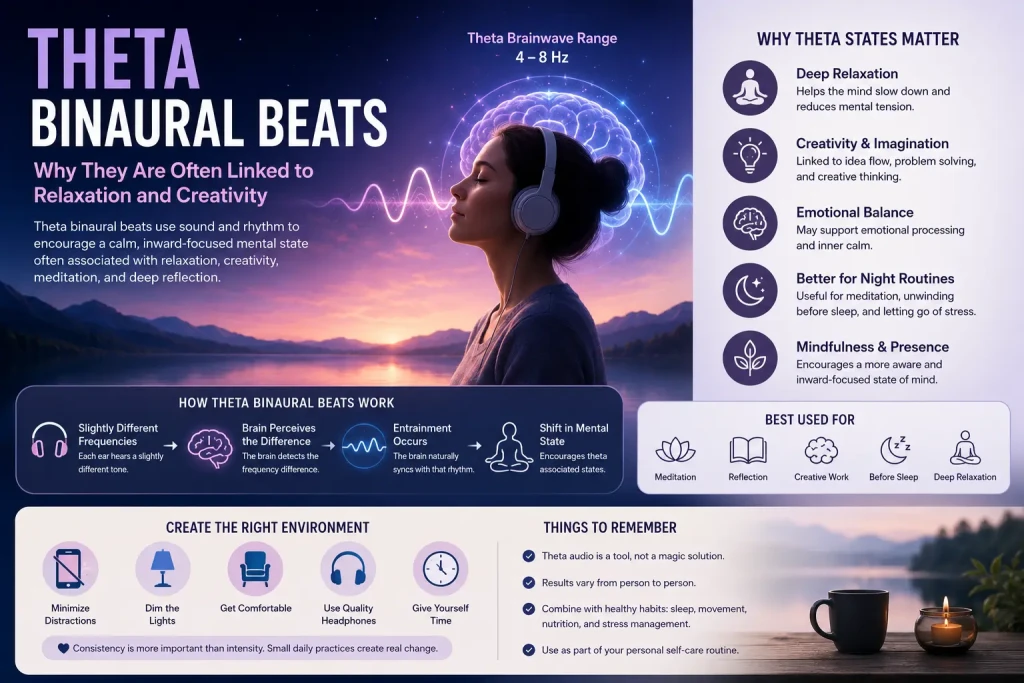
Binaural beats use slightly different tones in each ear to create a perceived rhythmic beat.
Ambient audio focuses more on atmosphere and emotional consistency.
Some people prefer structured frequency-based audio. Others focus better with soft rain, brown noise, or cinematic ambient soundscapes.
Related comparison:
Meditation Audio vs Relaxation Sounds
🚀 Where Genius Wave Fits Into Audio Environments
Some listeners prefer simple background sound. Others want a more layered neuroacoustic experience that combines rhythm, atmosphere, and brainwave-inspired sound design.
One example is The Genius Wave audio program, which uses structured sound environments inspired by mental clarity, focus, and relaxation concepts.
This type of layered audio may feel more immersive than simple tone-based tracks, especially for people who want calmer work or meditation environments.
🔬 What Does Research Suggest?
Research on sound environments, focus, and brainwave entrainment is still evolving.
Some studies suggest that rhythmic audio and controlled sound environments may influence mood, stress, concentration, or relaxation for certain people. Other findings remain mixed.
That means audio environments should be viewed as supportive tools rather than guaranteed cognitive upgrades.
Useful research starting points:
https://www.frontiersin.org/articles/10.3389/fnhum.2019.00425/full
https://www.ncbi.nlm.nih.gov/pmc/articles/PMC4428073/
https://pubmed.ncbi.nlm.nih.gov/11191043/
⚠️ Safe Listening Tips
Audio designed for mental clarity should feel calming and sustainable.
- Keep the volume comfortable.
- Take breaks during long listening sessions.
- Avoid extremely stimulating audio if you feel anxious.
- Use headphones responsibly.
- Speak with a professional if you have seizure history or neurological concerns.
Related guide:
Are Binaural Beats Safe?
📌 Final Thoughts
Mental clarity rarely comes from one perfect productivity trick.
It usually improves through better routines, reduced overload, calmer environments, healthier recovery habits, and more intentional focus practices.
Audio environments may help support those conditions by reducing distraction and creating a more stable mental atmosphere.
If you want a more immersive sound environment built around mental clarity and focus concepts, The Genius Wave audio program may be worth exploring as part of a calmer daily routine.
🔗 Related Articles
Related Posts
Stay Informed With the Latest & Most Important News
Previous Post
Next Post