
Now Reading: Recent Neuroscience Discoveries About Focus, Attention, and Cognitive Performance
-
01
Recent Neuroscience Discoveries About Focus, Attention, and Cognitive Performance
Recent Neuroscience Discoveries About Focus, Attention, and Cognitive Performance
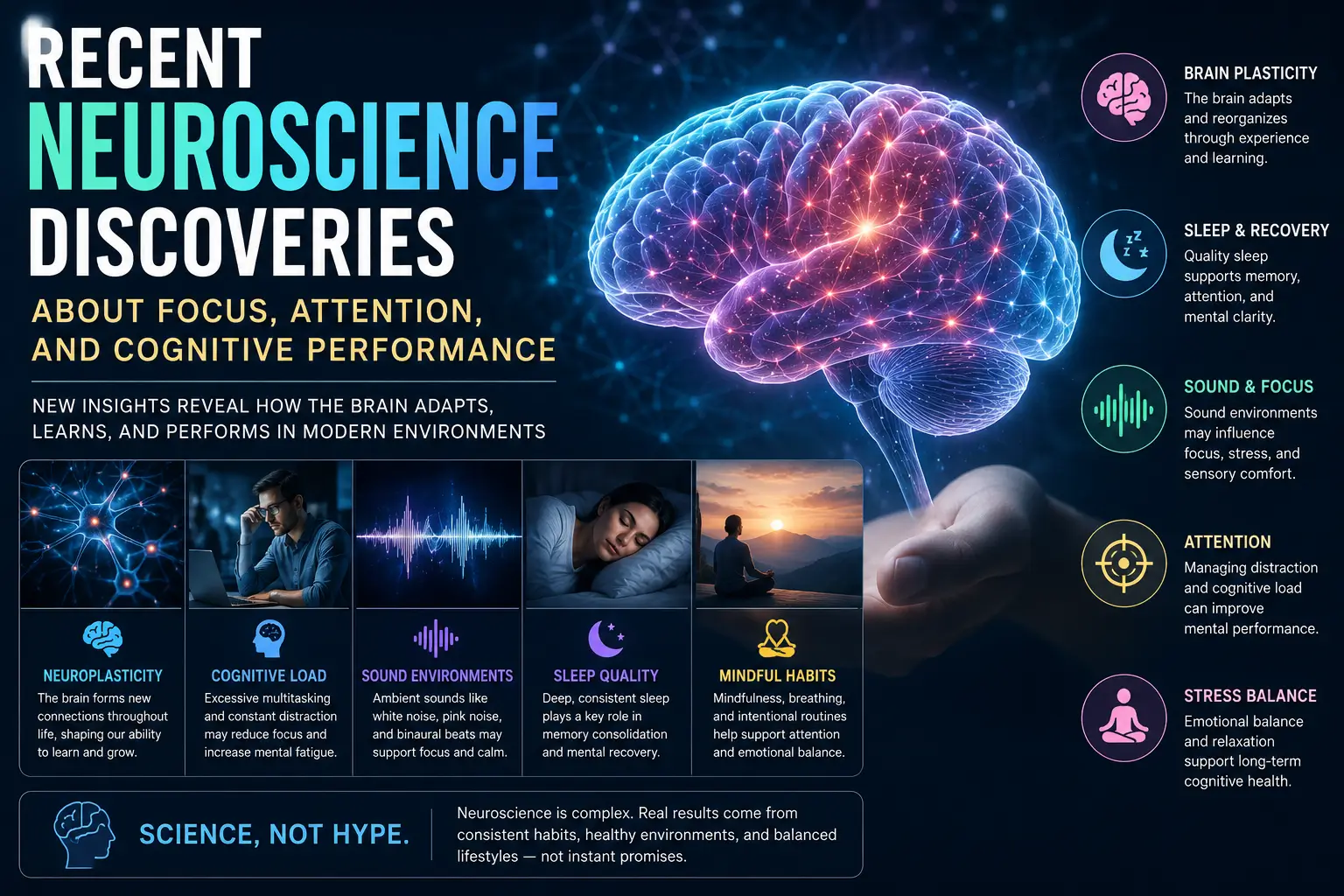
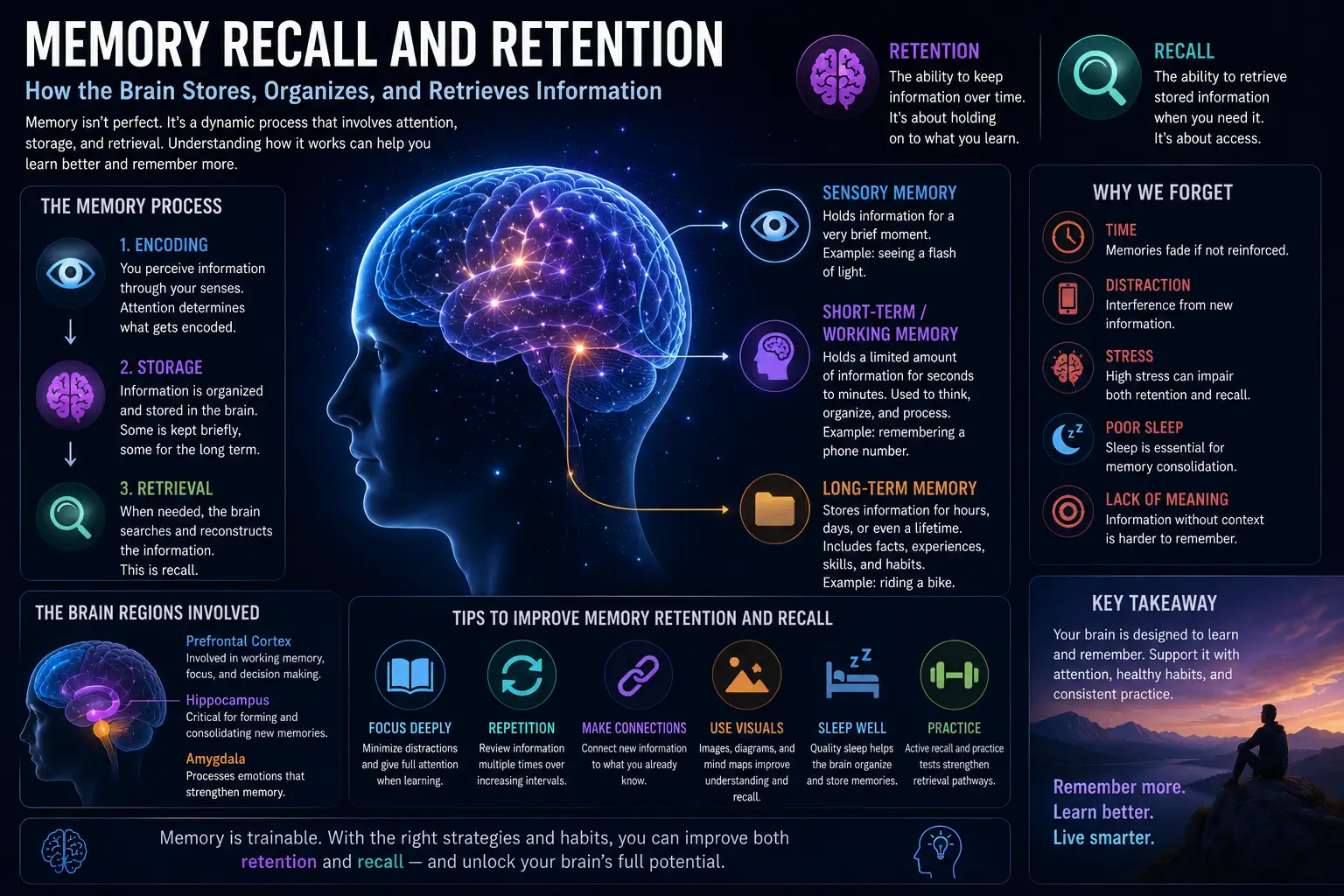
Neuroscience continues revealing how attention, sensory processing, stress, and environment influence human cognition.
Modern research increasingly explores how the brain responds to:
- distraction,
- multitasking,
- sleep quality,
- sensory overload,
- emotional stress,
- and environmental stimulation.
As digital environments become more demanding, scientists are studying new ways people may support:
- focus,
- cognitive balance,
- emotional regulation,
- and mental performance.
But what do recent neuroscience discoveries actually suggest?
🌊 The Brain Constantly Adapts to Environment
The human brain continuously responds to:
- sound,
- light,
- emotional context,
- routine,
- sleep patterns,
- and sensory stimulation.
Research suggests cognitive performance is not shaped by a single factor alone.
Instead, mental clarity often depends on broader conditions including:
- rest,
- attention management,
- stress regulation,
- and environmental comfort.
This is one reason modern neuroscience increasingly studies:
- focus environments,
- sensory balance,
- and attention fatigue.

🔬 Attention and Cognitive Overload
Digital environments expose people to:
- notifications,
- multitasking,
- rapid information switching,
- and constant interruption.
Some researchers believe excessive cognitive fragmentation may contribute to:
- mental fatigue,
- reduced concentration,
- attentional stress,
- and emotional exhaustion.
As a result, interest in:
- mindfulness,
- deep work,
- focus routines,
- and distraction management
has grown rapidly.
Researchers also continue studying how brainwave states and mental performance may be connected to attention, stress regulation, and cognitive fatigue.
🎧 Sound and Cognitive Environment
Recent neuroscience research also explores how sound environments may influence:
- focus,
- stress perception,
- sensory comfort,
- and attentional stability.
Many people use:
- ambient sound,
- white noise,
- pink noise,
- binaural beats,
- or calming audio environments
while:
- studying,
- reading,
- meditating,
- or working.
Some listeners also experiment with neuroacoustic audio systems designed to support calmer focus and reduced sensory overload.
At the same time, exaggerated internet claims involving:
- instant intelligence,
- consciousness unlocking,
- or guaranteed brain transformation
should be approached carefully.
Some studies also explore how sound and mental environment research relates to sensory comfort and sustained concentration.
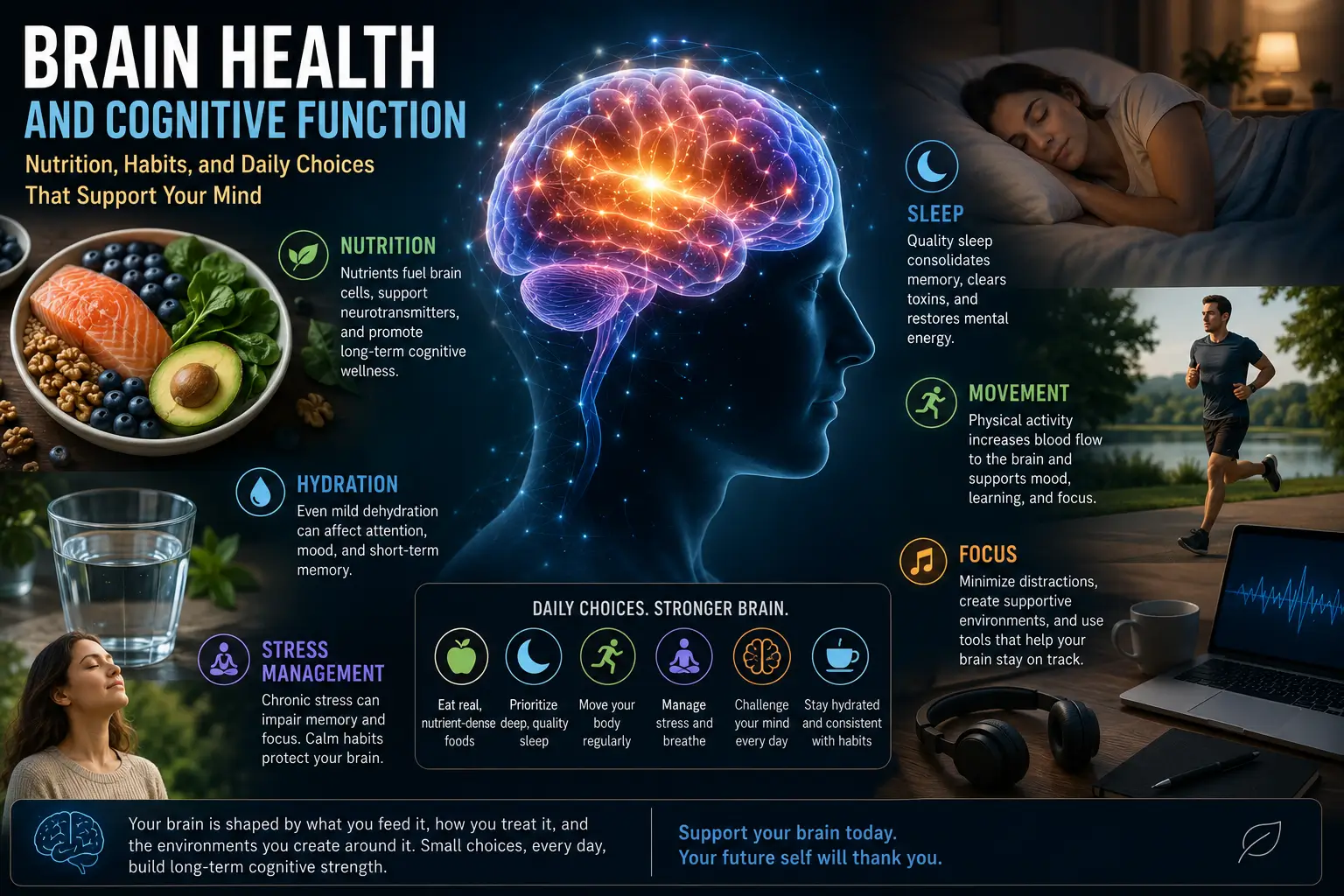
💤 Sleep and Mental Performance
Research consistently shows sleep quality plays a major role in:
- memory,
- attention,
- emotional balance,
- and cognitive recovery.
Poor sleep may affect:
- concentration,
- stress tolerance,
- reaction time,
- and mental clarity.
This is one reason neuroscience increasingly explores:
- nighttime sensory environments,
- sound masking,
- and relaxation routines.
You may also enjoy: Binaural Beats for Sleep and White Noise vs Pink Noise for more discussion about sound and sleep environments.
You may also be interested in the differences between white noise and pink noise for relaxation and focus environments.
⚡ Brain Plasticity and Learning
One of the most important discoveries in neuroscience involves:
neuroplasticity.
Neuroplasticity refers to the brain’s ability to adapt and reorganize through:
- learning,
- repetition,
- experience,
- and environmental interaction.
However, neuroplasticity is often misunderstood online.
Real cognitive adaptation is typically:
- gradual,
- complex,
- and influenced by many biological factors.
Quick-fix “brain rewiring” claims should be approached cautiously.
☁️ Focus Is Influenced by Multiple Factors
Mental performance depends on far more than motivation alone.
Factors influencing attention may include:
- emotional stress,
- sleep quality,
- environment,
- workload,
- physical health,
- and sensory stimulation.
This is why modern neuroscience increasingly emphasizes:
- sustainable routines,
- healthy focus habits,
- recovery,
- and balanced cognitive environments.
🌍 Why Interest in Cognitive Performance Keeps Growing
Modern lifestyles create increasing levels of:
- distraction,
- information overload,
- fragmented attention,
- and digital fatigue.
As a result, many people search for:
- healthier focus habits,
- calmer environments,
- improved concentration,
- and reduced mental overstimulation.
Neuroscience research continues exploring how:
- environment,
- routine,
- sound,
- and attention management
may influence mental well-being and cognitive comfort.
⚠️ Common Myths About Neuroscience and Mental Performance
Myth:
“Specific techniques instantly unlock the brain.”
Reality:
Cognitive performance is influenced by many interconnected biological and psychological factors.
Myth:
“One sound or frequency transforms intelligence.”
Reality:
Current scientific evidence does not support exaggerated transformation claims.
Myth:
“Mental performance depends entirely on willpower.”
Reality:
Sleep, stress, environment, and sensory balance all play major roles.
Final Thoughts
Recent neuroscience discoveries continue improving our understanding of:
- attention,
- sensory processing,
- stress,
- focus,
- and cognitive performance.
At the same time, realistic expectations remain important.
The healthiest perspective is viewing cognitive performance as the result of:
- environment,
- habits,
- recovery,
- emotional balance,
- and sustainable routines
rather than instant transformation techniques.
Related Articles
Related Posts
Stay Informed With the Latest & Most Important News