
Now Reading: Which Waves Help You Sleep? The Complete Sleep Frequency Guide
-
01
Which Waves Help You Sleep? The Complete Sleep Frequency Guide
Which Waves Help You Sleep? The Complete Sleep Frequency Guide
🌙 Why Brain Waves Matter During Sleep
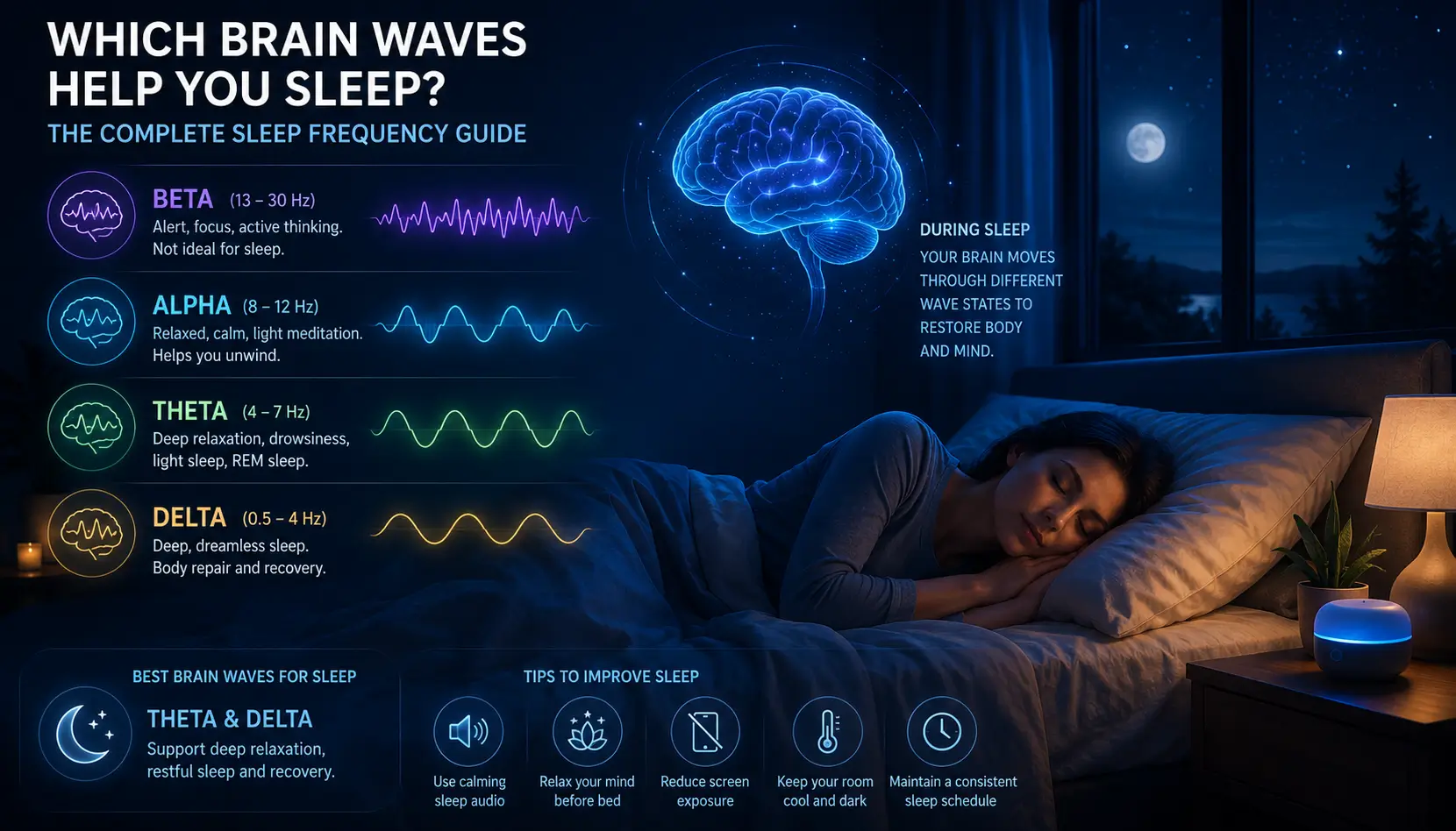
Sleep is not simply a passive state where the brain “shuts off.” During the night, the brain moves through multiple stages of activity associated with different brainwave patterns.
These changing brain states play important roles in:
- Physical recovery
- Memory processing
- Mental restoration
- Emotional regulation
- Cognitive performance
This is one reason interest in sleep-related brainwave activity has grown so rapidly in recent years.
Many people exploring sound-based sleep environments eventually encounter terms like delta waves, theta waves, binaural beats, and sleep frequencies.
But which brain waves are actually connected to sleep?
Let’s break it down clearly.
🧠 Understanding Brainwave States
The brain naturally produces electrical activity that can be measured as rhythmic wave patterns.
These patterns are usually grouped into several categories:
- Delta waves
- Theta waves
- Alpha waves
- Beta waves
- Gamma waves
Each state is associated with different types of mental activity.
Some are linked to alertness and concentration, while others are connected to relaxation or deep sleep.
Related guide:
Brainwave States and Mental Performance
😴 Delta Waves: The Deep Sleep State
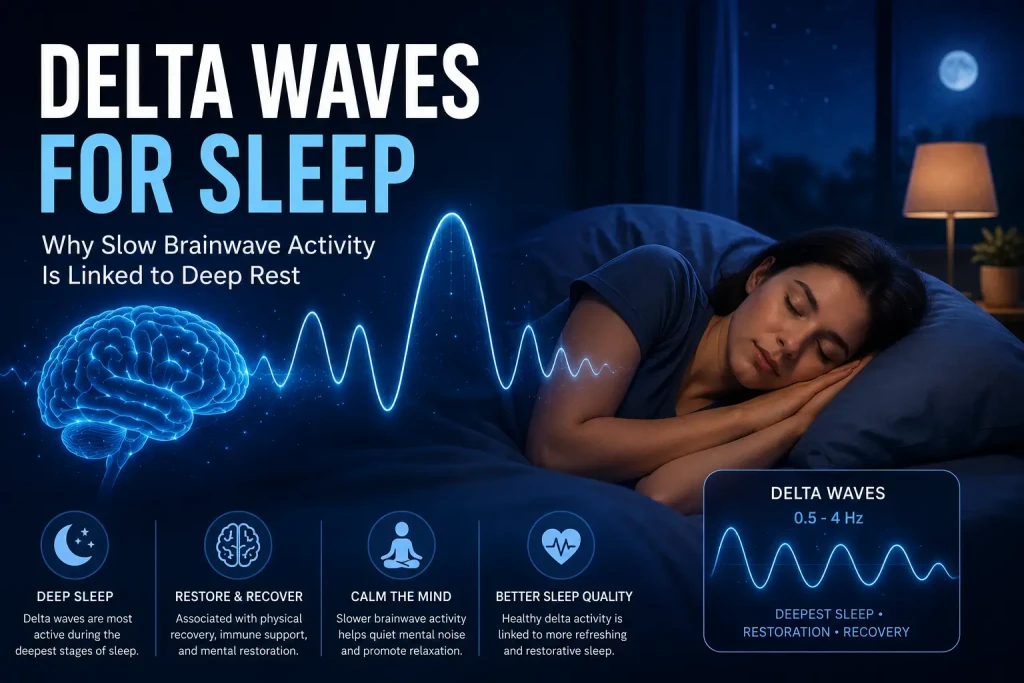
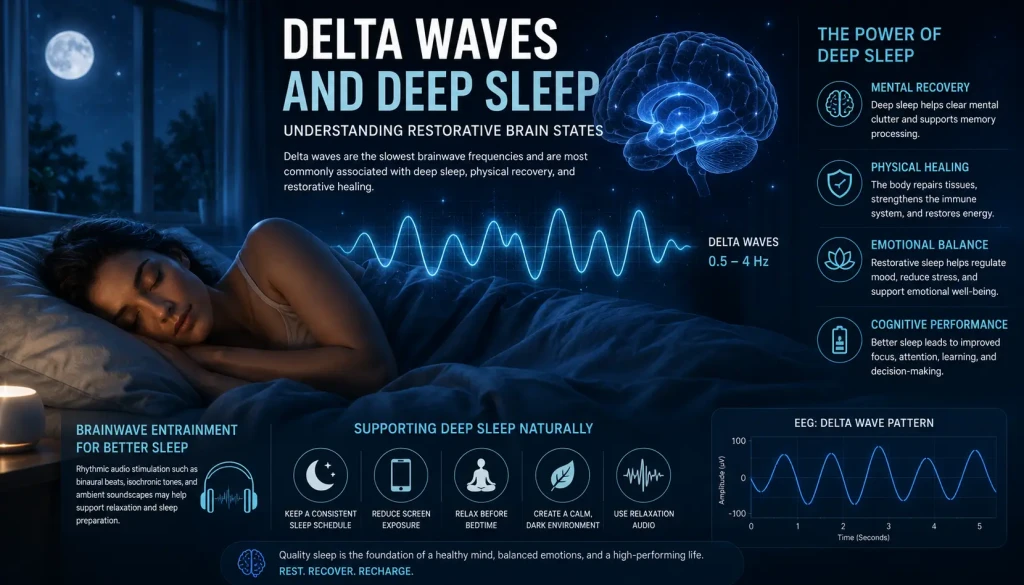
Delta waves are the slowest measurable brainwave patterns and are most strongly associated with deep sleep.
They are commonly linked to:
- Physical recovery
- Deep restorative sleep
- Reduced awareness
- Nervous system recovery
Delta activity is most active during the deepest stages of non-REM sleep.
This is the stage where the body performs much of its overnight restoration process.
Many sleep-focused audio environments use low-frequency pulse patterns inspired by delta activity.
Related article:
Delta Waves and Deep Sleep
🌌 Theta Waves and Sleep Transition
Theta waves are often associated with lighter sleep stages, relaxation, creativity, and meditation.
Theta activity commonly appears:
- During drowsiness
- Early sleep stages
- Deep relaxation
- Meditation sessions
Some listeners prefer theta-oriented sound environments during bedtime routines because they may feel calming without being overly intense.
Theta activity is also commonly discussed in relation to emotional relaxation and reduced mental tension.
Related reading:
Theta Waves and Relaxation
🎧 Can Brainwave Audio Help with Sleep?
Many sleep audio systems are designed around repetitive rhythmic stimulation.
These may include:
- Binaural beats
- Isochronic tones
- Brown noise
- Ambient sleep soundscapes
- Low-frequency pulse audio
The idea behind these systems is often connected to brainwave entrainment — the theory that the brain may respond to rhythmic external stimulation.
Some listeners report that repetitive sound environments help create a calmer nighttime atmosphere that feels less mentally stimulating than traditional music.
Related guide:
Brainwave Entrainment Explained
🌧️ White Noise, Brown Noise, and Sleep Sounds
Not all sleep audio is based on brainwave frequencies directly.
Many people use environmental sound masking such as:
- Brown noise
- White noise
- Rain sounds
- Ocean ambience
- Soft atmospheric audio
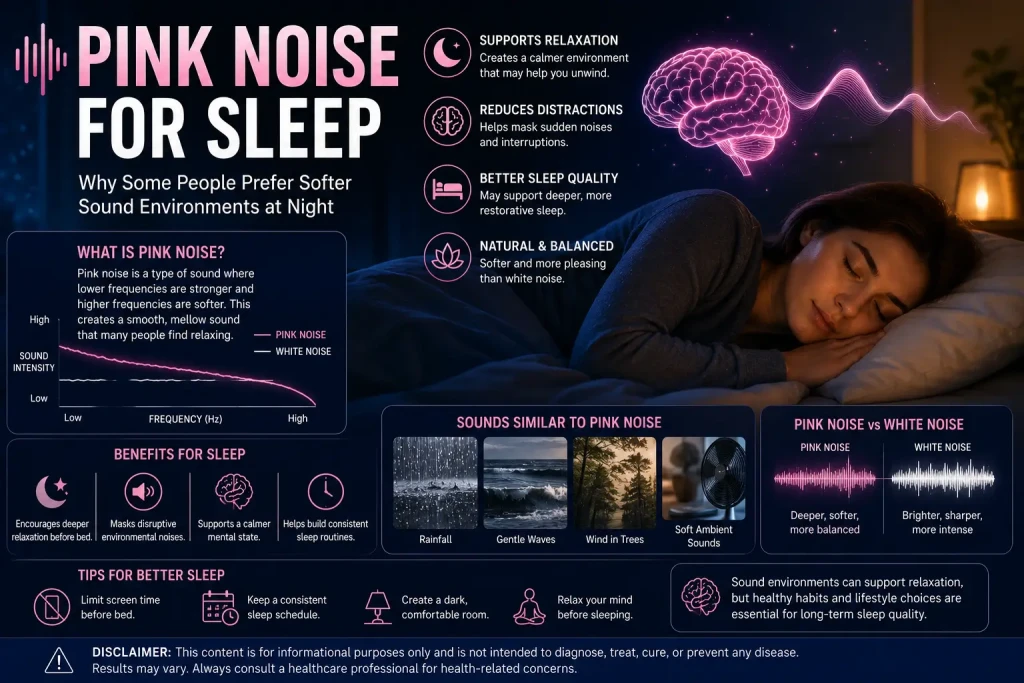
These environments may help reduce distracting background sounds and create a more stable sleep atmosphere.
Brown noise is especially popular among listeners who prefer deeper, softer sound textures during sleep.
Related comparison:
White Noise vs Pink Noise
📱 Why Modern Life Disrupts Sleep
Sleep problems are often influenced by more than audio alone.
Common causes of poor sleep include:
- Stress
- Late-night screen exposure
- Irregular schedules
- Overstimulation
- Anxiety
- Caffeine consumption
This is why improving sleep quality usually requires a combination of:
- Healthy routines
- Reduced stimulation
- Consistent sleep timing
- Relaxation practices
- Better sleep environments
🛌 Creating a Better Sleep Environment
People experimenting with sleep audio often combine multiple calming elements together.
This may include:
- Dim lighting
- Lower room temperature
- Reduced screen time
- Ambient sleep audio
- Consistent nighttime routines
Some modern audio systems combine layered sound environments with rhythmic pulse patterns inspired by brainwave entrainment concepts.
One example is:
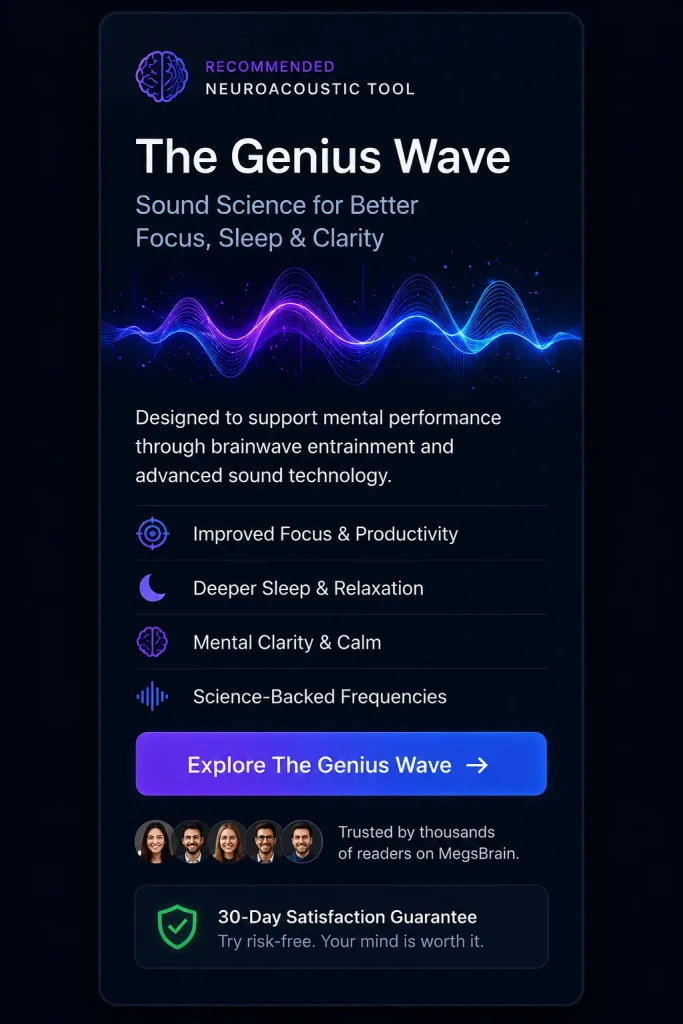
The Genius Wave audio program, which incorporates multiple sound environments inspired by focus and relaxation states.
🔬 What Does Research Say?
Research into brainwave entrainment and sleep audio is still evolving.
Some studies suggest rhythmic sound stimulation may influence relaxation and sleep preparation for certain listeners.
However, scientific evidence remains mixed, and results vary significantly between individuals.
Brainwave audio should not be viewed as a guaranteed medical solution for insomnia or sleep disorders.
Healthy sleep habits remain far more important than any individual sound program.
📌 Final Thoughts
Different brainwave states are associated with different stages of sleep and relaxation.
Delta activity is most strongly connected to deep restorative sleep, while theta activity is commonly linked to relaxation and the transition into sleep.
For many people, calming audio environments may help create a more peaceful nighttime routine — especially when combined with healthy sleep habits and reduced overstimulation.
The best sleep setup is usually the one that helps you feel calmer, more comfortable, and less mentally distracted before bed.
🔗 Related Articles
Related Posts
Stay Informed With the Latest & Most Important News
Previous Post
Next Post