
Now Reading: Meditation Audio vs Relaxation Sounds: What’s the Difference?
-
01
Meditation Audio vs Relaxation Sounds: What’s the Difference?
Meditation Audio vs Relaxation Sounds: What’s the Difference?
Not all calming audio serves the same purpose.
Some people listen to meditation audio for mindfulness, emotional regulation, or mental stillness. Others simply want relaxing background sound that helps reduce stress after a long day.
At first, meditation audio and relaxation sounds may seem similar. Both are designed to create calmer environments. But the experience they create can feel very different depending on how the sound is structured.
Understanding that difference may help you choose audio that actually matches your goal instead of randomly switching between playlists that never fully work.
Affiliate disclosure: This article may include affiliate links. If you choose to buy through them, Megs Brain may earn a commission at no extra cost to you.
🧘 What Is Meditation Audio?
Meditation audio is usually designed to support intentional mental states.
That can include:
- Mindfulness
- Breathing exercises
- Body awareness
- Guided meditation
- Deep relaxation
- Emotional regulation
- Mental clarity
Some meditation audio includes spoken guidance, while other tracks focus entirely on atmosphere and slow-moving sound design.
Many meditation-focused tracks also use softer pacing and fewer sudden sound changes to help the brain remain calm and inwardly focused.
🌊 What Are Relaxation Sounds?
Relaxation sounds are usually more passive.
The goal is often simple comfort rather than structured mindfulness practice.
Common examples include:
- Rain sounds
- Ocean waves
- Brown noise
- Forest ambience
- Fireplace sounds
- Soft instrumental music
- Nature soundscapes
Relaxation audio is often used while:
- Sleeping
- Reading
- Working
- Studying
- Recovering from stress
- Reducing background noise
Unlike meditation audio, relaxation sounds do not always require active mental engagement.
🧠 The Biggest Difference Between Them
The biggest difference is intention.
Meditation audio is usually designed to guide awareness inward.
Relaxation sounds are usually designed to create a calmer external atmosphere.
In practice:
- Meditation audio often supports intentional mindfulness or emotional regulation.
- Relaxation sounds often support comfort, background calmness, or stress reduction.
Neither is automatically better. The best choice depends on what your mind and body need at that moment.
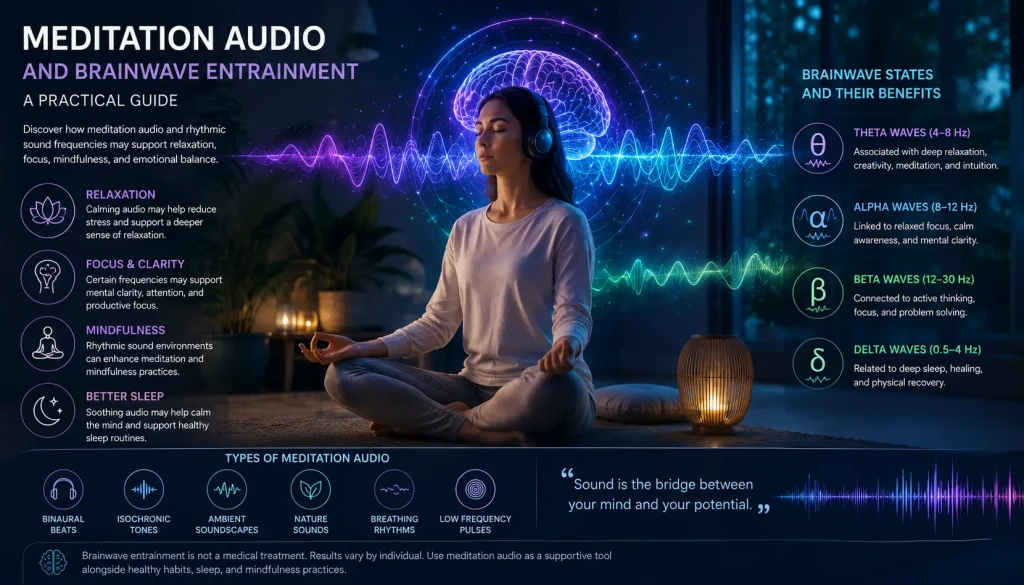
🎧 Brainwave Audio and Meditation
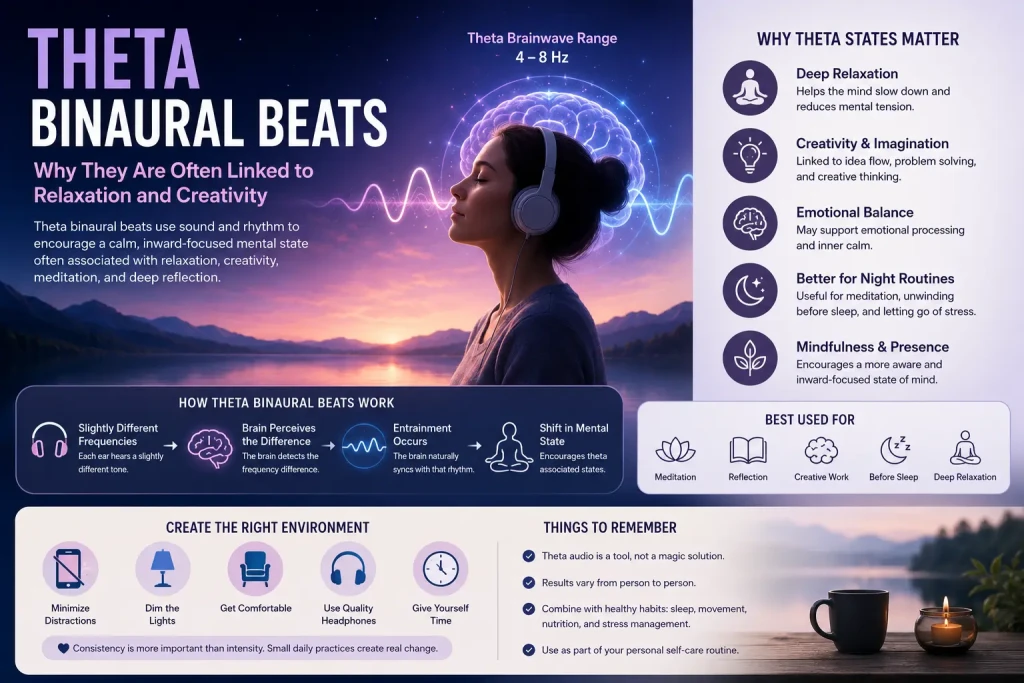
Some meditation-focused audio uses brainwave entrainment concepts.
This may include:
- Binaural beats
- Isochronic tones
- Rhythmic pulse patterns
- Layered neuroacoustic soundscapes
Different frequency ranges are commonly associated with different experiences:
- Alpha waves: calm awareness
- Theta waves: deep meditation and inward focus
- Delta waves: deep relaxation and sleep support
Related guide:
Brainwave Entrainment Explained
🌙 Which One Is Better for Stress Relief?
That depends on how stress affects you.
If your mind feels emotionally overwhelmed, meditation audio may help because it encourages slower awareness and intentional breathing.
If your brain simply feels overstimulated by noise and activity, passive relaxation sounds may work better because they create softer environmental conditions.
Many people actually benefit from using both in different situations.
- Meditation audio for intentional recovery
- Relaxation sounds for daily background calmness
📚 Best Situations for Meditation Audio
- Meditation sessions
- Breathing exercises
- Stress recovery
- Mindfulness routines
- Evening reflection
- Emotional regulation
- Pre-sleep relaxation
🎵 Best Situations for Relaxation Sounds
- Studying
- Working
- Sleeping
- Blocking background noise
- Creating a calmer workspace
- Reading
- Travel or commuting
🚀 Where Genius Wave Fits Into This
Some people prefer simple rain sounds or ambient playlists. Others prefer more immersive neuroacoustic experiences that combine atmosphere, rhythm, and brainwave-inspired sound design.
One example is The Genius Wave audio program, which uses layered sound environments inspired by focus, mindfulness, relaxation, and mental clarity concepts.
This type of audio may feel more immersive than standard relaxation tracks, especially for people who want structured listening environments for meditation or calm focus.
🔬 What Does Research Suggest?
Research into sound environments, meditation audio, and brainwave entrainment is still evolving.
Some studies suggest that calming sound environments may influence stress perception, mood, attention, or relaxation for certain individuals. Other findings remain mixed.
That means meditation audio should be viewed as a support tool rather than a guaranteed mental-health solution.
Useful research starting points:
https://www.frontiersin.org/articles/10.3389/fnhum.2019.00425/full
https://www.ncbi.nlm.nih.gov/pmc/articles/PMC4428073/
https://pubmed.ncbi.nlm.nih.gov/11191043/
⚠️ Safe Listening Tips
Calming audio should feel supportive, not overwhelming.
- Keep the volume comfortable.
- Avoid extremely stimulating tracks when anxious.
- Take breaks during long listening sessions.
- Use headphones responsibly.
- Speak with a professional if you have neurological concerns or seizure history.
Related guide:
Are Binaural Beats Safe?
📌 Final Thoughts
Meditation audio and relaxation sounds both aim to create calmer mental environments, but they often serve different purposes.
Meditation audio is usually more intentional and inward-focused. Relaxation sounds are often more passive and environmental.
The best option depends on whether you want active mindfulness, emotional recovery, background calmness, or simple stress reduction.
If you want a more immersive sound environment built around mindfulness and mental clarity concepts, The Genius Wave audio program may be worth exploring as part of a calmer daily routine.
🔗 Related Articles
Related Posts
Stay Informed With the Latest & Most Important News
Previous Post
Next Post