
Now Reading: Theta Binaural Beats: Why They Are Often Linked to Relaxation and Creativity
-
01
Theta Binaural Beats: Why They Are Often Linked to Relaxation and Creativity
Theta Binaural Beats: Why They Are Often Linked to Relaxation and Creativity
Some mental states feel noisy and rushed.
Others feel quieter, slower, and more reflective.
Many people become interested in meditation audio and brainwave discussions because they are searching for moments of calm in increasingly overstimulating environments.
One topic that appears frequently in these conversations is theta binaural beats.
Supporters often associate theta-oriented audio with:
- deep relaxation,
- creative thinking,
- reflection,
- and meditation routines.
But what exactly are theta binaural beats, and why do they attract so much attention?
🎧 What Are Theta Binaural Beats?
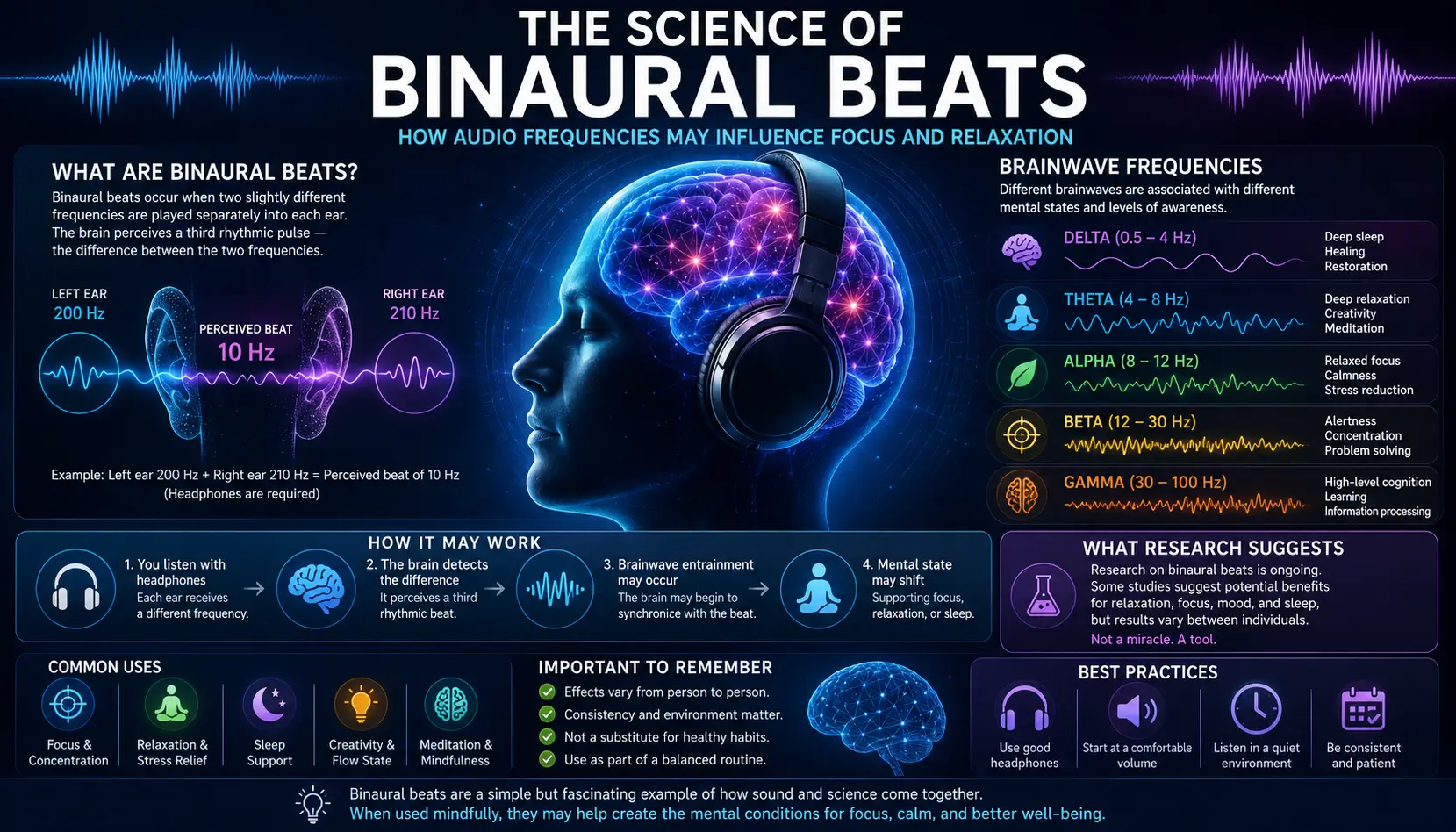
Binaural beats are audio experiences created when slightly different frequencies are played separately into each ear.
The brain perceives the difference between those tones as a rhythmic auditory effect.
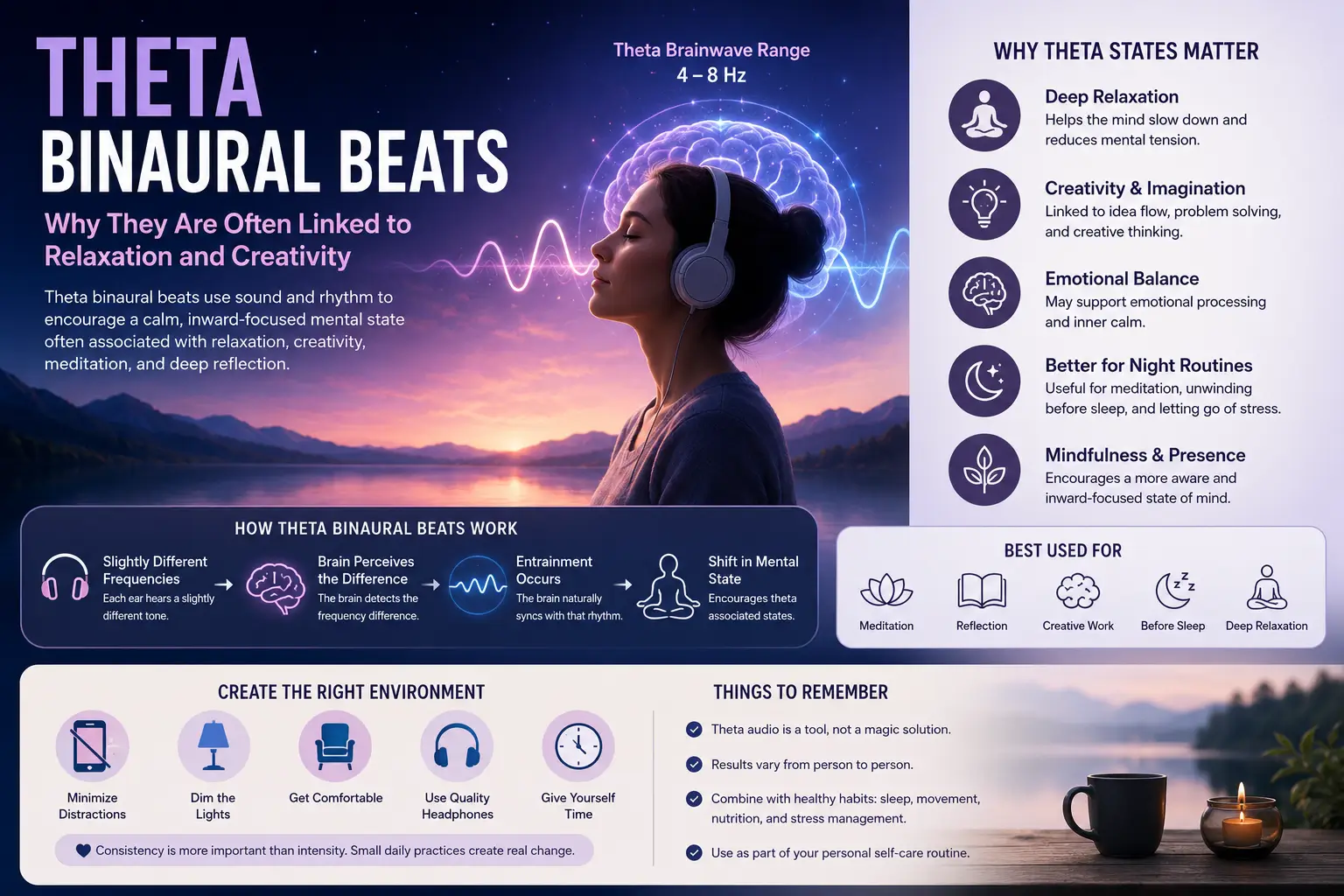
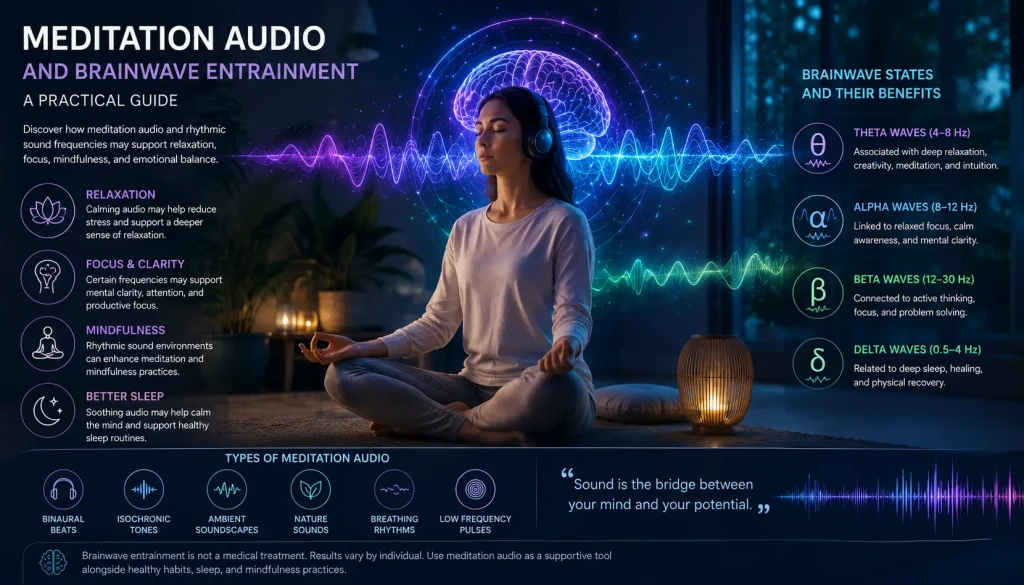
Theta binaural beats are designed around frequency ranges commonly discussed in relation to theta brainwave activity.
Theta-related discussions are often connected to:
- deep relaxation,
- meditation,
- dream-like mental states,
- creative reflection,
- and quiet focus.
🧠 Why Theta States Feel Different
People often describe theta-oriented states as mentally slower and less externally focused.
Instead of feeling highly analytical or overstimulated, attention may feel more inward and reflective.
This is one reason theta discussions frequently appear in conversations about:
- mindfulness,
- creative work,
- meditation,
- journaling,
- and emotional processing.
Related article: Brainwave States and Emotions.
🌙 Why People Use Theta Audio at Night
Many listeners prefer theta-oriented sound environments during evening routines.
Some people use calming audio while:
- meditating before sleep,
- reading quietly,
- reducing mental noise,
- or trying to emotionally decompress after stressful days.
The goal is usually not instant transformation.
Instead, listeners often want environments that feel calmer and less mentally demanding.
📱 Modern Overstimulation Makes Relaxation Harder
Modern life rarely gives the brain time to slow down naturally.
Notifications, multitasking, endless scrolling, and nonstop information exposure can leave attention feeling fragmented.
Related article: Modern Brain Overstimulation.
For many people, quiet mental states now feel unfamiliar because stimulation never fully stops.
🎨 Theta Discussions and Creativity
Theta-related conversations are often connected to creativity and imagination.
Some people feel more reflective and mentally open during calmer states where attention becomes less rigid and externally pressured.
This does not mean theta audio magically creates creativity.
However, quieter mental environments may sometimes support reflective thinking and idea generation.
😴 Sleep, Recovery, and Mental Calm
Many focus and emotional difficulties become worse when recovery disappears.
Healthy sleep remains strongly connected to:
- emotional regulation,
- mental clarity,
- attention quality,
- and cognitive recovery.
Related article: Delta Waves for Sleep.
Without proper recovery, even relaxation practices may feel less effective.
🎵 Sound Environments Affect People Differently
Some listeners enjoy binaural beats.
Others prefer:
- pink noise,
- ambient music,
- nature sounds,
- or complete silence.
There is no universal sound environment that works perfectly for everyone.
Personal comfort and consistency often matter more than chasing “perfect frequencies.”
Related article: Pink Noise for Sleep.
🎧 Neuroacoustic Audio and Relaxation Routines
Some people also explore neuroacoustic audio environments designed around relaxation, calm focus, and emotional recovery routines.
These tools are generally most useful when viewed as supportive environments rather than instant mental transformation systems.
⚠️ Common Misunderstandings
❌ “Theta Audio Instantly Unlocks Hidden Brain Power”
Online claims about dramatic cognitive transformation are often exaggerated.
❌ “One Frequency Works for Everyone”
People respond differently to sound environments and relaxation techniques.
❌ “Relaxation Means Laziness”
Mental recovery and emotional decompression are important parts of long-term well-being.
🧠 Final Thoughts
Theta binaural beats remain popular because many people are searching for calmer mental environments in overstimulating modern routines.
While sound alone cannot guarantee creativity or emotional balance, quieter and more reflective environments may help some individuals slow down and mentally reset.
And sometimes, simply creating space for calm attention may be more valuable than constantly pushing the brain harder.
Related Articles
Related Posts

Stay Informed With the Latest & Most Important News
Previous Post
Next Post