
Now Reading: Delta Waves and Deep Sleep: Understanding Restorative Brain States
-
01
Delta Waves and Deep Sleep: Understanding Restorative Brain States
Delta Waves and Deep Sleep: Understanding Restorative Brain States
🌙 What Are Delta Waves?
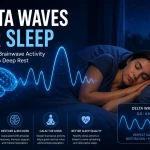
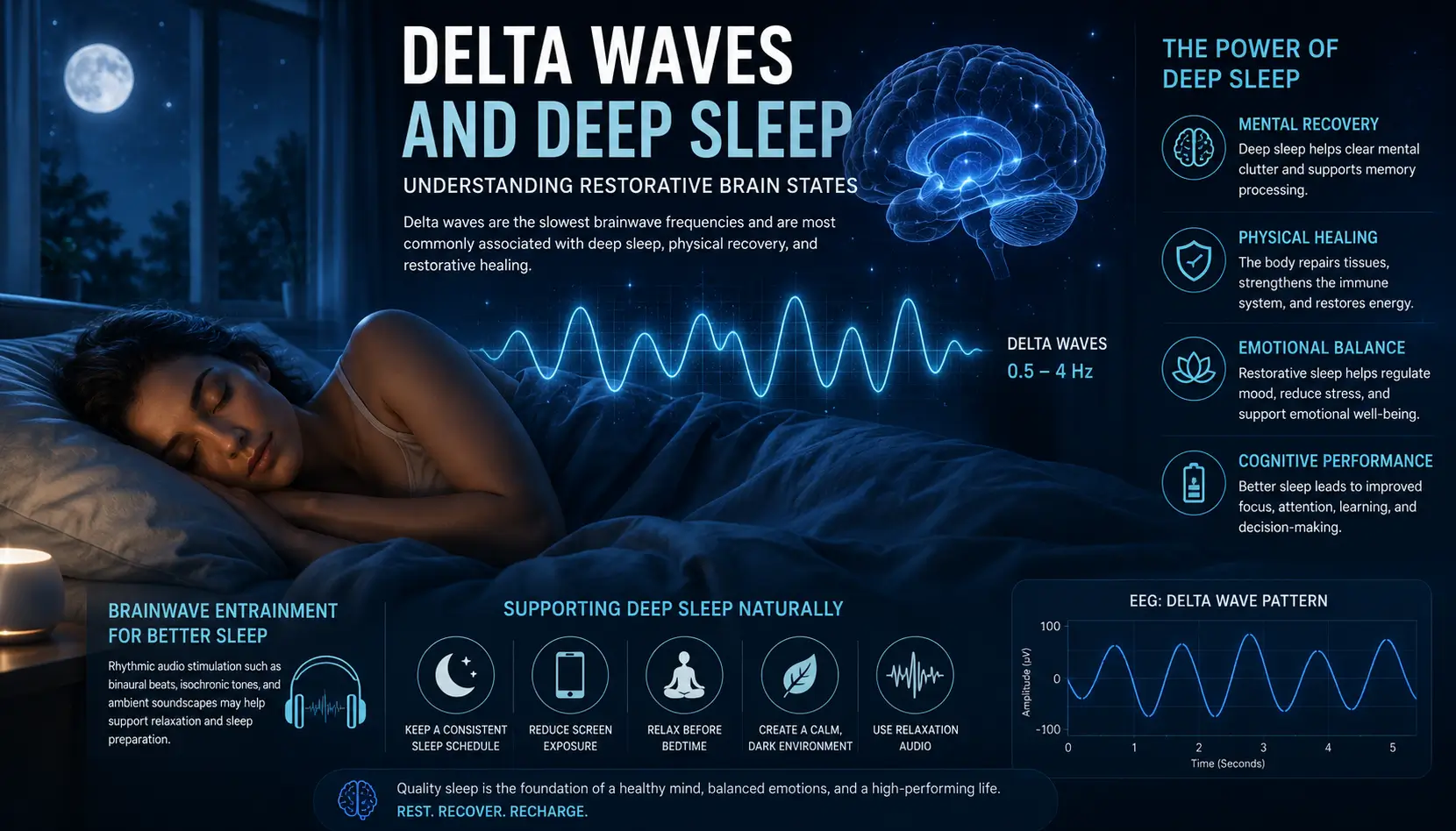
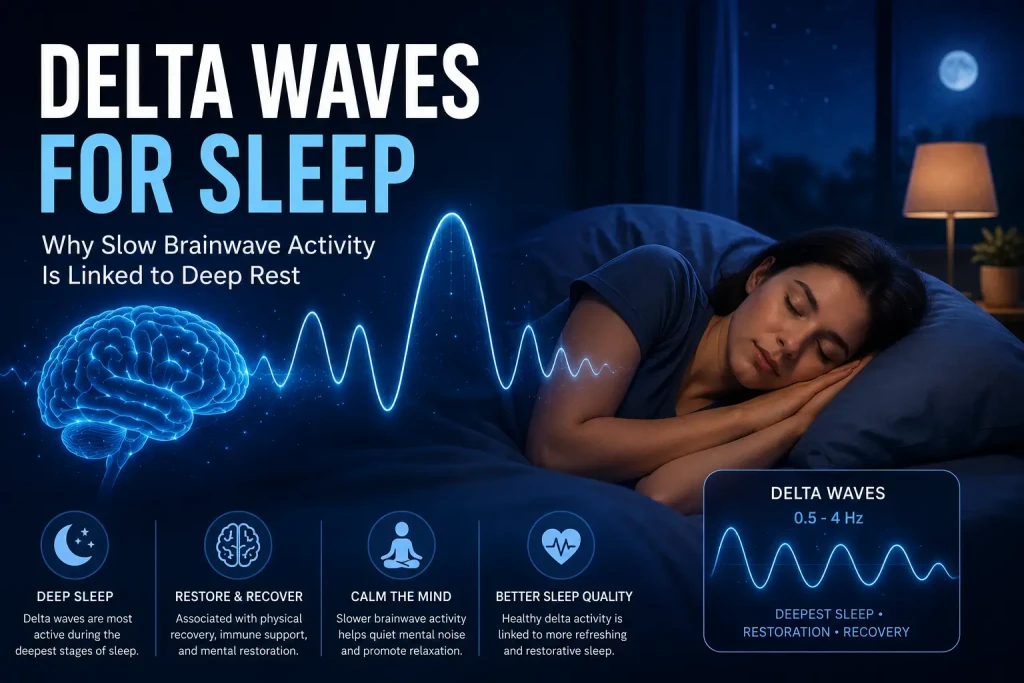
Delta waves are the slowest commonly measured brainwave patterns in the human brain.
They are most frequently associated with deep sleep, physical recovery, and restorative nighttime processes.
Delta activity is typically discussed in relation to:
- Deep sleep
- Recovery
- Relaxation
- Sleep quality
- Mental restoration
- Nervous system recovery
Healthy sleep remains one of the most important foundations for cognitive wellness and emotional balance.
Related guide:
Understanding Brain Waves and Cognitive States
🧠 Understanding Brainwave States
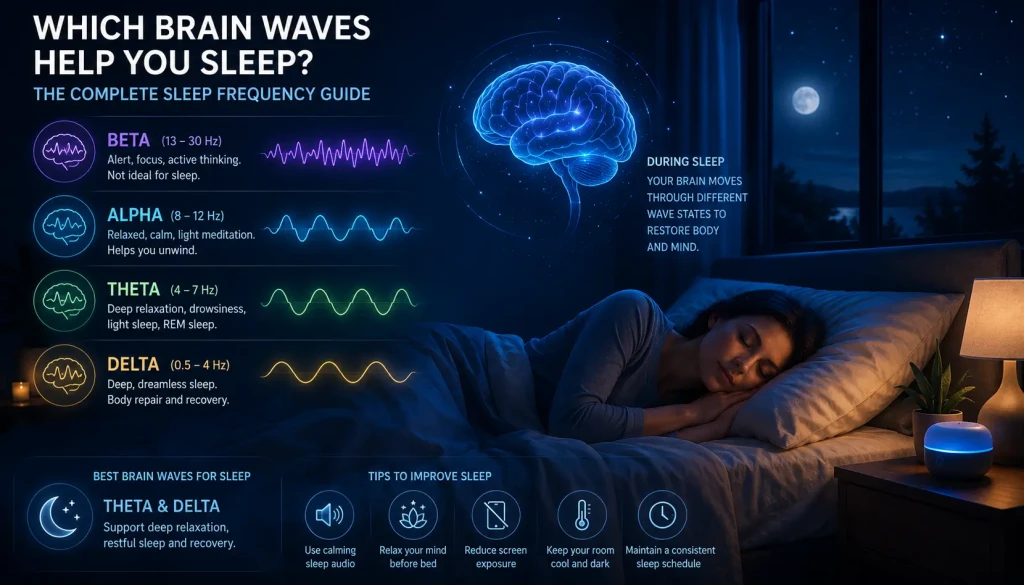
The brain naturally produces electrical activity known as brain waves.
Different brainwave ranges are commonly associated with different mental states.
- Delta waves — deep sleep and recovery
- Theta waves — relaxation and creativity
- Alpha waves — calm focus
- Beta waves — active thinking
- Gamma waves — cognitive processing
These patterns constantly shift throughout the day depending on sleep, attention, stress, and environmental stimulation.
😴 Why Deep Sleep Matters
Deep sleep is essential for both physical and mental recovery.
Poor sleep quality may negatively influence:
- Focus
- Mood stability
- Stress tolerance
- Memory processing
- Mental clarity
- Cognitive endurance
Many people underestimate how strongly sleep quality affects daytime mental performance.
Related article:
Brain Waves and Mental Performance
🌿 Delta States and Nervous System Recovery
Delta-associated states are often discussed in relation to reduced sensory stimulation and restorative recovery.
Healthy nighttime recovery may help support:
- Emotional balance
- Attention stability
- Stress management
- Mental energy
- Cognitive performance
Recovery is one of the most overlooked parts of long-term productivity and focus.
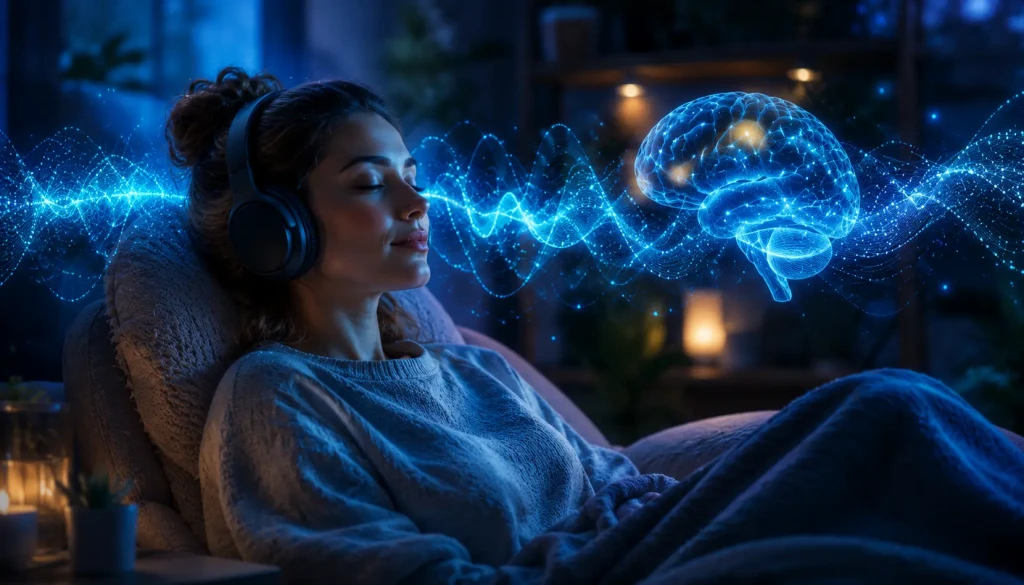
🎧 Sleep Audio and Brainwave Entrainment
Some people use structured sound environments during nighttime relaxation routines.
These may include:
- Ambient sleep soundscapes
- Binaural beats
- Isochronic tones
- White noise
- Rhythmic pulse audio
The theory behind many of these systems is connected to brainwave entrainment — the idea that rhythmic sensory stimulation may influence mental-state patterns.
Research is still evolving, and responses vary between individuals.
Related guide:
The Science of Brainwave Entrainment and Mental States
📱 Modern Life and Sleep Disruption
Modern lifestyles often interfere with healthy sleep routines.
Common sleep disruptors may include:
- Late-night screen exposure
- Stress and overstimulation
- Irregular schedules
- Digital distraction
- Excessive mental workload
Consistent recovery routines may sometimes improve cognitive performance more effectively than aggressive productivity systems.
🧘 Relaxation and Sleep Preparation
Many people use calming nighttime routines to reduce overstimulation before sleep.
These may include:
- Reduced screen time
- Meditation
- Quiet environments
- Breathing exercises
- Relaxation audio
Calmer environments may help support more consistent sleep habits over time.
Related article:
Audio Environments for Focus and Deep Work
🔬 What Does Research Actually Suggest?
Modern neuroscience strongly supports the importance of healthy sleep for emotional wellness, recovery, and cognitive function.
However, research into frequency-based sleep audio remains an evolving field.
Some studies suggest rhythmic auditory stimulation may influence relaxation patterns for certain listeners, but effects vary widely between individuals.
No audio system should be viewed as a guaranteed solution for sleep or mental performance.
Healthy routines remain the strongest foundation for restorative recovery.
🌊 Why Sleep Audio Continues to Grow
Many people enjoy structured nighttime audio because it may help create calmer environments with reduced mental stimulation.
Some modern systems combine atmospheric sound design with rhythmic pulse structures inspired by relaxation and mindfulness concepts.
One example is:
The Genius Wave audio program, which combines layered sound environments inspired by calm attention, recovery, and mental relaxation concepts.
📌 Final Thoughts
Delta waves remain one of the most discussed brainwave patterns associated with deep sleep and restorative recovery.
Although frequency-based sleep audio remains an evolving area of research, many people enjoy using structured sound environments during nighttime routines.
The most important factors for cognitive recovery still include healthy sleep habits, reduced overstimulation, emotional balance, and consistent recovery routines.
🔗 Related Articles
Related Posts
Stay Informed With the Latest & Most Important News
Previous Post
Next Post