
Now Reading: Natural Ways to Support Memory and Mental Performance
-
01
Natural Ways to Support Memory and Mental Performance
Natural Ways to Support Memory and Mental Performance

Memory plays a major role in everyday life.
Whether studying, working, learning new skills, or simply trying to stay mentally organized, many people look for ways to support:
- concentration,
- recall,
- focus,
- and long-term cognitive performance.
The internet is filled with dramatic promises involving:
- “instant memory hacks,”
- “brain rewiring,”
- and “genius activation.”
In reality, memory is influenced by a much broader combination of:
- sleep,
- attention,
- stress,
- lifestyle habits,
- and mental engagement.
The healthiest approach is usually building consistent routines that support overall brain function rather than chasing extreme shortcuts.
🌙 Sleep Is One of the Biggest Memory Factors
Sleep plays a critical role in memory processing.
Researchers believe the brain uses sleep to help:
- organize information,
- consolidate experiences,
- and support learning processes.
Poor sleep may negatively affect:
- attention,
- recall,
- concentration,
- and mental clarity.
This is one reason sleep quality is strongly connected to cognitive performance.
You may also enjoy our article on binaural beats for sleep to explore how calming nighttime audio environments may support relaxation routines.
🧠 Attention and Memory Work Together
Memory depends heavily on attention.
If the brain is overloaded with:
- distractions,
- multitasking,
- notifications,
- or stress,
information may never be processed deeply enough to become memorable in the first place.
This is why focused attention often improves learning more effectively than trying to absorb large amounts of information passively.
🔬 What Science Says About Cognitive Performance
Research involving cognition and memory often focuses on factors such as:
- sleep quality,
- emotional regulation,
- physical health,
- stress management,
- and mental stimulation.
Current evidence suggests long-term brain health is influenced more by consistent lifestyle habits than by dramatic “brain upgrade” claims.
Further reading:
https://www.ncbi.nlm.nih.gov/pmc/articles/PMC10198548/
https://www.frontiersin.org/articles/10.3389/fnhum.2019.00425/full
☁️ Stress Can Interfere With Memory
High stress levels may affect:
- concentration,
- recall,
- attention regulation,
- and mental organization.
When the nervous system remains overstimulated for long periods, many people experience:
- mental fatigue,
- forgetfulness,
- reduced focus,
- or difficulty processing information calmly.
This is one reason relaxation practices are often discussed alongside memory and cognitive performance.
🧘 Mental Calmness May Improve Learning Conditions
Many people find it easier to focus and retain information when the mind feels calmer and less fragmented.
Relaxation-focused practices may help support:
- attention,
- emotional balance,
- and sustained concentration.
Some individuals explore:
- mindfulness,
- meditation,
- ambient focus audio,
- or calming sound environments
to create more structured mental routines.
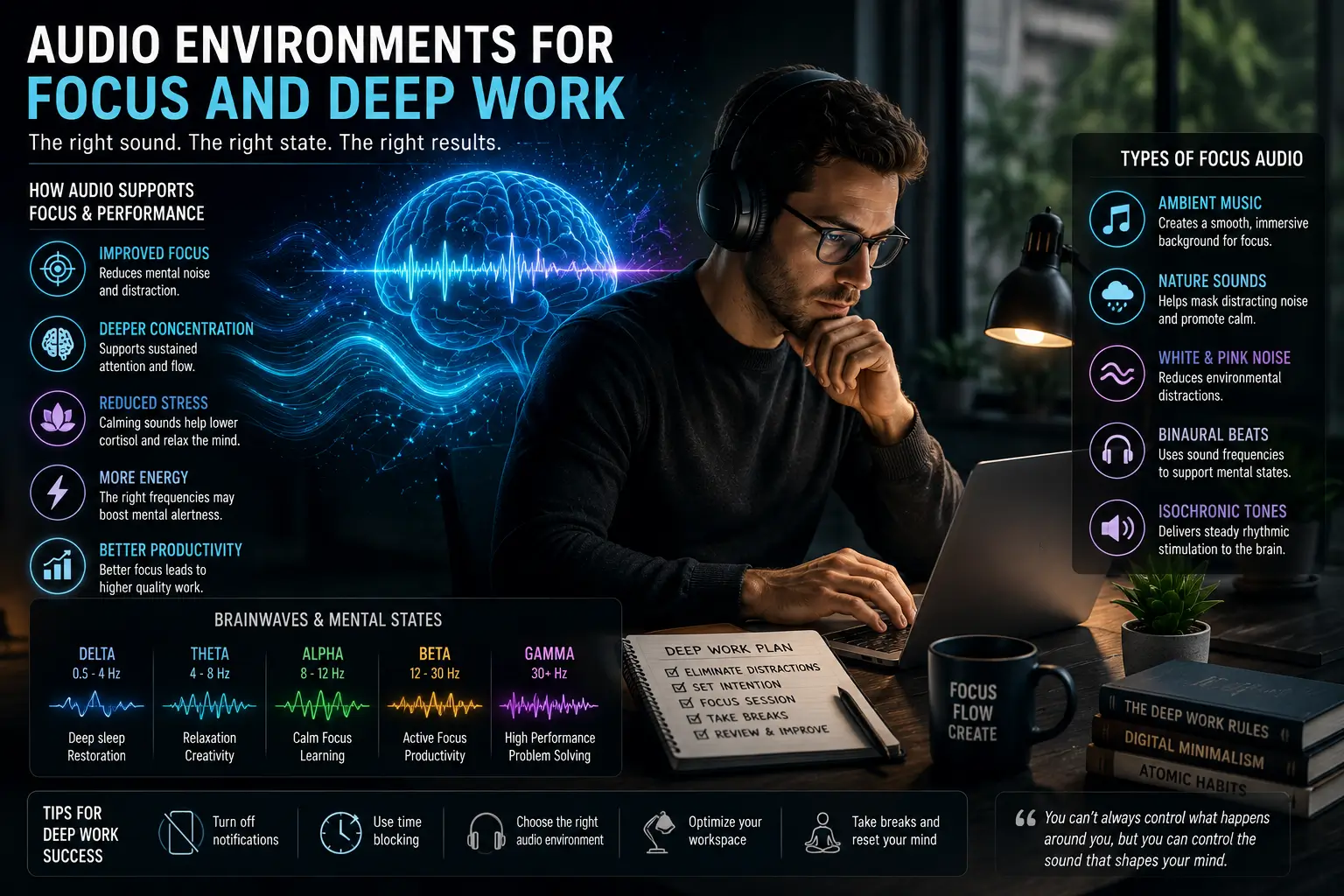
Some listeners also experiment with neuroacoustic focus audio systems designed to support calmer concentration environments during study or deep work sessions.
📚 Mental Stimulation Matters
The brain benefits from active engagement.
Examples of mentally stimulating activities include:
- reading,
- learning new skills,
- creative projects,
- writing,
- problem-solving,
- and meaningful conversation.
Cognitive flexibility is often strengthened through variety and consistent mental use rather than repetitive “brain hack” shortcuts.
⚡ Why Multitasking Often Hurts Memory
Modern digital habits encourage constant attention switching.
However, rapid multitasking may reduce:
- information retention,
- concentration depth,
- and mental clarity.
The brain generally processes information more effectively during:
- focused attention,
- slower pacing,
- and uninterrupted cognitive engagement.
You may also enjoy our article on brainwave entrainment and focus to understand how sensory environments may influence concentration routines.
⚠️ Common Myths About Memory Improvement
Myth:
“There are instant techniques that permanently unlock memory.”
Reality:
Memory is influenced by long-term habits, attention, and overall brain health.
Myth:
“One audio frequency dramatically increases intelligence.”
Reality:
Current research does not support extreme cognitive-transformation claims.
Myth:
“Productivity always improves memory.”
Reality:
Mental overload and chronic stress may reduce cognitive performance over time.
🌍 Healthy Habits That May Support Cognitive Function
Many brain-health discussions consistently emphasize:
- sleep quality,
- stress management,
- physical movement,
- mental stimulation,
- social interaction,
- and balanced routines.
These factors often matter more than dramatic “optimization” trends.
🔗 Related Brain and Focus Topics
Memory discussions are often connected to:
- focus,
- sleep,
- attention,
- relaxation,
- and cognitive flexibility.
You may also find these articles helpful:
Final Thoughts
Supporting memory and cognitive performance is rarely about finding a single shortcut.
The brain functions best when supported through:
- rest,
- focus,
- emotional balance,
- mental stimulation,
- and consistent healthy habits.
While many online claims exaggerate “brain optimization,” realistic improvements often come from creating calmer, more focused, and more sustainable daily routines.
Related Articles
Related Posts
Stay Informed With the Latest & Most Important News
Previous Post
Next Post