
Now Reading: Mindset, Neuroplasticity, and the Science of Mental Performance
-
01
Mindset, Neuroplasticity, and the Science of Mental Performance
Mindset, Neuroplasticity, and the Science of Mental Performance
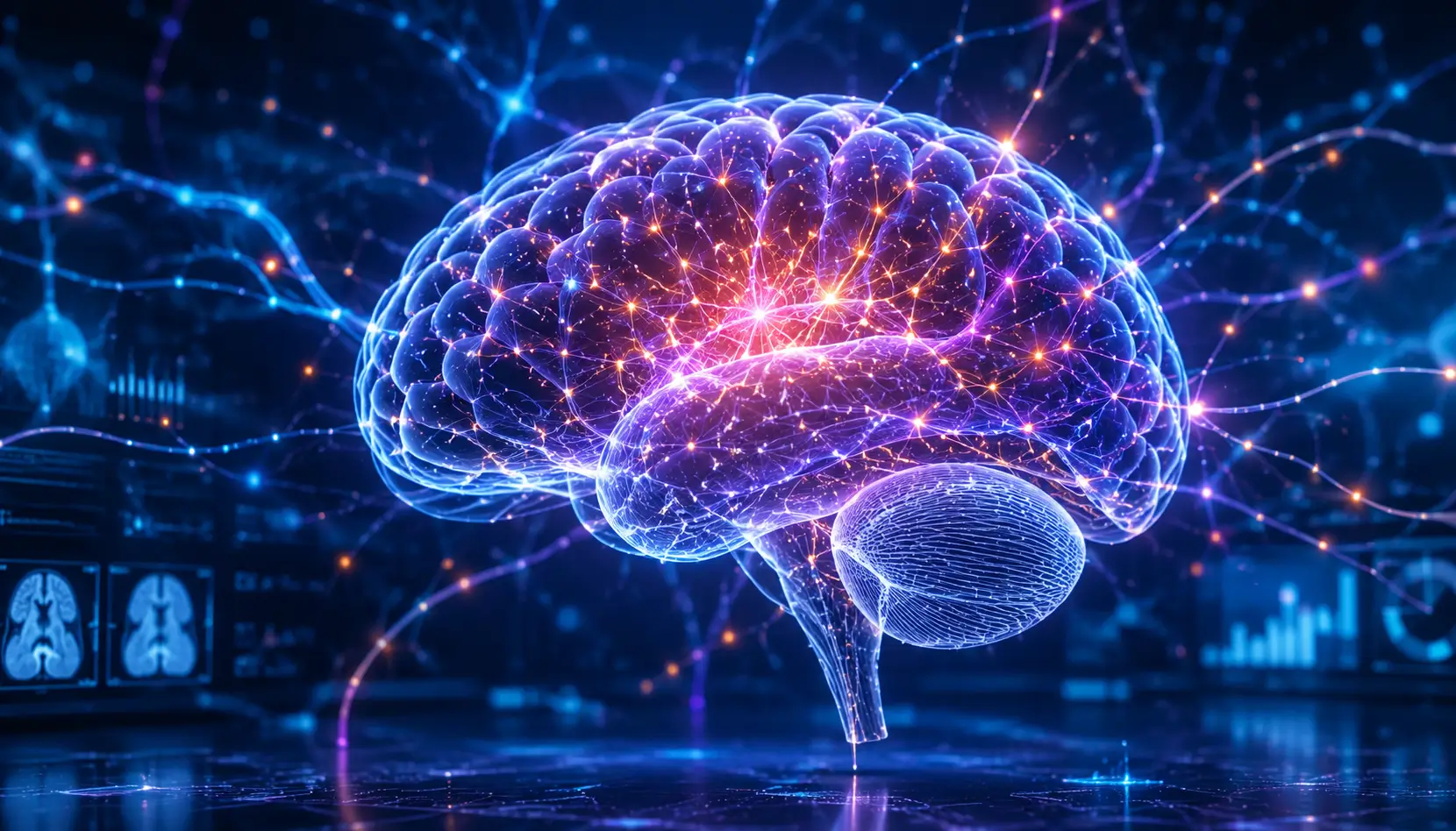
The internet often treats “mind power” as either magic or complete nonsense.
Modern neuroscience suggests reality is far more nuanced.
Your thoughts alone cannot magically reshape reality overnight. However, your brain is highly adaptable, and your habits can gradually influence how efficiently your mind performs over time.
This adaptability is known as:
neuroplasticity.
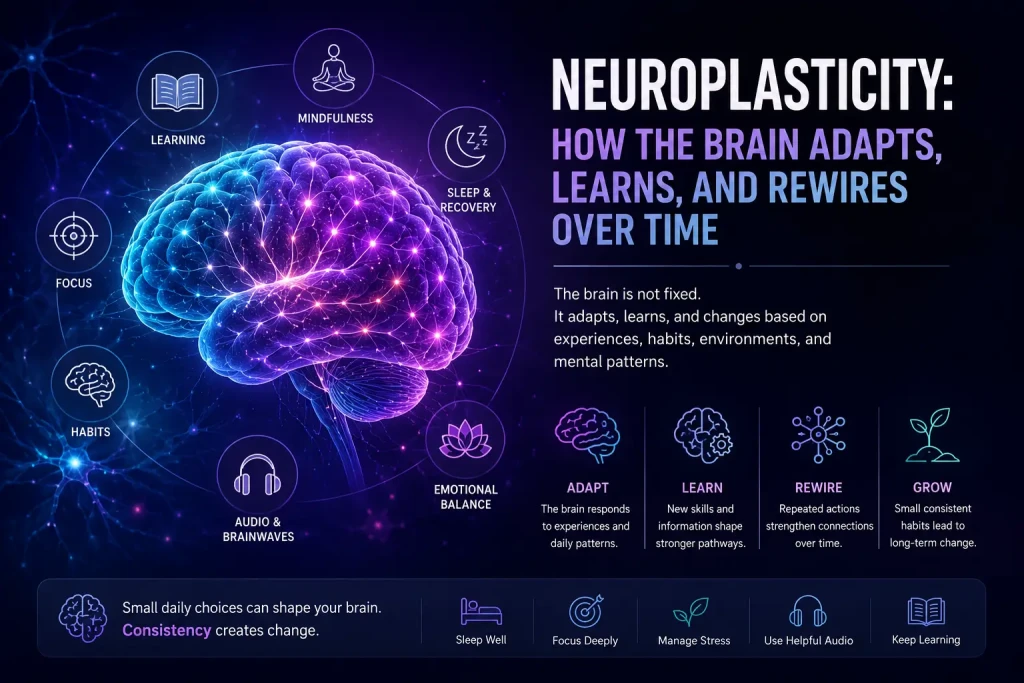
Rather than remaining fixed throughout life, the brain continuously reorganizes neural pathways based on:
- repetition,
- learning,
- emotional experiences,
- environment,
- focus patterns,
- and behavior.
This does not mean humans possess unlimited mental abilities.
But it does mean the brain is far more flexible than researchers once believed.
🧬 What Is Neuroplasticity?
Neuroplasticity refers to the brain’s ability to adapt through experience.
Every repeated behavior strengthens certain neural connections.
That includes:
- learning new skills,
- practicing focus,
- emotional regulation,
- memory formation,
- and even stress responses.
Scientists have observed neuroplastic changes connected to:
- attention control,
- cognitive recovery,
- problem-solving,
- language learning,
- emotional flexibility,
- and long-term habit formation.
Research from institutions like Harvard Medical School continues exploring how lifestyle behaviors may influence cognitive health and brain resilience over time.
Further reading:
https://hms.harvard.edu/news-events/publications-archive/brain/neuroplasticity
https://www.nih.gov/news-events/nih-research-matters/brain-may-clean-waste-during-sleep
🌍 Why Focus Feels More Difficult Today
Modern life constantly fragments attention.
Notifications, short-form content, multitasking, and digital overstimulation make sustained concentration increasingly difficult for many people.
Mental fatigue often has less to do with intelligence and more to do with continuous cognitive interruption.
This is one reason why focus-supporting routines have become increasingly popular, including:
- meditation,
- mindfulness,
- deep work habits,
- ambient sound environments,
- binaural beats,
- and structured productivity routines.
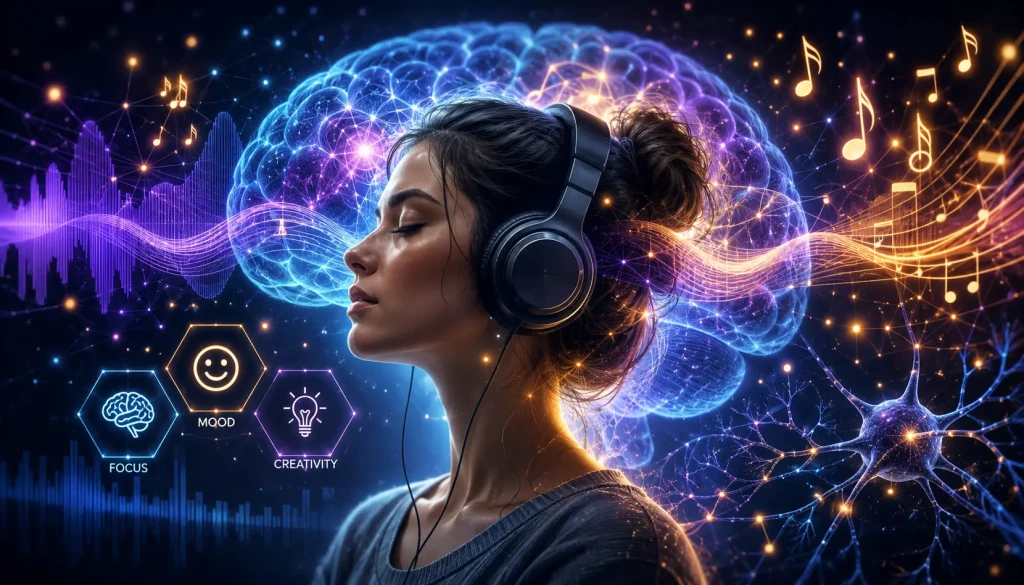
Some individuals also explore neuroacoustic audio systems designed to create calmer listening environments during study, creative work, or mentally demanding tasks.
🌊 Brainwaves and Mental States
The brain naturally operates through electrical activity patterns commonly grouped into ranges such as:
- Delta
- Theta
- Alpha
- Beta
- Gamma
Different mental states are often associated with different patterns of activity.
For example:
- Alpha activity is commonly linked to calm focus
- Theta states may appear during creativity or deep relaxation
- Beta waves are associated with alert concentration
This is one reason why brainwave-oriented audio content has become increasingly widespread online.
Some modern sound systems combine:
- ambient frequency layering,
- binaural stimulation,
- and relaxation-focused audio environments
to help create more immersive concentration experiences.
😴 Sleep May Matter More Than “Mind Hacks”
Many people search for shortcuts to mental performance.
But the foundations of cognitive health remain surprisingly simple.
Sleep quality strongly affects:
- memory,
- emotional balance,
- learning retention,
- focus,
- and recovery.
Without proper recovery, the brain struggles to function efficiently.
In many cases, improving sleep consistency and reducing overstimulation may have a greater long-term impact than chasing aggressive productivity trends.
Further reading:
https://www.sleepfoundation.org/how-sleep-works/why-do-we-need-sleep
🔬 Cognitive Improvement Is Usually Gradual
One of the biggest misconceptions online is the belief in instant mental transformation.
Real cognitive improvement is usually:
- gradual,
- repetitive,
- habit-driven,
- and highly individual.
Healthy long-term habits may include:
- physical movement,
- mindfulness,
- reduced distractions,
- learning new skills,
- structured focus routines,
- and consistent sleep schedules.
Some people also incorporate brainwave-based focus audio into their routines as a way to create calmer mental environments during work or study sessions.
🧩 Why Sound Can Feel Psychologically Powerful
The human brain naturally responds to:
- rhythm,
- repetition,
- emotional association,
- and sensory atmosphere.
This helps explain why certain sounds may feel calming, immersive, or mentally engaging.
In many cases, the emotional experience comes less from a “magical frequency” and more from:
- expectation,
- environment,
- nervous system relaxation,
- and personal association.
That doesn’t make the experience meaningless.
It simply makes it more human.
Final Thoughts
The brain remains one of the most complex systems scientists continue studying.
But modern neuroscience increasingly supports one important idea:
your habits shape your mental performance over time.
Neuroplasticity is not magic.
It’s the brain’s measurable ability to adapt through repetition, learning, environment, and behavior.
For people interested in focus, creativity, relaxation, or cognitive performance, supportive routines and carefully designed mental environments may help create better conditions for deep work and learning.
Related Articles
- Do Binaural Beats Really Work?
- Ultimate Guide to Brainwave Entrainment
- Binaural Beats for Anxiety Relief
- Emotional Healing Frequencies
👉 Related read: How Binaural Beats For Sleep Can Upgrade Your Night: The Science, the benefits and the Tips for more insights on brainwave focus and mental clarity.
Related Posts
Stay Informed With the Latest & Most Important News
Previous Post
Next Post