
Now Reading: Best Frequencies for Studying: What Science Says About Focus and Learning
- 01
Best Frequencies for Studying: What Science Says About Focus and Learning
Best Frequencies for Studying: What Science Says About Focus and Learning
🎓 Introduction: Why Frequency Matters When You Study
Studying is not just about time spent — it’s about brain state.
Your brain operates in different electrical rhythms, and each one supports a different mental function.
When you study while your brain is in the wrong frequency state, learning feels slow, tiring, and frustrating.
When you align with the right frequency, focus becomes effortless and memory retention improves naturally.
Let’s explore what science says about the best frequencies for studying — and how to use them correctly.
🧠 Understanding Brainwaves and Learning States
Brainwaves are measured in Hertz (Hz) and reflect how fast neurons communicate.
Different frequency ranges support different cognitive abilities.
For studying, we’re primarily concerned with Alpha, Beta, and Gamma waves.
📘 Alpha Waves (8–12 Hz): Calm Focus & Absorption
Alpha is often called the learning gateway frequency.
Why Alpha Is Ideal for Studying
Promotes relaxed alertness
Reduces mental noise and anxiety
Enhances information absorption
Improves reading comprehension
Alpha is perfect for:
Reading textbooks
Watching educational videos
Reviewing notes
Language learning
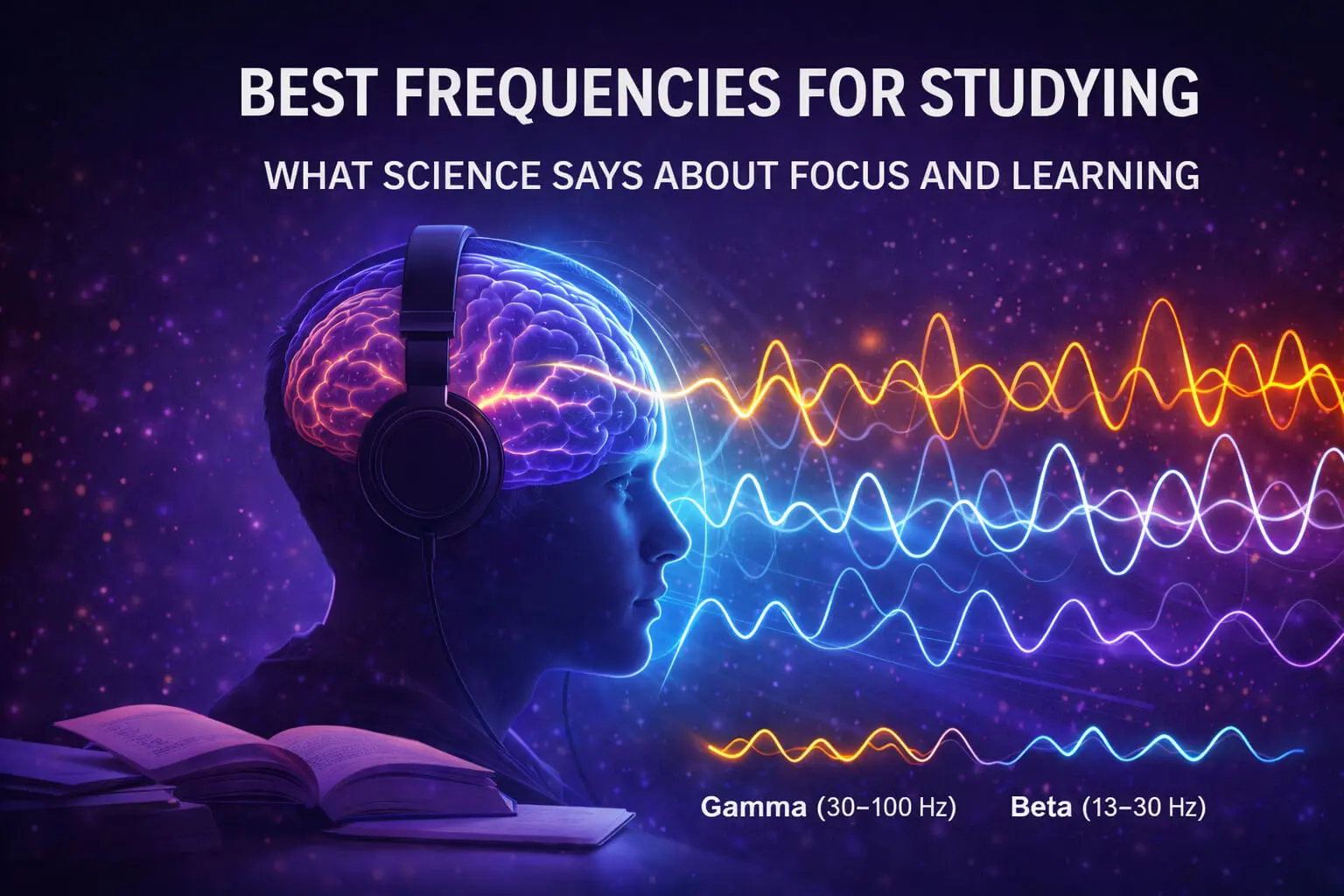
⚡ Beta Waves (13–30 Hz): Active Thinking & Problem Solving
Beta frequencies support analytical thinking and conscious effort.
Best Uses of Beta for Studying
Solving math problems
Writing essays
Logical reasoning
Test preparation
However, too much Beta can cause stress and mental fatigue.
This is why pure high-Beta sessions are not ideal for long study periods.
Balanced Alpha-Beta combinations work best.
🚀 Gamma Waves (30–100 Hz): Memory & Cognitive Performance
Gamma waves are linked to:
Working memory
Information integration
Pattern recognition
High-level cognition
Short bursts of Gamma stimulation can boost learning speed, especially when combined with Alpha.
🧩 Best Frequency Combinations for Studying
Instead of using a single frequency, research suggests multi-frequency entrainment works best.
Science-Backed Study Frequency Combos
Alpha + Low Beta → sustained focus
Alpha + Gamma → memory encoding
Theta + Alpha (short sessions) → creativity and idea generation
These combinations mirror how the brain naturally learns.
🎧 How to Use Study Frequencies Correctly
To get real results, technique matters.
Best Practices
Use stereo headphones
Study in 25–40 minute sessions
Avoid multitasking
Keep volume moderate
Stay consistent (daily use matters)
Sound should guide the brain — not distract it.
🧪 What Science Really Says
Studies using EEG scans show that:
Alpha entrainment improves information intake
Gamma activity correlates with memory formation
Consistency matters more than session length
Brainwave audio is not magic, but it does measurably influence neural states when used correctly.
🔮 Why Generic Study Music Often Fails
Many “study beats” online:
Use random frequencies
Overstimulate Beta
Ignore brainwave transitions
True cognitive entrainment requires precision, layering, and timing.
That’s why structured systems outperform generic playlists.
🧘 Final Thoughts
Studying smarter isn’t about pushing harder — it’s about aligning your brain with the right frequencies.
Alpha calms the mind.
Beta sharpens thinking.
Gamma strengthens memory.
When used together, learning becomes smoother, faster, and more sustainable.
👉 Related read: Brain Wave Meditation: How to Train Your Mind Through Frequency and Focus for more insights on brainwave focus and mental clarity.