
Now Reading: Brown Noise vs White Noise: Which Sound Environment Is Better for Focus and Sleep?
-
01
Brown Noise vs White Noise: Which Sound Environment Is Better for Focus and Sleep?
Brown Noise vs White Noise: Which Sound Environment Is Better for Focus and Sleep?
Sound environments are becoming increasingly popular for:
- concentration,
- relaxation,
- sleep,
- studying,
- and reducing distraction.
Among the most commonly discussed audio environments are:
- white noise,
- brown noise,
- pink noise,
- ambient soundscapes,
- and calming background audio.
But what exactly separates brown noise from white noise?
And why do some people strongly prefer one over the other?
🌊 What Is White Noise?
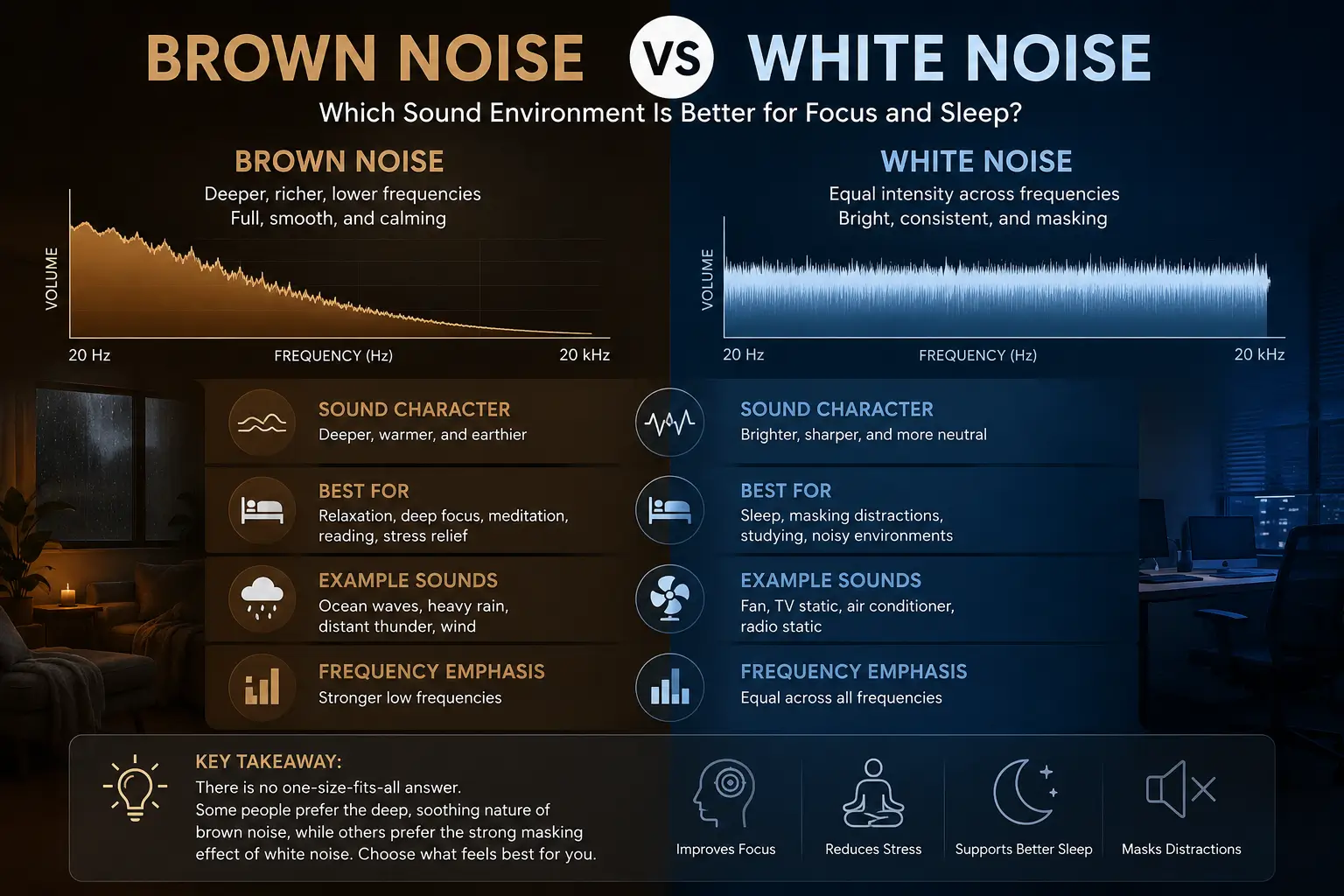
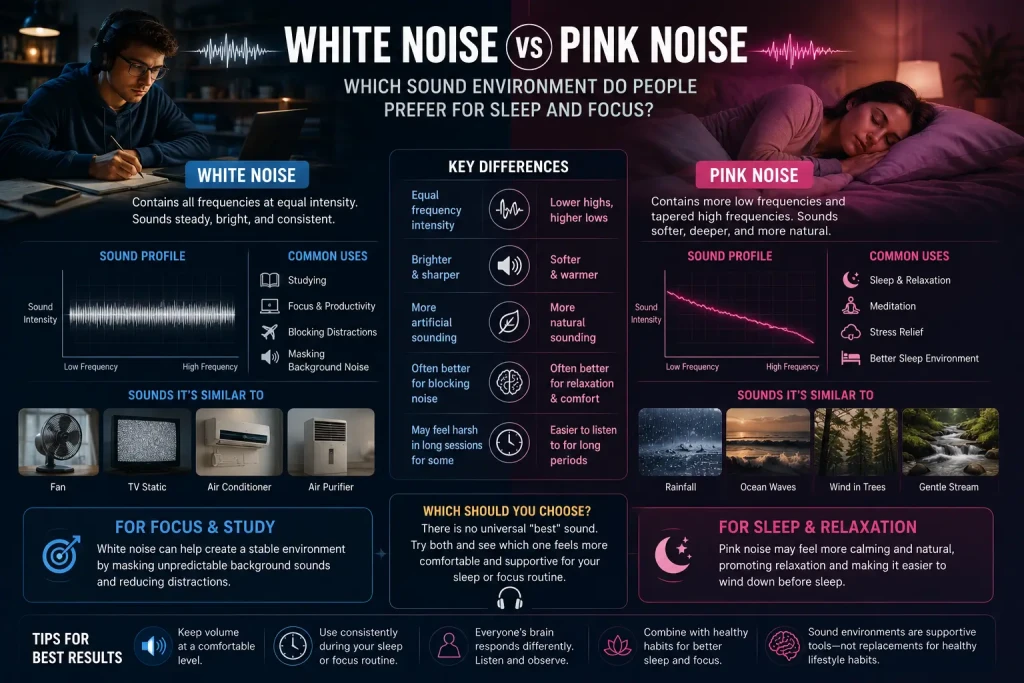
White noise contains all audible frequencies played at relatively equal intensity.
This creates a bright and consistent sound texture often compared to:
- television static,
- air conditioning,
- fan noise,
- or radio hiss.
Many people use white noise to help mask:
- background conversation,
- traffic,
- environmental distraction,
- and sudden interruptions.
Because the sound profile is broad and even, white noise is commonly used in:
- offices,
- study environments,
- shared spaces,
- and sleep routines.

🌑 What Is Brown Noise?
Brown noise has a deeper and softer sound profile.
Unlike white noise, brown noise emphasizes lower frequencies more heavily.
The result is a darker and fuller sound often compared to:
- distant thunder,
- strong rainfall,
- ocean rumble,
- or deep wind sounds.
Many listeners describe brown noise as:
- warmer,
- smoother,
- less sharp,
- and more immersive.
🧠 Why Sound Environments Affect Focus
The brain constantly processes sensory information from the environment.
Unexpected sound changes may contribute to:
- distraction,
- fragmented attention,
- mental fatigue,
- and sensory overload.
Consistent sound environments may help reduce awareness of:
- unpredictable background noise,
- nearby conversations,
- and sudden interruptions.
This is one reason many people explore:
- white noise,
- brown noise,
- pink noise,
- or calming sound environments
while:
- studying,
- working,
- meditating,
- or relaxing.
🔬 What Science Currently Suggests
Research involving sound environments and sensory processing is still evolving.
Some studies suggest consistent sound environments may influence:
- sensory comfort,
- relaxation,
- sleep quality perception,
- and attentional stability.
Further reading:
https://www.frontiersin.org/articles/10.3389/fnhum.2019.00425/full
https://www.ncbi.nlm.nih.gov/pmc/articles/PMC10198548/
At the same time, exaggerated internet claims involving:
- instant cognitive enhancement,
- “brain rewiring,”
- or guaranteed productivity increases
should be approached carefully.
⚡ Brown Noise for Focus
Some listeners prefer brown noise because the deeper sound profile may feel:
- calmer,
- softer,
- and less mentally sharp than white noise.
Brown noise is often used during:
- reading,
- deep work,
- studying,
- and relaxation routines.
Some individuals feel lower-frequency sound textures are less distracting during long sessions.
🌙 White Noise for Sleep
White noise remains popular for sleep because it may help mask:
- environmental sounds,
- hallway noise,
- traffic,
- and sudden interruptions.
The steady sound profile may help create a more consistent nighttime environment.
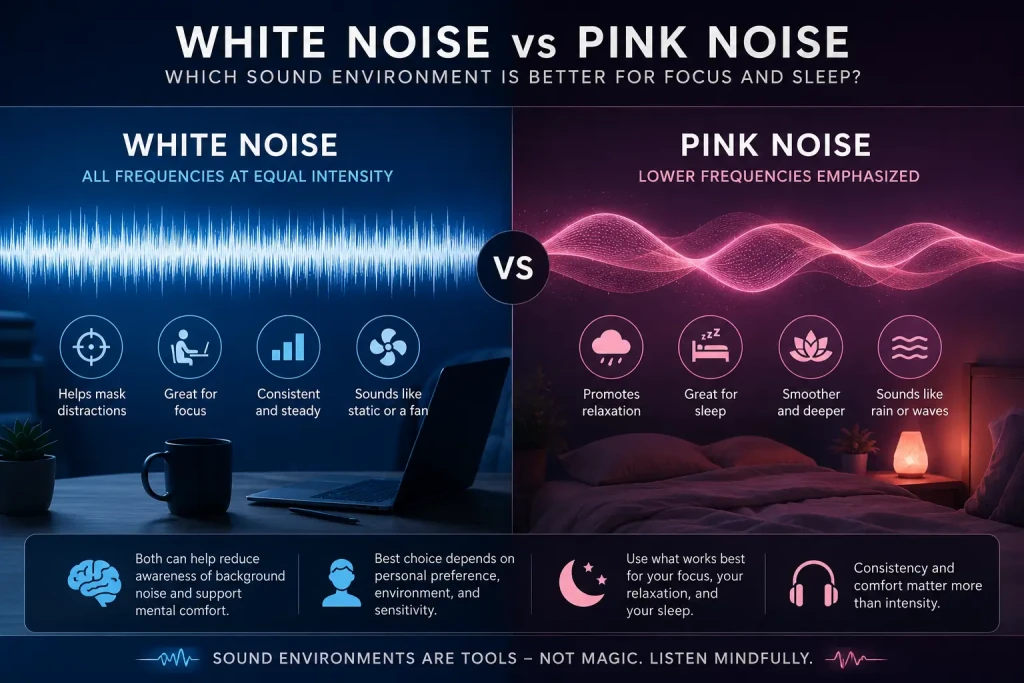
You may also enjoy: white noise vs pink noise comparisons for additional sound environment comparisons.
🎵 Which One Is Better?
There is no universal answer.
Some people prefer:
white noise
because it masks distraction more aggressively.
Others prefer:
brown noise
because the deeper sound profile feels smoother and more calming.
Personal preference and listening comfort matter more than exaggerated internet promises.
☁️ Brown Noise vs White Noise: Quick Comparison
White Noise
- Brighter sound profile
- Equal frequency intensity
- Strong distraction masking
- Common for offices and sleep environments
Brown Noise
- Deeper sound profile
- Stronger low-frequency emphasis
- Softer and warmer sound texture
- Often preferred for long focus sessions
🎧 Sound Environments and Relaxation Audio
Many people combine sound environments with:
- mindfulness,
- relaxation routines,
- focus habits,
- and calming audio environments.
Some listeners also experiment with neuroacoustic relaxation audio systems designed to support calmer attention and sensory comfort.
⚠️ Common Myths About Noise Audio
Myth:
“One sound environment works perfectly for everyone.”
Reality:
People respond differently to sound textures and sensory stimulation.
Myth:
“Noise audio permanently changes brain function.”
Reality:
Current scientific evidence does not support extreme transformation claims.
Myth:
“More intense sound creates better focus.”
Reality:
Comfort and consistency are usually more important than intensity.
🌍 Why Noise Audio Keeps Growing in Popularity
Modern environments expose people to:
- constant notification sounds,
- multitasking,
- traffic,
- fragmented attention,
- and sensory overload.
As a result, many individuals search for:
- calmer workspaces,
- reduced distraction,
- improved sleep environments,
- and more controlled sensory experiences.
Sound environments may simply help some people feel:
- more relaxed,
- less overstimulated,
- and mentally organized.
Final Thoughts
Brown noise and white noise are both popular sound environments for:
- focus,
- relaxation,
- sleep,
- and sensory comfort.
The best option usually depends on:
- personal preference,
- environment,
- and listening comfort.
The healthiest perspective is viewing these audio environments as supportive tools rather than guaranteed cognitive enhancement systems.
Related Articles
Related Posts
Stay Informed With the Latest & Most Important News
Previous Post
Next Post