
Now Reading: Benefits of Binaural Beats: How They Work and What Research Says
-
01
Benefits of Binaural Beats: How They Work and What Research Says
Benefits of Binaural Beats: How They Work and What Research Says
Binaural beats have become one of the most discussed topics in the world of brainwave entrainment, meditation, and cognitive performance.
Supporters claim they may help with relaxation, focus, sleep, and mental clarity. Skeptics often question whether they work at all.
So what exactly are binaural beats, and why have they attracted so much attention from researchers, audio enthusiasts, and people looking for new ways to improve their mental state?
The answer begins with how the brain processes sound.
🧠 What Are Binaural Beats?
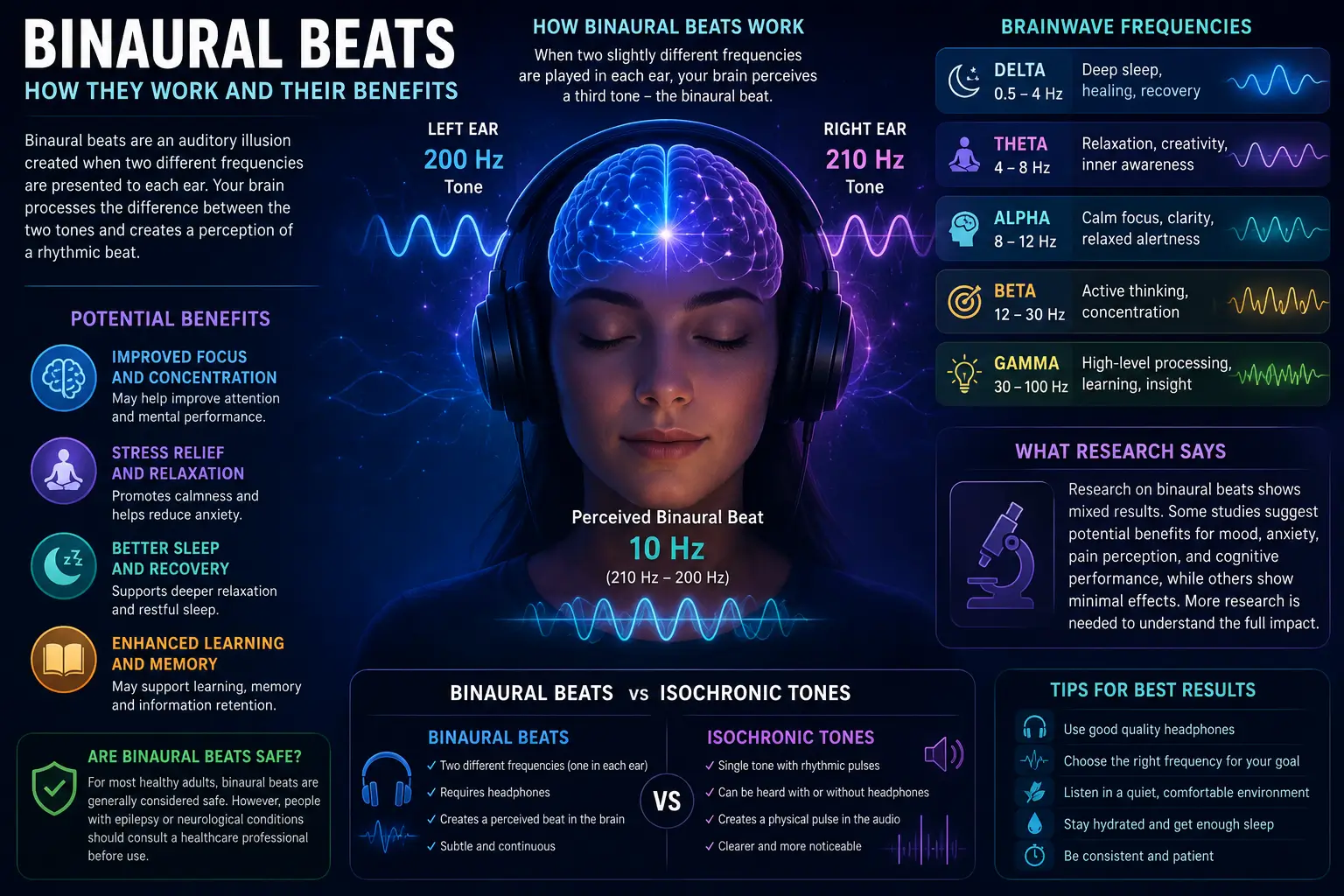
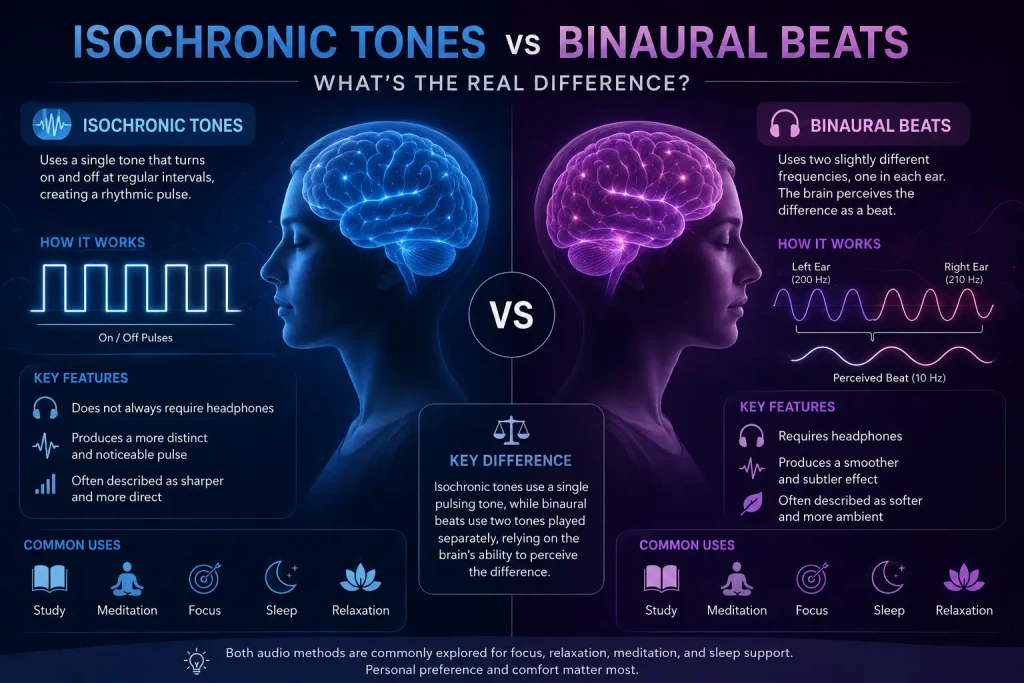
Binaural beats are an auditory phenomenon created when two slightly different frequencies are presented separately to each ear.
For example, if the left ear hears a 200 Hz tone and the right ear hears a 210 Hz tone, the brain perceives a difference of 10 Hz.
This perceived frequency is known as a binaural beat.
Unlike ordinary sounds, the beat itself is not physically present in the audio signal. It is created by the brain’s interpretation of the two frequencies.
Because each ear must receive a different tone, headphones are generally required for binaural beats to work properly.
⚡ How Do Binaural Beats Work?
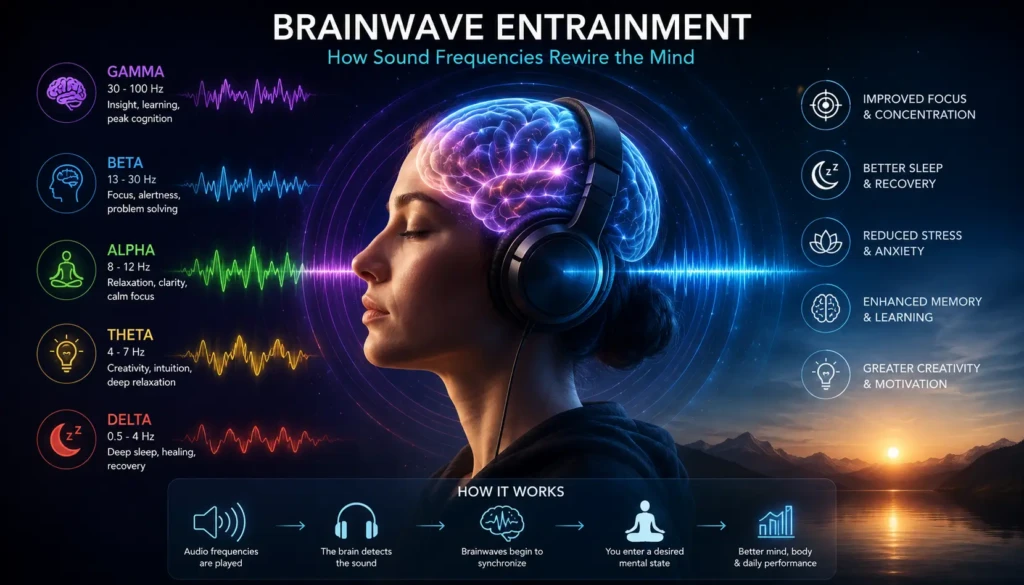
The theory behind binaural beats is linked to brainwave activity.
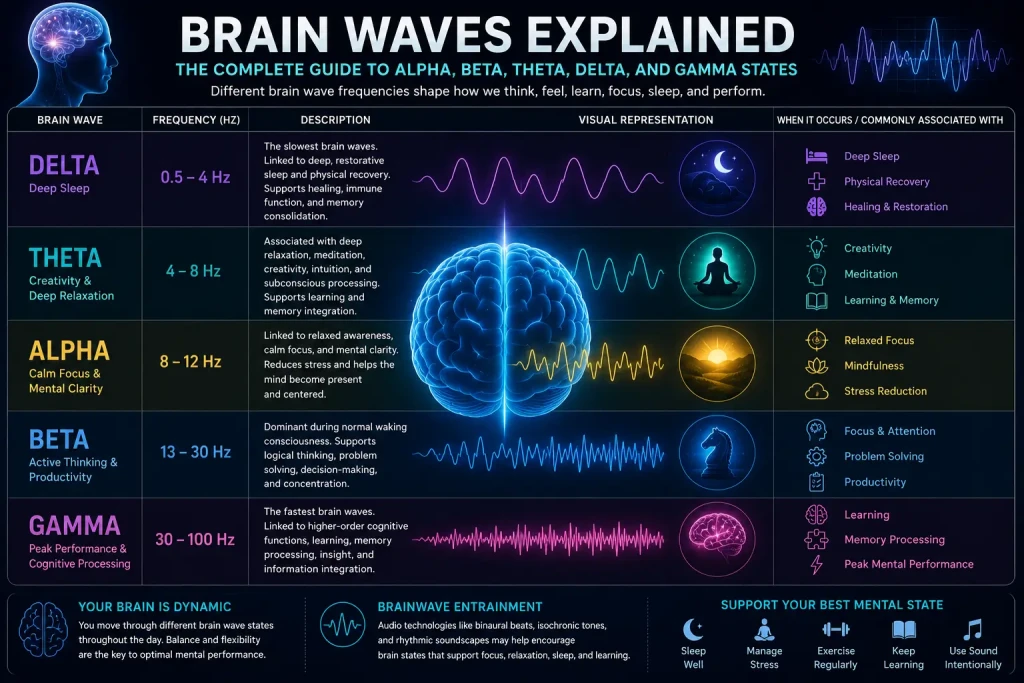
The brain naturally produces electrical patterns that can be measured using electroencephalography (EEG).
These patterns are often grouped into frequency ranges associated with different mental states.
- Delta Waves – deep sleep and recovery
- Theta Waves – relaxation and creativity
- Alpha Waves – calm focus and mental clarity
- Beta Waves – active thinking and concentration
- Gamma Waves – learning and information processing
Binaural beat recordings are designed around these frequency ranges, with the goal of creating specific listening environments.
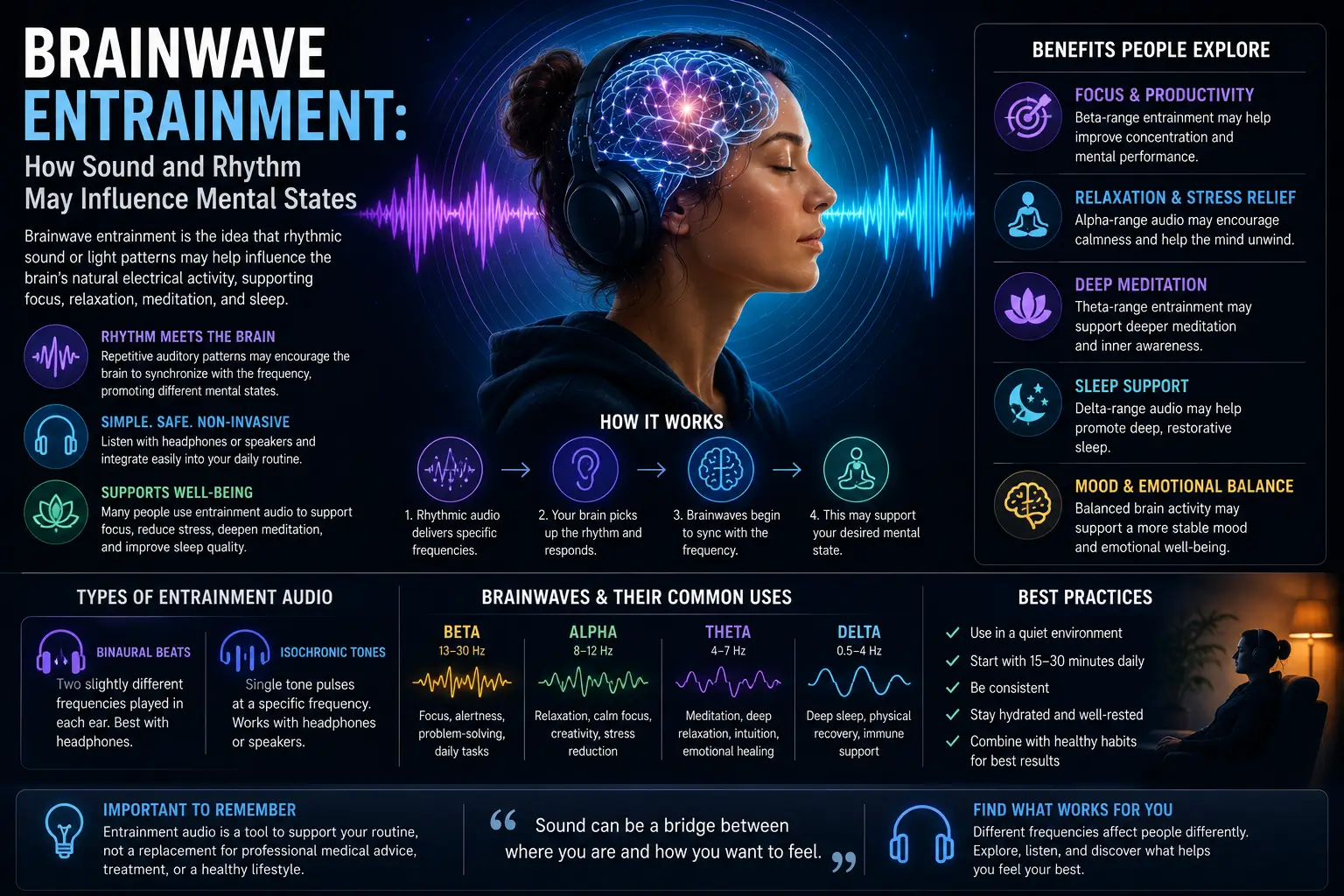
Related article: Brainwave Entrainment.
🎯 Potential Benefits of Binaural Beats
Research into binaural beats is ongoing, and results vary between studies. However, several potential benefits are frequently discussed.
🧘 Relaxation and Stress Management
Many listeners use binaural beats during meditation or relaxation sessions.
The structured nature of the audio may help create a more intentional listening environment.
For this reason, binaural beats are commonly associated with mindfulness and stress-reduction routines.
🎧 Improved Focus and Concentration
Focus is one of the most popular reasons people explore binaural beats.
Students, professionals, and creators often experiment with focus-oriented frequencies while working or studying.
Related article: Cognitive Performance and Attention Span.
😴 Sleep Support
Sleep-focused binaural beats are among the most searched forms of brainwave audio.
Many listeners use them as part of evening routines designed to support relaxation and recovery before bed.
Related article: Sleep Waves Explained.
📚 Learning and Memory
Researchers continue studying how auditory stimulation may influence attention, learning, and memory-related processes.
While findings remain mixed, the topic continues attracting scientific interest.
Related article: Memory Consolidation During Sleep.
🔬 What Does Research Say?
Scientific research on binaural beats has produced promising but mixed results.
Some studies report improvements in relaxation, mood, or attention under certain conditions.
Others find little or no measurable effect.
This does not necessarily mean binaural beats are ineffective. It simply highlights the complexity of studying human cognition and individual responses.
Researchers continue exploring how factors such as listening duration, frequency selection, expectations, and personal differences may influence outcomes.
🎧 Why Headphones Matter
One of the most common misunderstandings about binaural beats involves headphones.
Because each ear must receive a separate frequency, headphones are typically necessary to create the binaural effect.
Without headphones, the intended auditory illusion may not occur correctly.
⚠️ Are Binaural Beats Safe?
For most healthy adults, binaural beats are generally considered low-risk audio experiences.
However, people with specific neurological conditions should consult qualified healthcare professionals before using any form of brainwave stimulation audio.
As with many wellness tools, individual responses can vary.
Related article: Are Binaural Beats Safe?.
🎵 Binaural Beats vs Isochronic Tones
Binaural beats are often compared with isochronic tones.
Although both are discussed within brainwave entrainment communities, they use different methods.
Binaural beats rely on separate frequencies delivered to each ear.
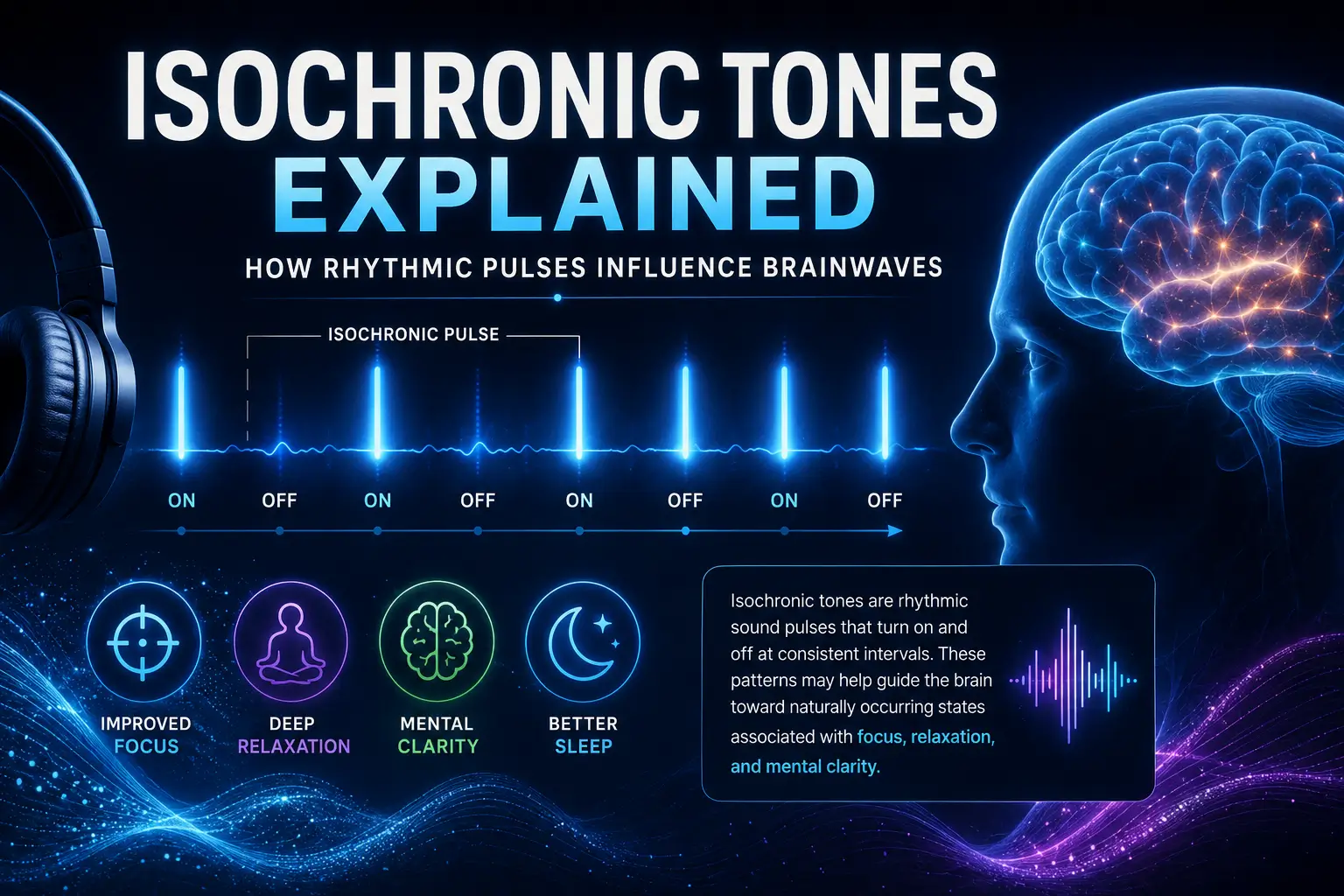
Isochronic tones use clearly defined rhythmic pulses within the audio itself.
Neither approach is universally superior, and personal preference often plays a significant role.
Related article: Isochronic Tones vs Binaural Beats.
🌙 Creating a Better Listening Environment
The listening environment itself can influence the overall experience.
Many people combine binaural beats with:
- meditation,
- breathing exercises,
- focused work sessions,
- reading,
- or evening relaxation routines.
The goal is often not to force a specific outcome but to create conditions that support focus, calmness, or recovery.
🧠 Common Myths About Binaural Beats
❌ “Binaural Beats Instantly Change Your Brain”
The brain is complex, and individual responses vary significantly.
❌ “Higher Frequencies Are Always Better”
Different frequency ranges are associated with different listening goals.
❌ “One Session Guarantees Results”
Like many wellness practices, experiences differ from person to person.
🎧 Neuroacoustic Audio and Modern Listening Experiences
Today, many people explore broader forms of neuroacoustic audio beyond traditional binaural beats.
These audio environments may combine sound design, rhythmic stimulation, ambient textures, and carefully structured frequencies.
Some individuals also explore neuroacoustic listening experiences designed around focus, relaxation, and mental clarity as part of broader cognitive wellness routines.
Individual experiences vary, and no audio method works identically for everyone.
🧠 Final Thoughts
Binaural beats remain one of the most fascinating topics in brainwave entrainment.
While research continues evolving, their popularity reflects a growing interest in how sound may influence attention, relaxation, and mental performance.
Whether used for focus, meditation, sleep support, or simple curiosity, binaural beats continue to serve as a gateway into the broader world of neuroscience-inspired audio experiences.
Related Articles
Related Posts
Stay Informed With the Latest & Most Important News
Previous Post
Next Post