
Now Reading: Gamma Waves Benefits: The High-Power Frequency for Advanced Cognition
-
01
Gamma Waves Benefits: The High-Power Frequency for Advanced Cognition
Gamma Waves Benefits: The High-Power Frequency for Advanced Cognition
Gamma waves are often described as the brain’s fastest and most complex frequency pattern.
Unlike slower brainwave states associated with relaxation or sleep, Gamma activity appears linked to:
- high-level cognition,
- rapid information processing,
- attention integration,
- and advanced mental coordination.
In recent years, Gamma waves have attracted growing attention from neuroscientists, meditation researchers, and cognitive performance experts.
But internet discussions often exaggerate what Gamma frequencies actually do.
Gamma waves are not “instant genius frequencies.”
However, they may play an important role in how the brain organizes information during demanding mental activity.
🧠 What Are Gamma Waves?
Gamma waves are high-frequency brainwave patterns generally measured above:
30 Hz.
Some researchers study Gamma activity in ranges reaching:
- 40 Hz,
- 80 Hz,
- or even higher depending on the context.
Gamma oscillations are commonly associated with:
- attention coordination,
- sensory integration,
- memory processing,
- and conscious awareness.
Unlike isolated brain regions working independently, Gamma synchronization may help multiple brain systems communicate more efficiently together.
This process is sometimes called:
neural integration.
🔬 What Neuroscience Says About Gamma Activity
Gamma waves have become a major topic in modern neuroscience research.
Several studies suggest Gamma synchronization may increase during:
- focused attention,
- memory tasks,
- meditation,
- and complex cognitive processing.
Researchers have explored possible relationships between Gamma activity and:
- learning efficiency,
- pattern recognition,
- information binding,
- and conscious perception.
Some meditation studies involving experienced practitioners have also reported unusually high Gamma synchronization during deep awareness states.
Further reading:
Importantly, neuroscience still does not fully understand every function of Gamma activity.
The field remains active and evolving.
⚡ Gamma Synchronization & Cognitive Integration
One of the most interesting theories surrounding Gamma waves involves:
cognitive integration.
The brain constantly processes:
- visual input,
- memory,
- emotion,
- language,
- and sensory information simultaneously.
Some neuroscientists believe Gamma synchronization may help bind these separate processes into a more unified conscious experience.
This could explain why Gamma activity is frequently discussed in relation to:
- insight moments,
- rapid understanding,
- and heightened awareness.
However, Gamma is likely only one part of a much larger neurological system.
🧩 Why Gamma Feels Different From Relaxation Frequencies
Many people are familiar with Alpha or Theta audio because those frequencies often feel calming.
Gamma-oriented stimulation may feel different.
Some listeners describe Gamma sessions as:
- mentally bright,
- highly alert,
- cognitively active,
- or intensely engaging.
Others find excessive high-frequency stimulation mentally tiring.
This is why balanced session design matters.
The goal is not constant overstimulation.
The brain also requires slower states for recovery and regulation.
🎧 Can Brainwave Audio Influence Gamma States?
Some auditory entrainment systems attempt to encourage Gamma-related activity using rhythmic stimulation patterns.
The idea is not to “download intelligence.”
Instead, the goal is usually:
- supporting alert cognition,
- reducing mental sluggishness,
- and encouraging attentive awareness.
Different listeners report different experiences.
Some describe:
- sharper concentration,
- increased mental clarity,
- or faster task engagement.
Others notice only subtle effects.
👉 Some users exploren Genius Wave because the sessions combine multiple layered frequencies instead of relying only on aggressive high-frequency stimulation.
🌊 Why Gamma Alone Probably Isn’t Enough
This is one of the biggest misconceptions online.
Many articles treat Gamma waves like a standalone “super brain frequency.”
But the brain rarely operates using only one isolated state.
Healthy cognition usually involves dynamic interaction between:
- Alpha,
- Theta,
- Beta,
- and Gamma activity.
For example:
- Alpha may reduce mental noise,
- Theta may support creative association,
- while Gamma may contribute to integration and rapid processing.
The relationship between these systems appears more important than any single frequency alone.
🧘 Gamma Waves & Meditation Research
Some of the most fascinating Gamma studies involve advanced meditation practitioners.
Researchers observed unusually high Gamma synchronization during certain deep meditation states involving:
- awareness,
- compassion,
- and sustained attention.
This does not necessarily mean Gamma causes enlightenment or extraordinary abilities.
However, it suggests that advanced mental training may influence large-scale neural coordination patterns.
This is one reason Gamma waves continue attracting scientific interest.
⚠️ Common Myths About Gamma Frequencies
Myth:
“Gamma waves instantly increase intelligence.”
Reality:
No strong scientific evidence supports dramatic intelligence boosts from frequency exposure alone.
Myth:
“More Gamma always means better cognition.”
Reality:
Excessive stimulation may feel mentally exhausting for some people.
Myth:
“Gamma frequencies replace sleep or recovery.”
Reality:
The brain requires balanced cycles between activation and restoration.
🔍 Who Might Be Interested in Gamma-Oriented Audio?
People often explore Gamma-focused sessions during:
- demanding mental work,
- strategic thinking,
- coding,
- problem solving,
- creative analysis,
- and intellectually intensive tasks.
However, calmer frequencies may still be more effective for:
- relaxation,
- emotional recovery,
- and sleep preparation.
Different mental goals usually require different brain states.
Final Thoughts
Gamma waves remain one of the most intriguing areas of modern brain research.
They appear connected to:
- advanced cognition,
- neural integration,
- awareness,
- and complex information processing.
But the internet often transforms nuanced neuroscience into exaggerated promises.
The most realistic perspective is usually the most useful one:
Gamma waves are not magical shortcuts to genius.
They are part of the brain’s extraordinarily complex communication system — one that researchers are still learning to understand.
Related Articles
- Ultimate Guide to Brainwave Entrainment
- Flow State Brain Waves
- Alpha Waves for Relaxation
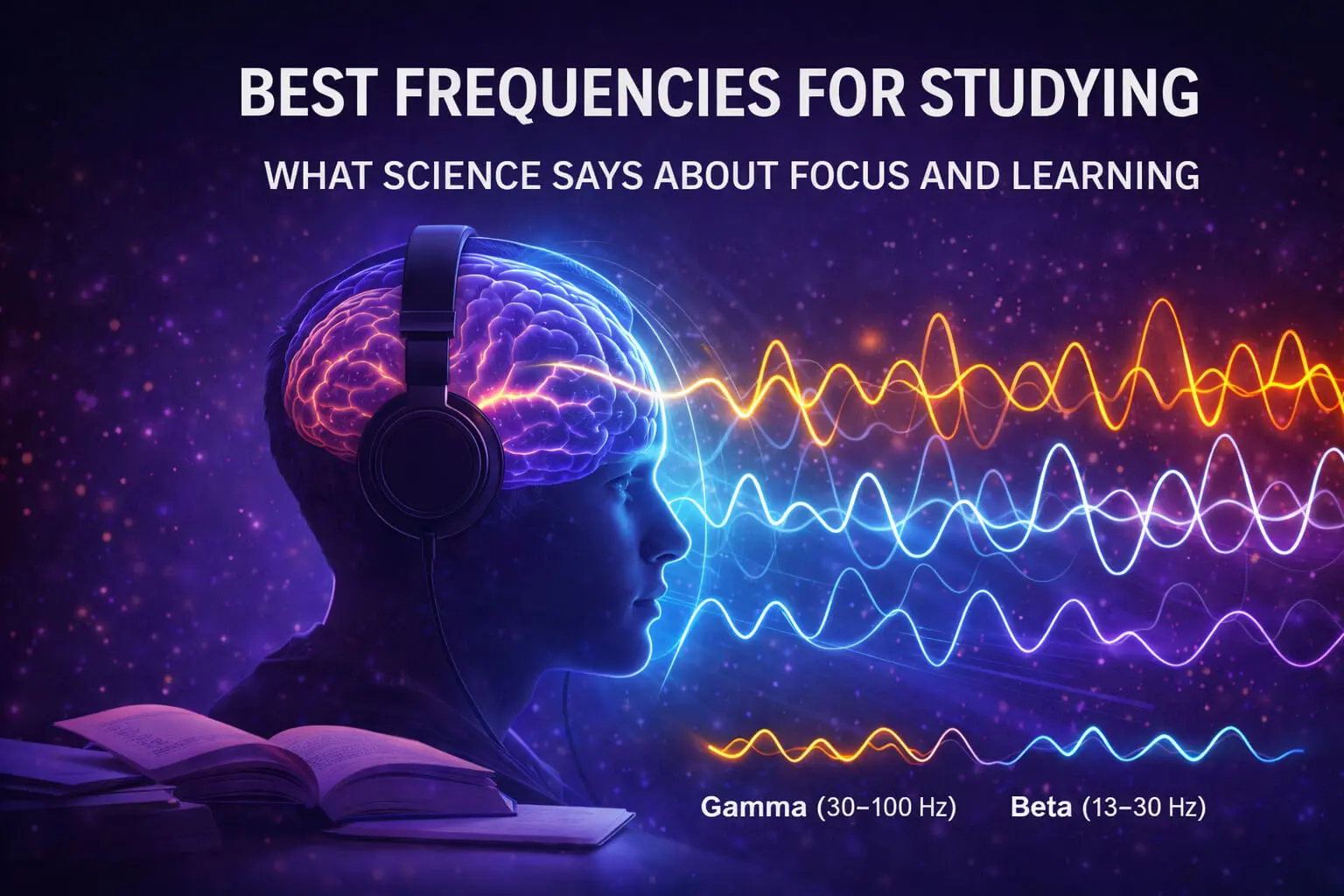
- Best Frequencies for Studying
👉 Related read: From Subconscious Blocks to Mental Freedom: The New Neuroscience Approach for more insights on brainwave focus and mental clarity.
Stay Informed With the Latest & Most Important News
Previous Post
Next Post