
Now Reading: Binaural Beats for Focus and Concentration
-
01
Binaural Beats for Focus and Concentration
Binaural Beats for Focus and Concentration
🎧 What Are Binaural Beats?
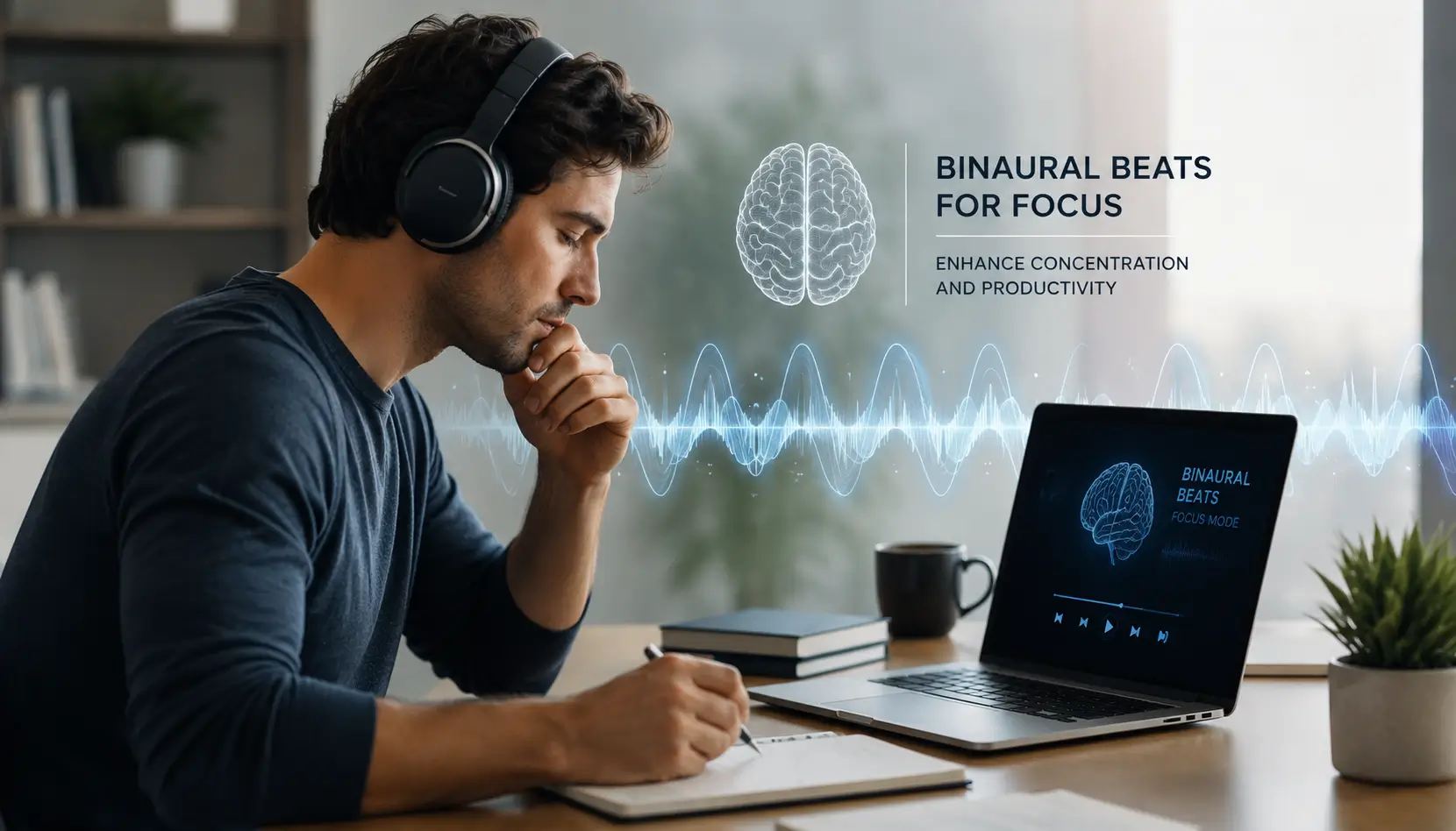
Binaural beats are a type of auditory illusion created when two slightly different frequencies are played separately into each ear.
The brain processes the difference between these tones, which may create the perception of a rhythmic pulse pattern.
Binaural beats are commonly discussed in relation to:
- Focus
- Concentration
- Relaxation
- Meditation
- Sleep support
- Deep work environments
Many people use binaural beats as part of structured audio routines during study sessions, creative work, or mindfulness practices.
Related guide:
Brainwave Entrainment Explained
🧠 How Binaural Beats Work
Binaural beats require stereo headphones because each ear receives a slightly different tone.
For example:
- Left ear: 200 Hz
- Right ear: 210 Hz
The brain may interpret the difference between the two frequencies as a rhythmic 10 Hz pulse.
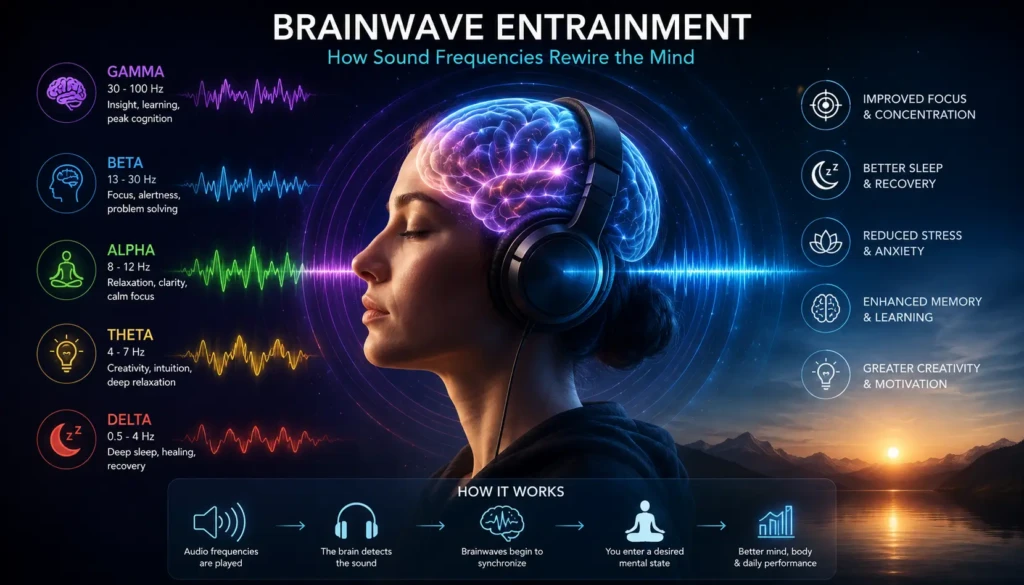
This concept is connected to brainwave entrainment — the theory that rhythmic stimulation may influence mental-state patterns.
Research in this area is still evolving, and individual responses vary significantly.
🎯 Why People Use Binaural Beats for Focus
Modern environments often make concentration difficult.
Notifications, multitasking, background noise, and constant digital stimulation may increase cognitive fatigue and attention fragmentation.
Some people use binaural beats to create calmer focus conditions with fewer distractions.
Focus-oriented audio environments may help support:
- Deep work sessions
- Study routines
- Reading
- Creative tasks
- Attention consistency
Related article:
Audio Environments for Focus and Deep Work
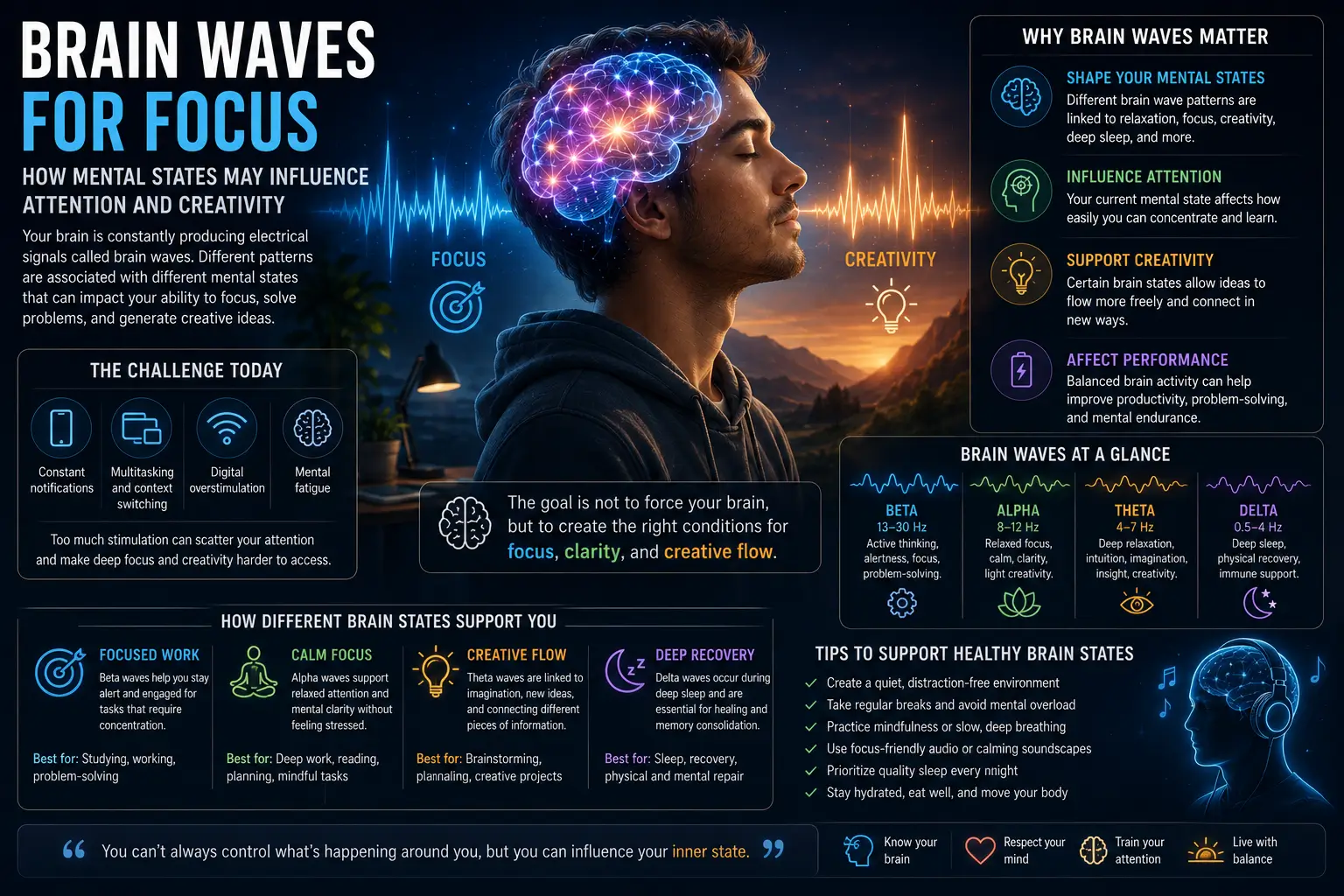
⚡ Brainwave States and Attention
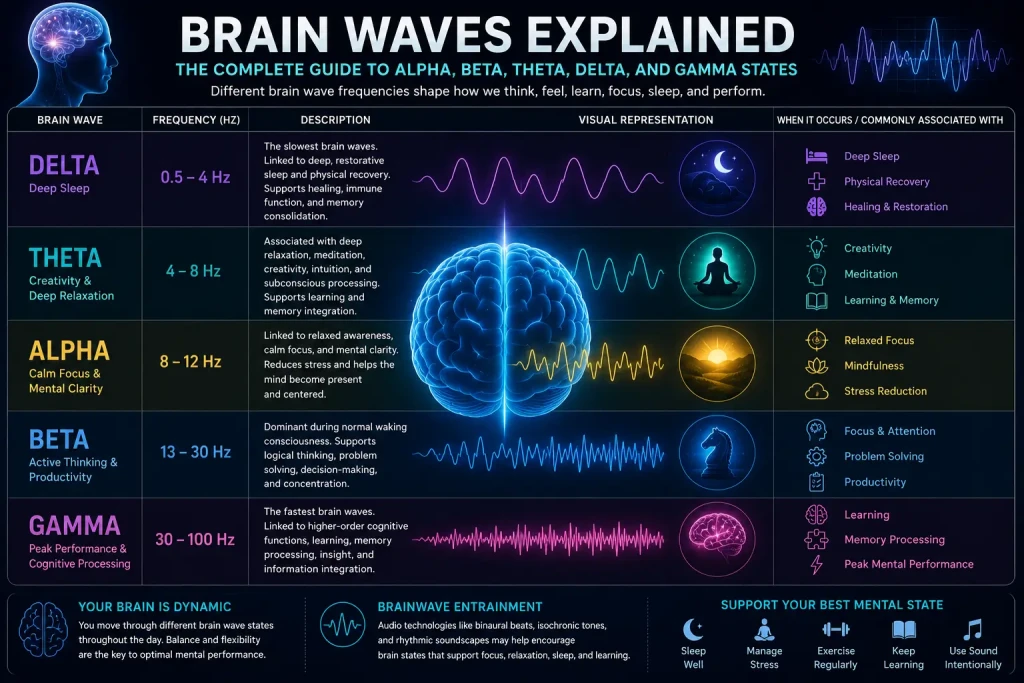
Different brainwave patterns are commonly associated with different mental states.
🌿 Alpha Waves
Alpha-associated states are often connected to calm focus and relaxed concentration.
Many people prefer alpha-oriented sound environments during creative work or reading sessions.
Related reading:
Alpha Brain Waves and Relaxed Focus
🚀 Beta Waves
Beta activity is commonly associated with alert thinking and active mental engagement.
Focus-oriented binaural audio is sometimes discussed in relation to beta-oriented attention states.
💡 Gamma Waves
Gamma activity is frequently explored in neuroscience research related to attention and information processing.
Some listeners use fast-paced focus audio during mentally demanding tasks.
Related article:
Gamma Brain Waves and Cognitive Performance
📚 Study Sessions and Deep Work
Many students and professionals use structured sound environments while studying or working.
Focus routines often work best when combined with:
- Reduced notifications
- Quiet environments
- Single-task focus
- Scheduled breaks
- Consistent sleep habits
Audio alone is not a shortcut to productivity, but some people find it useful for creating calmer and more consistent attention environments.
🌙 Binaural Beats and Relaxation
Not all binaural beat audio is designed for productivity.
Some listeners prefer slower sound environments during:
- Meditation
- Stress recovery
- Mindfulness routines
- Evening relaxation
- Sleep preparation
Related guide:
Which Brain Waves Help You Sleep?
🔬 What Does Research Actually Suggest?
Research into binaural beats remains ongoing.
Some studies suggest rhythmic audio stimulation may influence relaxation or attention patterns for certain individuals.
However, results vary widely between listeners.
Modern neuroscience does not support exaggerated claims about instantly boosting intelligence or unlocking hidden mental abilities through one sound frequency.
Healthy routines remain the strongest foundation for cognitive wellness and sustained concentration.
🌊 Why Focus Audio Continues to Grow
Many people enjoy structured audio environments because they may help reduce mental clutter and create more immersive focus conditions.
Some modern systems combine ambient soundscapes with layered rhythmic pulse patterns inspired by brainwave research.
One example is:
The Genius Wave audio program, which combines atmospheric sound design inspired by focus, relaxation, and cognitive performance concepts.
📌 Final Thoughts
Binaural beats remain one of the most widely discussed forms of focus-oriented audio.
Although research is still evolving, many people enjoy using structured sound environments during study sessions, creative work, meditation, or deep work routines.
The most effective approach to concentration still includes healthy sleep, reduced distraction, balanced routines, and sustainable attention habits.
🔗 Related Articles
Related Posts
Stay Informed With the Latest & Most Important News
Previous Post
Next Post